
TLR8/mTOR 信号在 SKOV3 细胞生长环境中调节 CD4 Treg 的葡萄糖代谢和功能。
Glucose metabolism and function of CD4 Tregs are regulated by the TLR8/mTOR signal in an environment of SKOV3 cell growth.
机构信息
Department of Laboratory Medicine, the First Affiliated Hospital of Nanjing Medical University, Nanjing, China.
Branch of National Clinical Research Center for Laboratory Medicine, Nanjing, China.
出版信息
Cancer Med. 2023 Aug;12(15):16310-16322. doi: 10.1002/cam4.6247. Epub 2023 Jun 14.
PURPOSE
To investigate the role of mammalian target of rapamycin (mTOR) signal in Toll-like receptor (TLR) 8-mediated regulation of glucose metabolism and its effect on reversing immunosuppression in CD4 regulatory T-cells (Tregs) in ovarian cancer (OC).
METHODS
Fluorescence-activated cell sorting was used to detect the expression levels of mTOR and 4E-BP1 cells in CD4 Tregs. The prognosis and immune infiltration analysis of mTOR mRNA in OC were performed using the TIMER and Kaplan-Meier plotter database. Furthermore, real-time polymerase chain reaction (RT-PCR) and western blot (WB) were used to detect expression levels of glucose metabolism-related genes and proteins in CD4 Tregs. Glucose uptake and glycolysis levels were detected by colorimetry, while the effects of CD4 Tregs on the proliferation of CD4 T-effector cells (Teffs) were evaluated by carboxyfluorescein diacetate succinimidyl ester (CFSE).
RESULTS
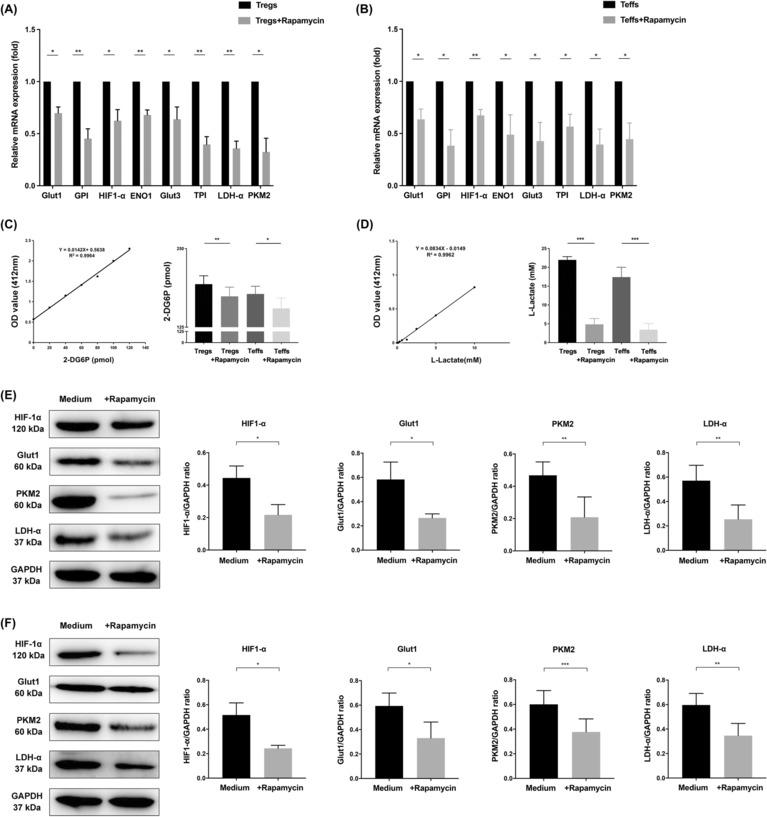
mTOR expression in CD4 Tregs was significantly higher in patients with OC compared with controls and in CD4 Tregs than in CD4 Teffs in OC. Additionally, the expression level of mTOR mRNA was related to prognosis and immune infiltration levels in patients with OC. Blocking the mTOR signal resulted in downregulation of glucose metabolism in CD4 Tregs. Simultaneous inhibition of the mTOR signal while activation of the TLR8 signal had a coordinated inhibitory effect on glucose metabolism and the immunosuppressive function of CD4 Tregs. Furthermore, the mTOR signal played an essential role in TLR8-mediated reversal of immunosuppressive function in CD4 Tregs.
CONCLUSION
These findings imply that activation of the TLR8 signal inhibits glucose metabolism in CD4 Tregs by downregulating mTOR signaling, thereby reversing the immunosuppressive function of these cells in an OC cell growth environment.
目的
研究哺乳动物雷帕霉素靶蛋白(mTOR)信号在 Toll 样受体(TLR)8 介导的葡萄糖代谢调节中的作用及其对卵巢癌(OC)中 CD4 调节性 T 细胞(Treg)免疫抑制逆转的影响。
方法
采用流式细胞术检测 CD4 Treg 细胞中 mTOR 和 4E-BP1 细胞的表达水平。使用 TIMER 和 Kaplan-Meier plotter 数据库对 mTOR mRNA 在 OC 中的预后和免疫浸润进行分析。此外,采用实时聚合酶链反应(RT-PCR)和蛋白质印迹(WB)检测 CD4 Treg 中葡萄糖代谢相关基因和蛋白的表达水平。通过比色法检测葡萄糖摄取和糖酵解水平,通过羧基荧光素二乙酸琥珀酰亚胺酯(CFSE)评估 CD4 Treg 对 CD4 T 效应细胞(Teff)增殖的影响。
结果
与对照组相比,OC 患者 CD4 Treg 中 mTOR 表达明显升高,且 OC 患者 CD4 Treg 中 mTOR 表达高于 CD4 Teff。此外,mTOR mRNA 的表达水平与 OC 患者的预后和免疫浸润水平有关。阻断 mTOR 信号导致 CD4 Treg 中葡萄糖代谢下调。同时抑制 mTOR 信号并激活 TLR8 信号对 CD4 Treg 的葡萄糖代谢和免疫抑制功能具有协同抑制作用。此外,mTOR 信号在 TLR8 介导的 CD4 Treg 免疫抑制功能逆转中起重要作用。
结论
这些发现表明,激活 TLR8 信号通过下调 mTOR 信号抑制 CD4 Treg 中的葡萄糖代谢,从而在 OC 细胞生长环境中逆转这些细胞的免疫抑制功能。



 Zotero 插件