Theoretical Biology and Bioinformatics, Department of Biology, Science for Life, Utrecht University, Utrecht, The Netherlands.
Instituto Andino Patagónico de Tecnologías Biológicas y Geoambientales, Bariloche, Rio Negro, Argentina.
ISME J. 2023 Sep;17(9):1396-1405. doi: 10.1038/s41396-023-01453-6. Epub 2023 Jun 15.
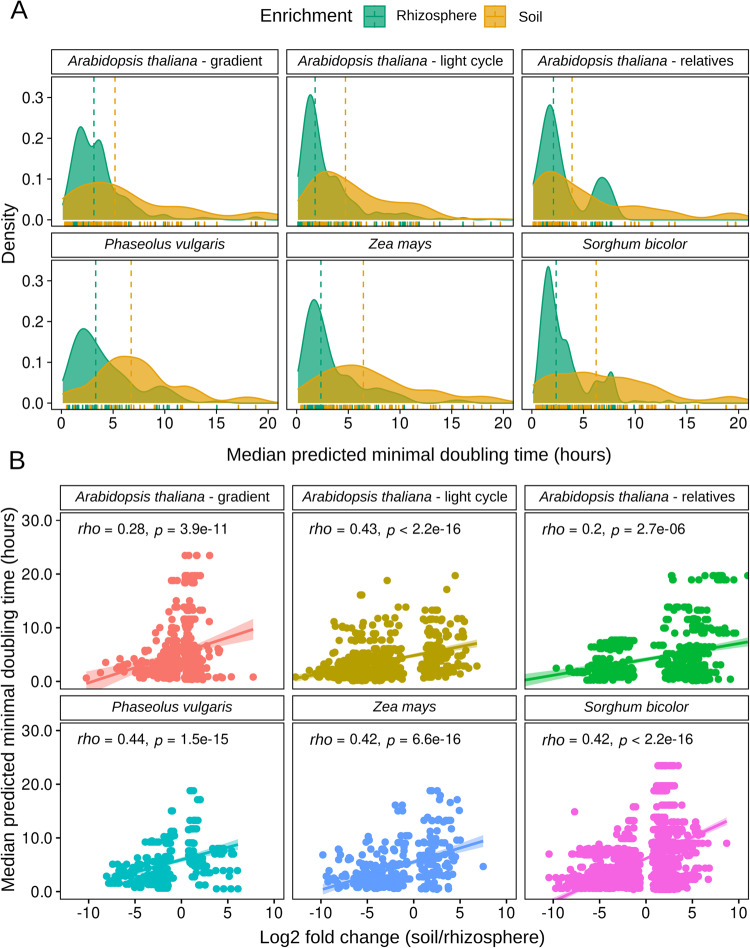
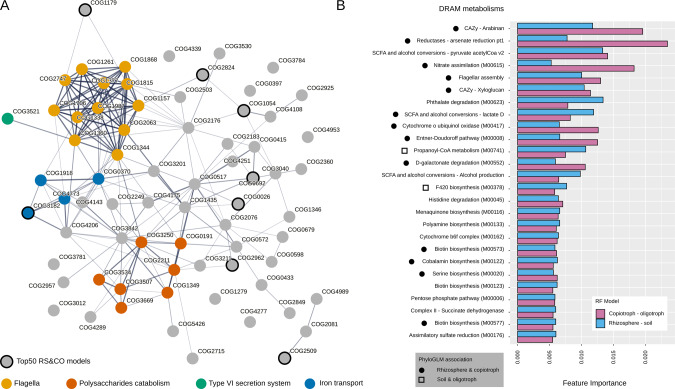
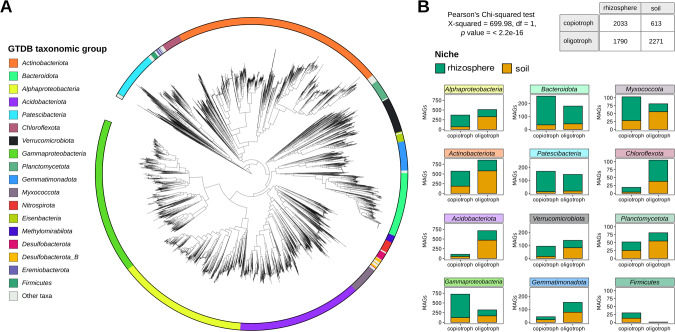
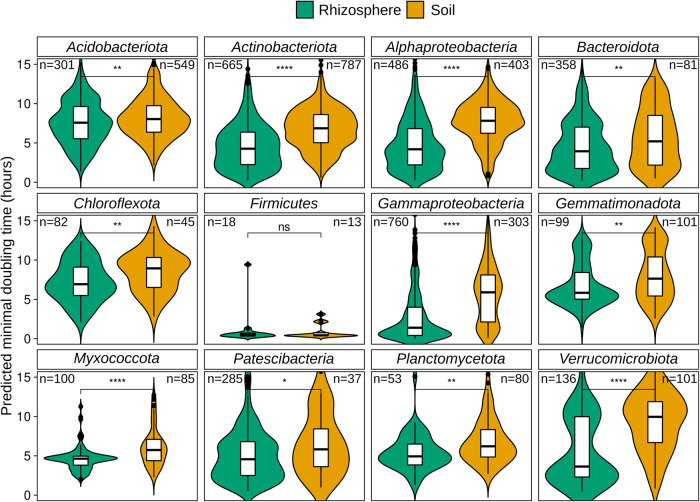
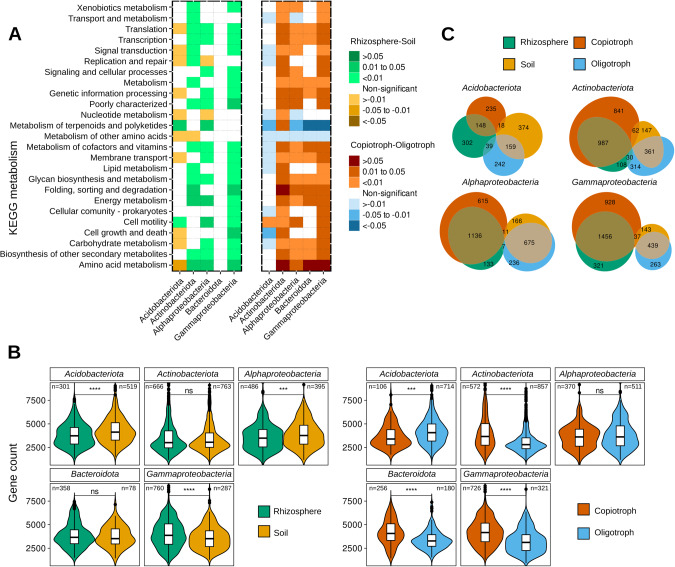
The root microbiome is shaped by plant root activity, which selects specific microbial taxa from the surrounding soil. This influence on the microorganisms and soil chemistry in the immediate vicinity of the roots has been referred to as the rhizosphere effect. Understanding the traits that make bacteria successful in the rhizosphere is critical for developing sustainable agriculture solutions. In this study, we compared the growth rate potential, a complex trait that can be predicted from bacterial genome sequences, to functional traits encoded by proteins. We analyzed 84 paired rhizosphere- and soil-derived 16S rRNA gene amplicon datasets from 18 different plants and soil types, performed differential abundance analysis, and estimated growth rates for each bacterial genus. We found that bacteria with higher growth rate potential consistently dominated the rhizosphere, and this trend was confirmed in different bacterial phyla using genome sequences of 3270 bacterial isolates and 6707 metagenome-assembled genomes (MAGs) from 1121 plant- and soil-associated metagenomes. We then identified which functional traits were enriched in MAGs according to their niche or growth rate status. We found that predicted growth rate potential was the main feature for differentiating rhizosphere and soil bacteria in machine learning models, and we then analyzed the features that were important for achieving faster growth rates, which makes bacteria more competitive in the rhizosphere. As growth rate potential can be predicted from genomic data, this work has implications for understanding bacterial community assembly in the rhizosphere, where many uncultivated bacteria reside.
根际微生物组受植物根系活动的影响,植物根系从周围土壤中选择特定的微生物类群。这种对根际附近微生物和土壤化学的影响被称为根际效应。了解使细菌在根际成功的特征对于开发可持续农业解决方案至关重要。在这项研究中,我们将生长率潜力(一种可以从细菌基因组序列中预测的复杂特征)与由蛋白质编码的功能特征进行了比较。我们分析了来自 18 种不同植物和土壤类型的 84 对根际和土壤衍生的 16S rRNA 基因扩增子数据集,进行了差异丰度分析,并估计了每个细菌属的生长率。我们发现,具有更高生长率潜力的细菌在根际中始终占据主导地位,这一趋势在使用来自 1121 个植物和土壤相关宏基因组的 3270 个细菌分离株和 6707 个宏基因组组装基因组 (MAG) 的细菌门的基因组序列中得到了证实。然后,我们根据它们的生态位或生长率状态确定了哪些功能特征在 MAG 中得到了富集。我们发现,预测的生长率潜力是区分根际和土壤细菌的机器学习模型的主要特征,然后我们分析了实现更快生长率的重要特征,这使细菌在根际更具竞争力。由于生长率潜力可以从基因组数据中预测,因此这项工作对于理解根际细菌群落组装具有重要意义,因为许多未培养的细菌都存在于根际中。