Ramzan Firyal, Abrar Fatima, Mishra Gyana Gourab, Liao Lucia Meng Qi, Martin Dale D O
NeurdyPhagy Lab, Department of Biology, Faculty of Science, University of Waterloo, Waterloo, ON, Canada.
Front Physiol. 2023 May 30;14:1166125. doi: 10.3389/fphys.2023.1166125. eCollection 2023.
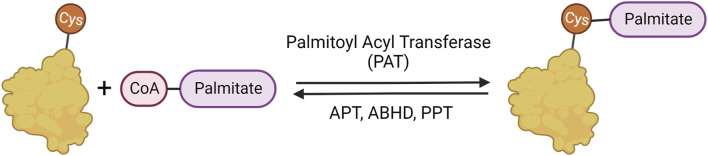
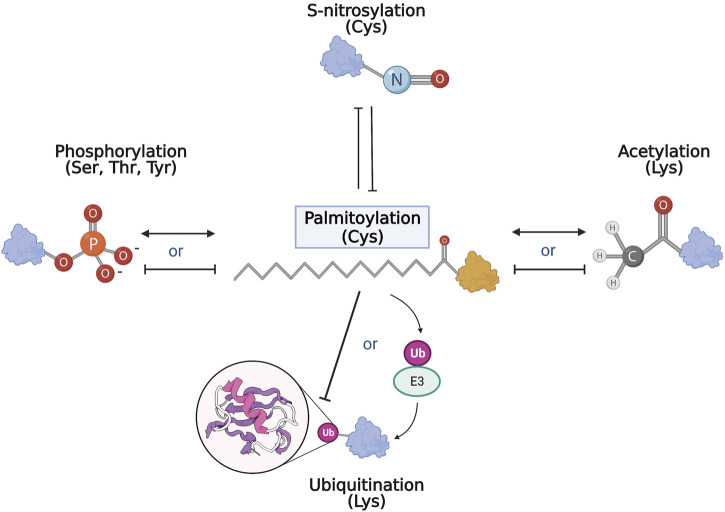
One of the first molecular events in neurodegenerative diseases, regardless of etiology, is protein mislocalization. Protein mislocalization in neurons is often linked to proteostasis deficiencies leading to the build-up of misfolded proteins and/or organelles that contributes to cellular toxicity and cell death. By understanding how proteins mislocalize in neurons, we can develop novel therapeutics that target the earliest stages of neurodegeneration. A critical mechanism regulating protein localization and proteostasis in neurons is the protein-lipid modification S-acylation, the reversible addition of fatty acids to cysteine residues. S-acylation is more commonly referred to as S-palmitoylation or simply palmitoylation, which is the addition of the 16-carbon fatty acid palmitate to proteins. Like phosphorylation, palmitoylation is highly dynamic and tightly regulated by writers (i.e., palmitoyl acyltransferases) and erasers (i.e., depalmitoylating enzymes). The hydrophobic fatty acid anchors proteins to membranes; thus, the reversibility allows proteins to be re-directed to and from membranes based on local signaling factors. This is particularly important in the nervous system, where axons (output projections) can be meters long. Any disturbance in protein trafficking can have dire consequences. Indeed, many proteins involved in neurodegenerative diseases are palmitoylated, and many more have been identified in palmitoyl-proteomic studies. It follows that palmitoyl acyl transferase enzymes have also been implicated in numerous diseases. In addition, palmitoylation can work in concert with cellular mechanisms, like autophagy, to affect cell health and protein modifications, such as acetylation, nitrosylation, and ubiquitination, to affect protein function and turnover. Limited studies have further revealed a sexually dimorphic pattern of protein palmitoylation. Therefore, palmitoylation can have wide-reaching consequences in neurodegenerative diseases.
无论病因如何,神经退行性疾病最早出现的分子事件之一是蛋白质错误定位。神经元中的蛋白质错误定位通常与蛋白质稳态缺陷有关,导致错误折叠的蛋白质和/或细胞器积累,从而造成细胞毒性和细胞死亡。通过了解蛋白质在神经元中如何错误定位,我们可以开发针对神经退行性变最早阶段的新型疗法。调节神经元中蛋白质定位和蛋白质稳态的一个关键机制是蛋白质-脂质修饰S-酰化作用,即脂肪酸可逆地添加到半胱氨酸残基上。S-酰化作用更常被称为S-棕榈酰化或简称为棕榈酰化,即把16碳脂肪酸棕榈酸添加到蛋白质上。与磷酸化一样,棕榈酰化是高度动态的,并且受到写入酶(即棕榈酰酰基转移酶)和擦除酶(即去棕榈酰化酶)的严格调控。疏水性脂肪酸将蛋白质锚定到膜上;因此,这种可逆性使蛋白质能够根据局部信号因子往返于膜之间。这在神经系统中尤为重要,因为轴突(输出投射)可能长达数米。蛋白质运输中的任何干扰都可能产生严重后果。事实上,许多与神经退行性疾病相关的蛋白质都被棕榈酰化了,并且在棕榈酰蛋白质组学研究中还发现了更多这样的蛋白质。由此可见,棕榈酰酰基转移酶也与多种疾病有关。此外,棕榈酰化可以与细胞机制(如自噬)协同作用,影响细胞健康,还可以与蛋白质修饰(如乙酰化、亚硝基化和泛素化)协同作用,影响蛋白质功能和周转。有限的研究进一步揭示了蛋白质棕榈酰化存在性别差异模式。因此,棕榈酰化在神经退行性疾病中可能会产生广泛的影响。