Department of Pathology, Institute of Infectious Disease and Molecular Medicine (IDM), University of Cape Town, Cape Town, South Africa.
Seattle Children's Hospital, Seattle, United States of America.
PLoS Pathog. 2020 Jun 4;16(6):e1008559. doi: 10.1371/journal.ppat.1008559. eCollection 2020 Jun.
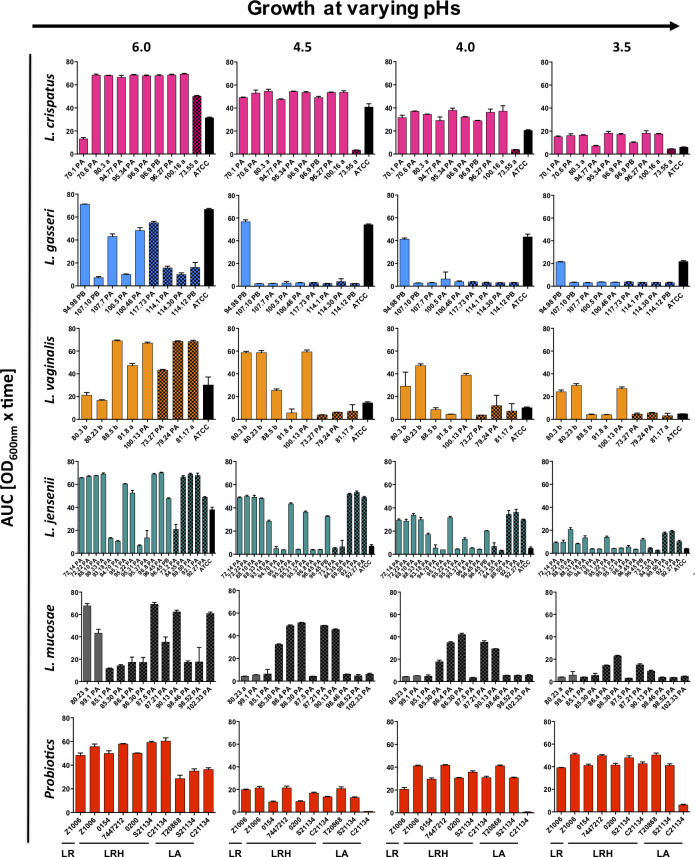
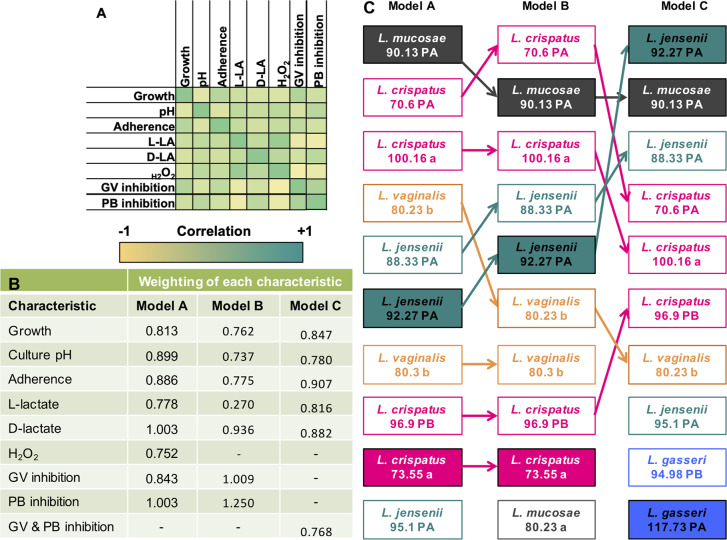
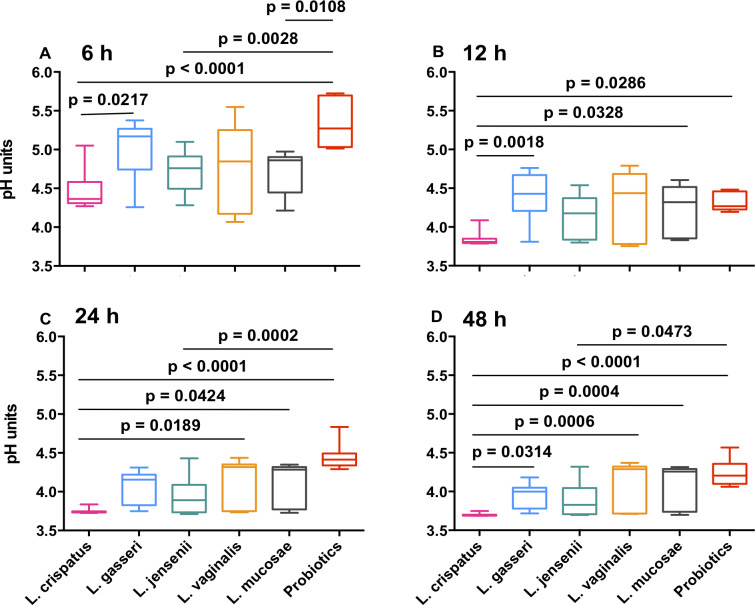
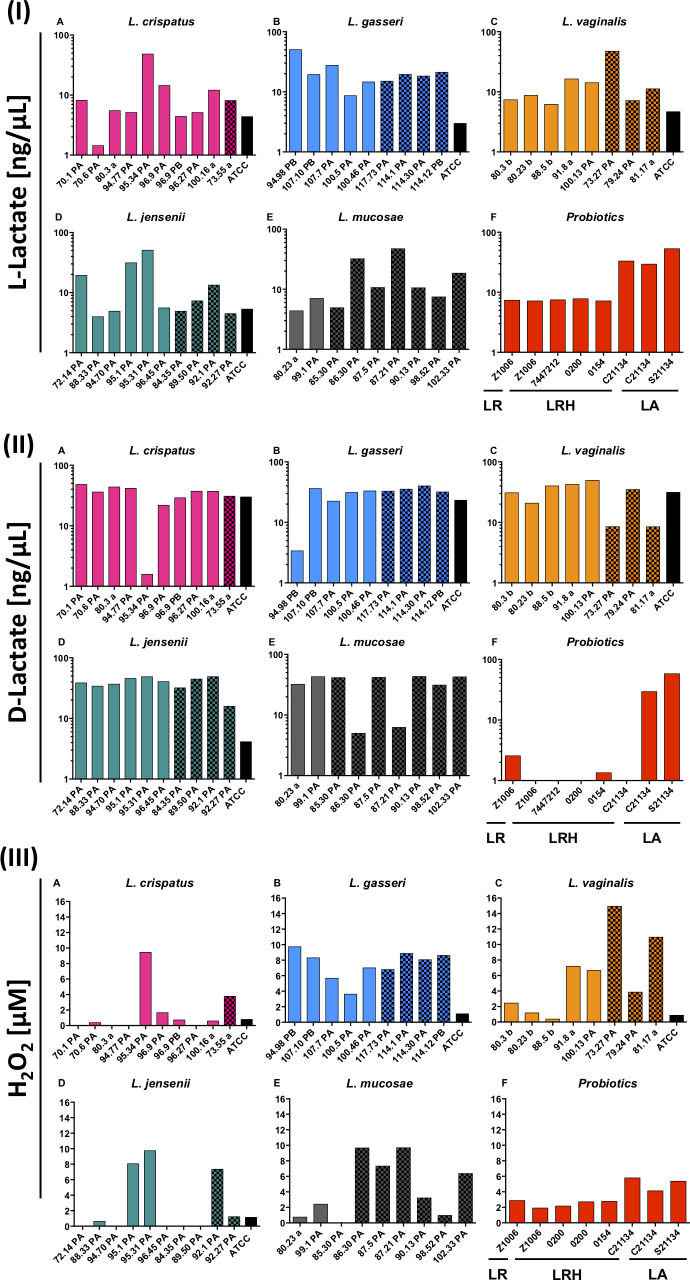
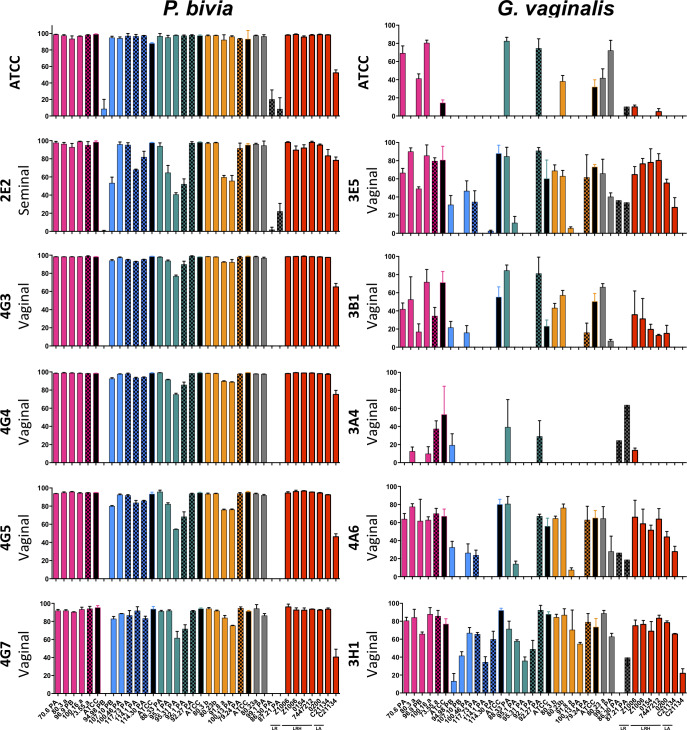
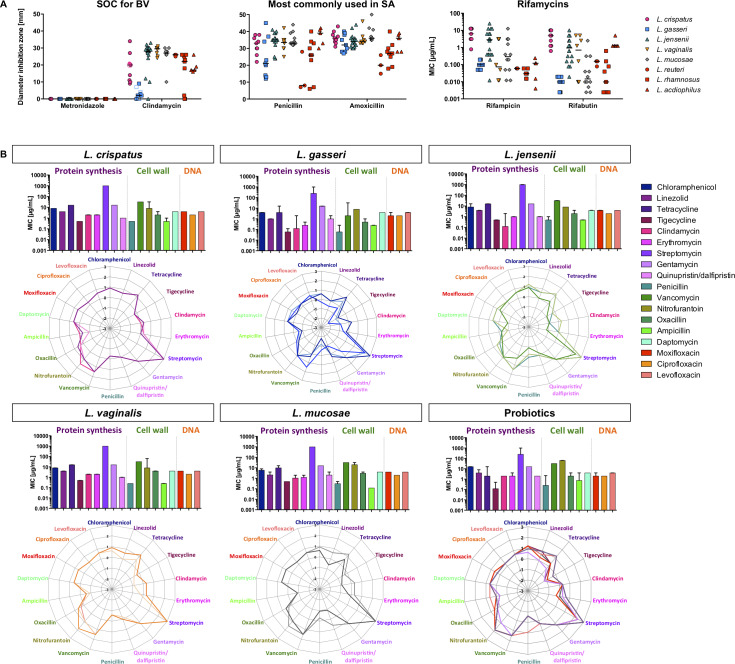
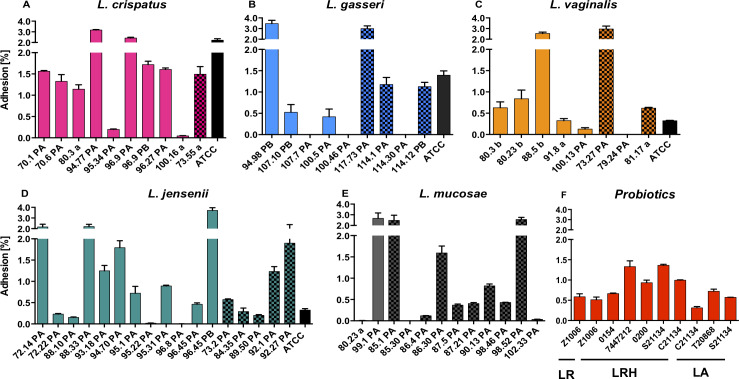
Antibiotics continue to be the standard-of-care for bacterial vaginosis (BV), although recurrence rates are high. Vaginal probiotics may improve durability of BV treatment, although few probiotics for vaginal health contain Lactobacillus spp. that commonly colonize the lower female genital tract. Characteristics of vaginal Lactobacillus strains from South African women were evaluated for their probiotic potential in vitro compared to strains from commercial vaginal products, including growth at varying pHs, ability to lower pH, produce D-/L-lactate and H2O2, influence growth of BV-associated Gardnerella vaginalis and Prevotella bivia, adherence to cervical cells and susceptibility to antibiotics. Fifty-seven Lactobacillus strains were purified from cervico-vaginal fluid, including L. crispatus, L. jensenii, L. gasseri, L. mucosae, and L. vaginalis. L crispatus strains grew better at pHs below 4.5 and lowered pH more effectively than other strains. Production of D-/L-lactate and H2O2 varied between Lactobacillus species and strains. Lactobacillus strains generally inhibited P. bivia more uniformly than G. vaginalis isolates. All vaginal Lactobacillus isolates were resistant to metronidazole while susceptibility to clindamycin varied. Furthermore, vaginal Lactobacillus strains tended to be broadly susceptible to penicillin, amoxicillin, rifampicin and rifabutin. Whole-genome-sequencing of five of the best-performing vaginal Lactobacillus strains confirmed their likely safety, due to antimicrobial resistance elements being largely absent, while putative intact prophages were present in the genomes of two of the five strains. Overall, vaginal Lactobacillus strains largely performed better in these in vitro assays than probiotic strains currently used in probiotics for vaginal health. Including the best-performing vaginal Lactobacillus isolates in a region-specific probiotic for vaginal health may result in improved BV treatment options.
抗生素仍然是细菌性阴道病 (BV) 的标准治疗方法,尽管复发率很高。阴道益生菌可能会提高 BV 治疗的持久性,但很少有阴道健康益生菌含有通常定植于女性下生殖道的乳杆菌属。本研究评估了南非女性阴道乳杆菌菌株的特性,以评估其与商业阴道产品中的菌株相比在体外的益生菌潜力,包括在不同 pH 值下的生长能力、降低 pH 值的能力、产生 D-/L-乳酸和 H2O2 的能力、影响 BV 相关加德纳菌和普雷沃菌生长的能力、对宫颈细胞的黏附能力以及对抗生素的敏感性。从宫颈阴道分泌物中纯化了 57 株乳杆菌,包括 L. crispatus、L. jensenii、L. gasseri、L. mucosae 和 L. vaginalis。L crispatus 菌株在 pH 值低于 4.5 时生长更好,降低 pH 值的效果优于其他菌株。D-/L-乳酸和 H2O2 的产生在乳杆菌属和菌株之间有所不同。乳杆菌菌株通常比阴道加德纳菌分离株更均匀地抑制普雷沃菌。所有阴道乳杆菌分离株均对甲硝唑耐药,而克林霉素的敏感性则不同。此外,阴道乳杆菌菌株对青霉素、阿莫西林、利福平利福布汀普遍敏感。对 5 株表现最好的阴道乳杆菌菌株进行全基因组测序证实了它们的安全性,因为抗菌耐药元件基本缺失,而两个菌株的基因组中存在完整的潜在噬菌体。总体而言,阴道乳杆菌菌株在这些体外试验中的表现大多优于目前用于阴道健康益生菌的益生菌菌株。在特定于该地区的阴道健康益生菌中包含表现最好的阴道乳杆菌分离株可能会改善 BV 的治疗选择。