Department of Biomedical Sciences, University of Padova, Padova 35131, Italy.
Department of Biomedical Sciences, University of Padova, Padova 35131, Italy.
J Sport Health Sci. 2024 Mar;13(2):264-276. doi: 10.1016/j.jshs.2023.06.004. Epub 2023 Jun 17.
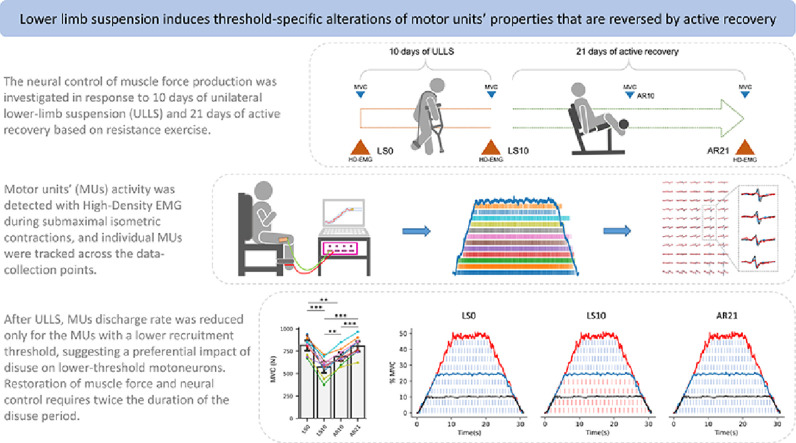
This study aimed to non-invasively test the hypothesis that (a) short-term lower limb unloading would induce changes in the neural control of force production (based on motor units (MUs) properties) in the vastus lateralis muscle and (b) possible changes are reversed by active recovery (AR).
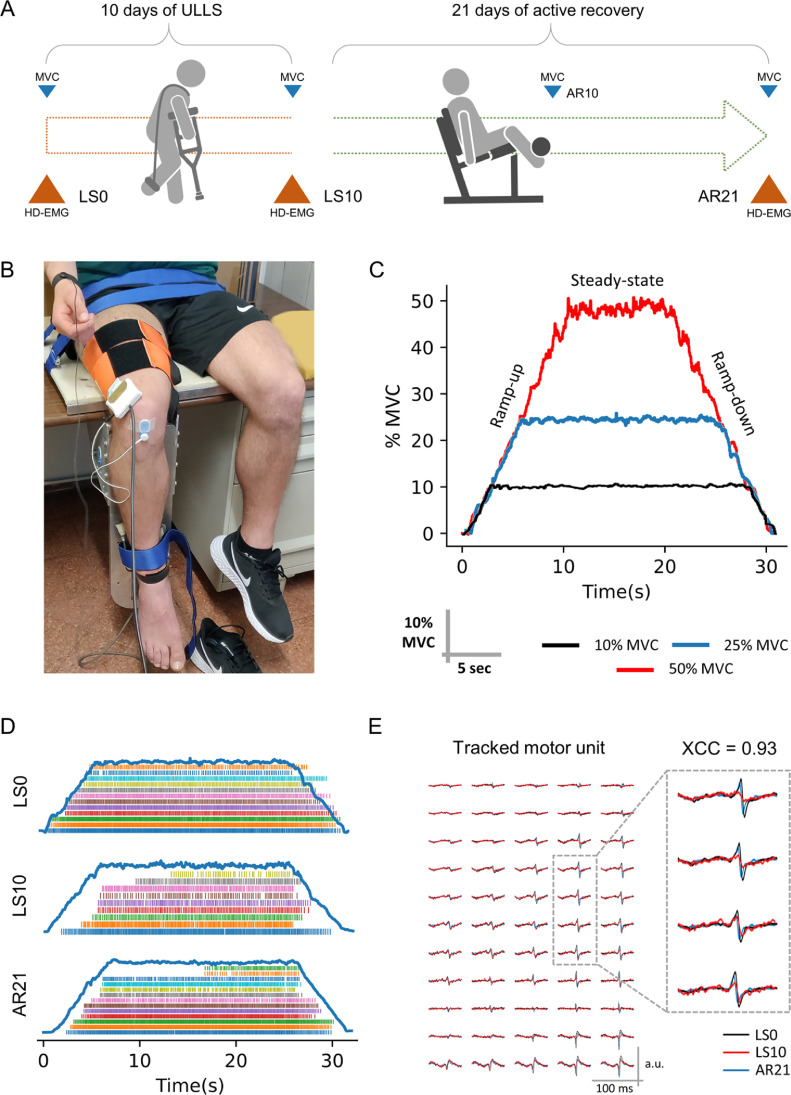
Ten young males underwent 10 days of unilateral lower limb suspension (ULLS) followed by 21 days of AR. During ULLS, participants walked exclusively on crutches with the dominant leg suspended in a slightly flexed position (15°-20°) and with the contralateral foot raised by an elevated shoe. The AR was based on resistance exercise (leg press and leg extension) and executed at 70% of each participant's 1 repetition maximum, 3 times/week. Maximal voluntary isometric contraction (MVC) of knee extensors and MUs properties of the vastus lateralis muscle were measured at baseline, after ULLS, and after AR. MUs were identified using high-density electromyography during trapezoidal isometric contractions at 10%, 25%, and 50% of the current MVC, and individual MUs were tracked across the 3 data collection points.
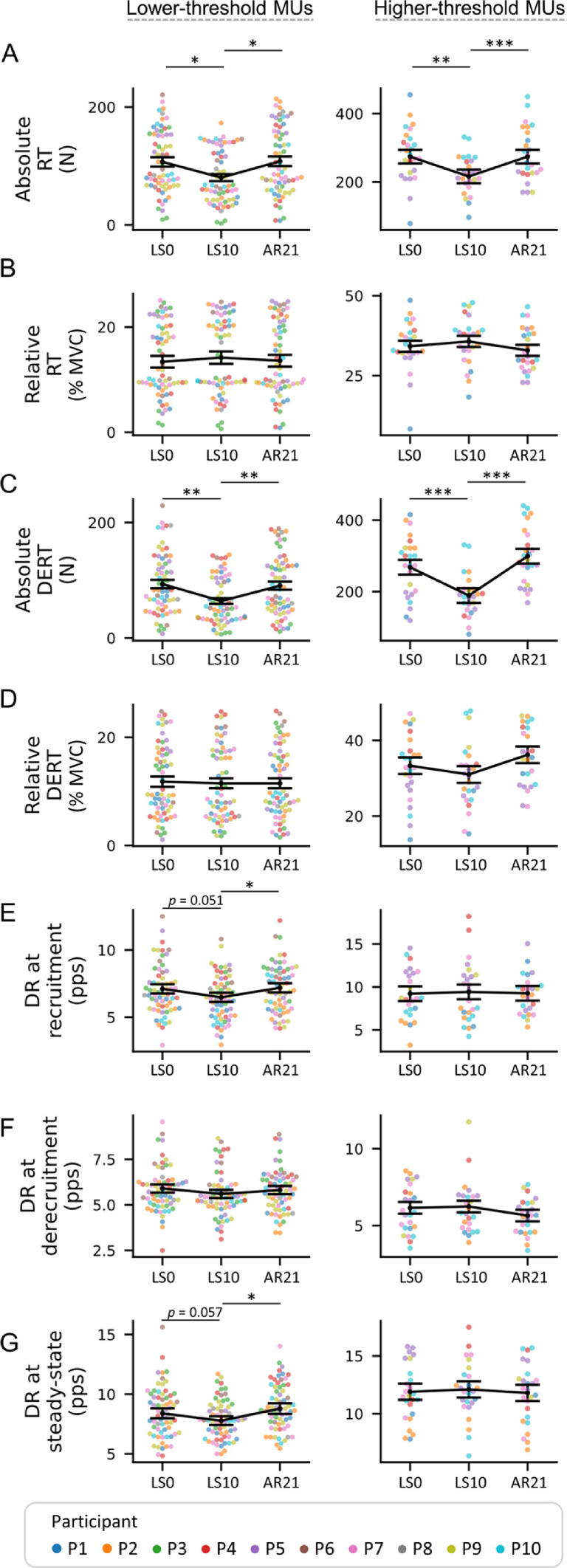
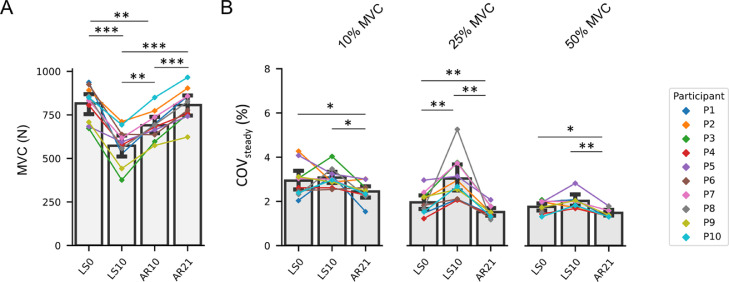
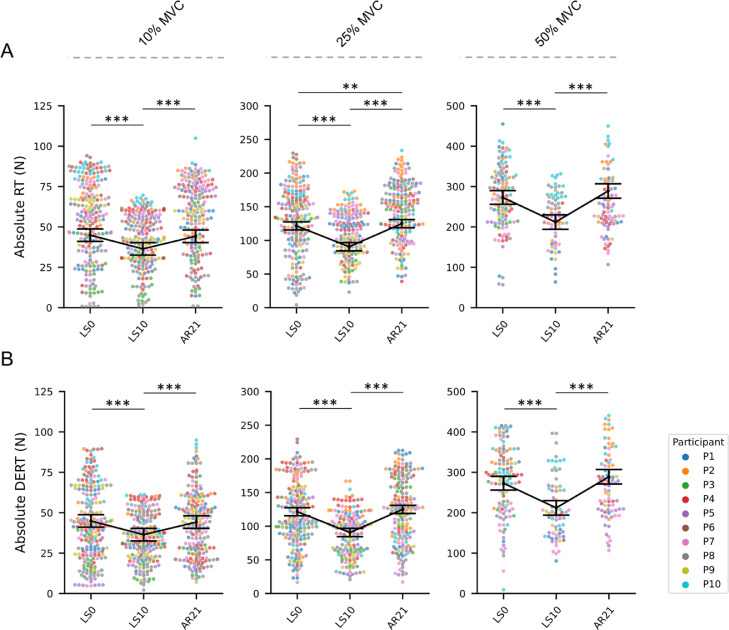
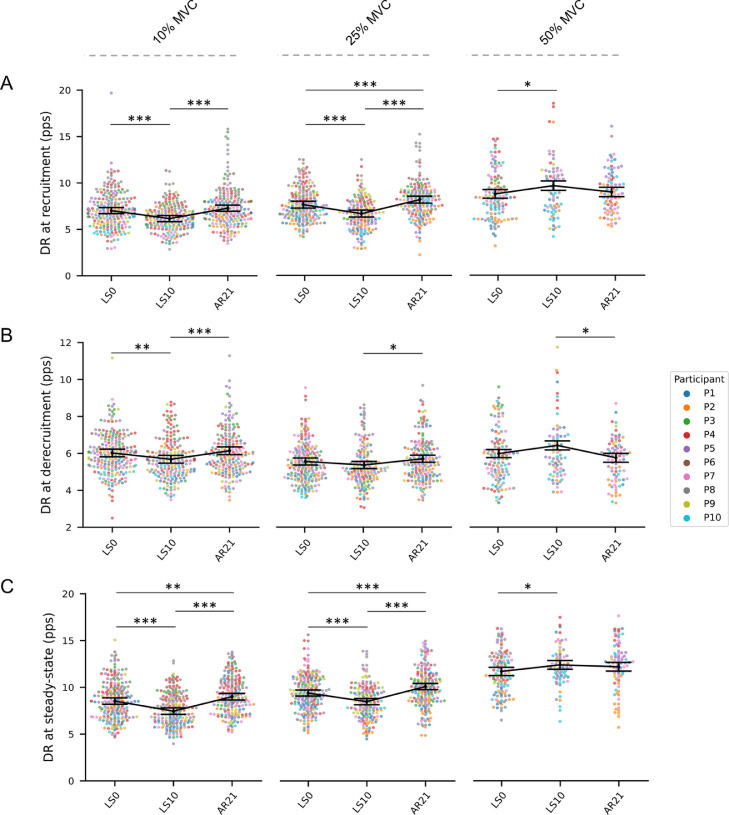
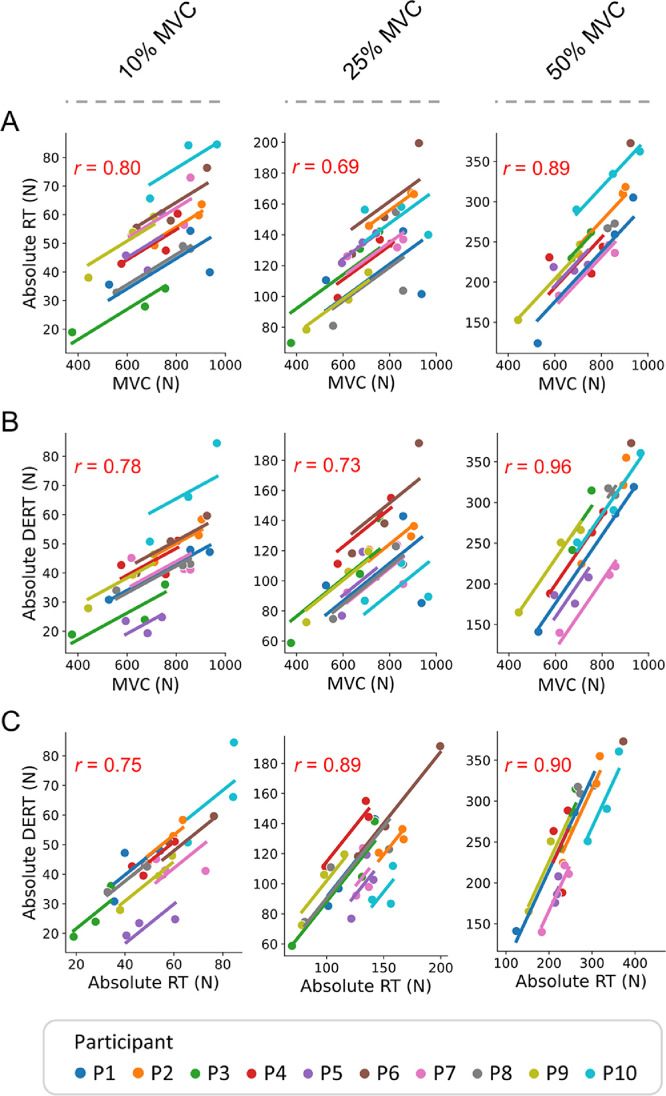
We identified 1428 unique MUs, and 270 of them (18.9%) were accurately tracked. After ULLS, MVC decreased by 29.77%, MUs absolute recruitment/derecruitment thresholds were reduced at all contraction intensities (with changes between the 2 variables strongly correlated), while discharge rate was reduced at 10% and 25% but not at 50% MVC. Impaired MVC and MUs properties fully recovered to baseline levels after AR. Similar changes were observed in the pool of total as well as tracked MUs.
Our novel results demonstrate, non-invasively, that 10 days of ULLS affected neural control predominantly by altering the discharge rate of lower-threshold but not of higher-threshold MUs, suggesting a preferential impact of disuse on motoneurons with a lower depolarization threshold. However, after 21 days of AR, the impaired MUs properties were fully restored to baseline levels, highlighting the plasticity of the components involved in neural control.
本研究旨在无创性地检验以下假设:(a) 短期下肢去负荷会导致股外侧肌的力产生神经控制(基于运动单位 (MU) 特性)发生变化,以及 (b) 可能的变化可以通过主动恢复 (AR) 逆转。
10 名年轻男性接受了 10 天的单侧下肢悬吊 (ULLS),随后进行了 21 天的 AR。在 ULLS 期间,参与者仅使用拐杖行走,主导腿在略微弯曲的位置(15°-20°)下悬吊,对侧脚抬高到一个垫高的鞋子上。AR 基于阻力运动(腿推和腿伸),以每个参与者 1 次最大重复次数的 70%执行,每周 3 次。在基线、ULLS 后和 AR 后测量膝关节伸肌的最大自主等长收缩 (MVC) 和股外侧肌的 MU 特性。在梯形等长收缩期间,使用高密度肌电图在 10%、25%和 50%的当前 MVC 下识别 MU,并且在 3 个数据采集点跟踪各个 MU。
我们鉴定了 1428 个独特的 MU,其中 270 个(18.9%)被准确跟踪。ULLS 后,MVC 下降了 29.77%,所有收缩强度下 MU 的绝对募集/去募集阈值都降低(这两个变量之间的变化高度相关),而放电率在 10%和 25%时降低,但在 50% MVC 时没有降低。AR 后,受损的 MVC 和 MU 特性完全恢复到基线水平。在总 MU 和跟踪 MU 池中也观察到类似的变化。
我们的新结果无创性地表明,10 天的 ULLS 主要通过改变低阈值但不改变高阈值 MU 的放电率来影响神经控制,这表明废用对具有较低去极化阈值的运动神经元有优先影响。然而,在 21 天的 AR 后,受损的 MU 特性完全恢复到基线水平,突出了神经控制所涉及的成分的可塑性。