Molecular Oncology Research Center, Barretos Cancer Hospital, Barretos, Brazil.
Department of Pathology, Barretos Cancer Hospital, Barretos, Brazil.
Cancer Med. 2023 Aug;12(15):15854-15867. doi: 10.1002/cam4.6224. Epub 2023 Jun 20.
Colorectal cancer (CRC) screening can help to reduce its incidence and mortality. Noninvasive strategies, such as plasma analysis of epigenetic alterations, can constitute important biomarkers of CRC detection.
This study aimed to evaluate the plasma methylation status of SEPT9 and BMP3 promoters as biomarkers for detection of CRC and its precursor lesions in a Brazilian population.
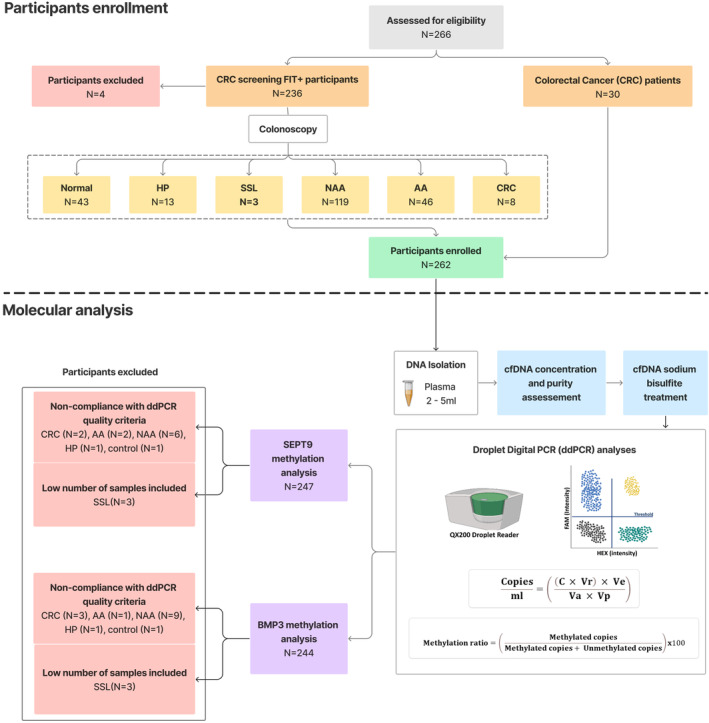
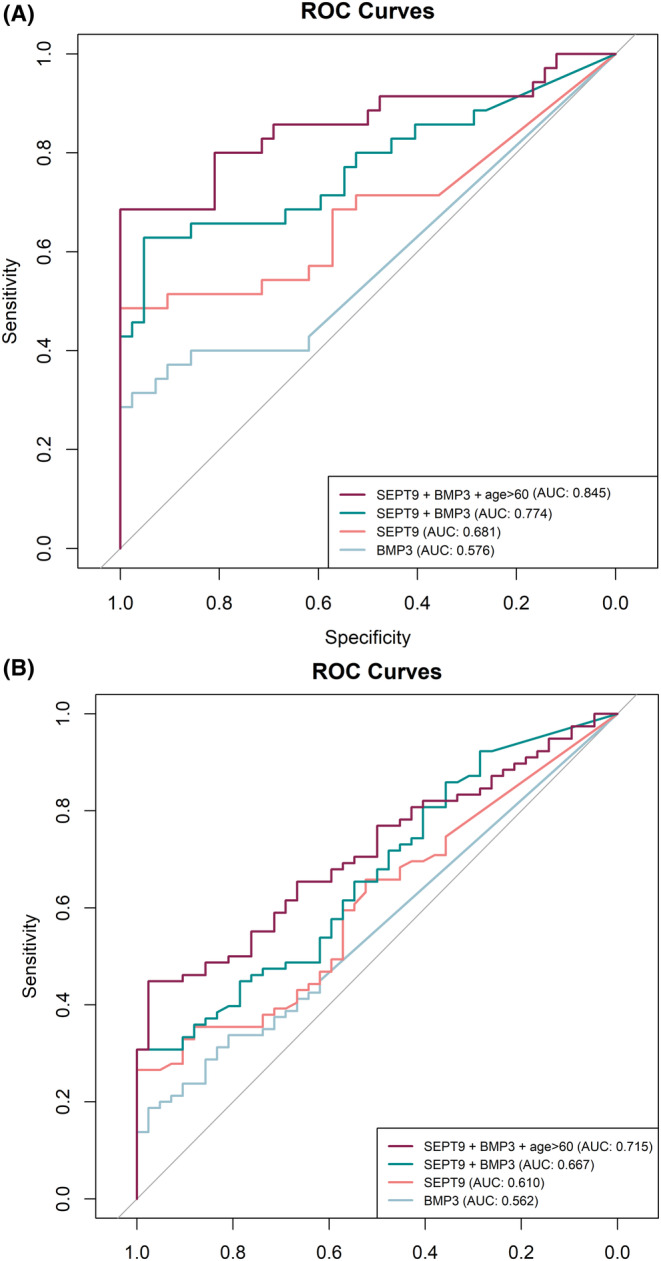
Plasma samples from 262 participants of the CRC screening program of Barretos Cancer Hospital who had a positive fecal occult blood test and underwent colonoscopy and cancer patients were analyzed. Participants were grouped according to the worst lesion detected in the colonoscopy. Cell-free circulating DNA (cfDNA) was bisulfite treated followed by the analysis of SEPT9 and BMP3 methylation status using a droplet digital PCR system (ddPCR). The best methylation cutoff value for group discrimination was calculated by receiver operating characteristic (ROC) curve analysis.
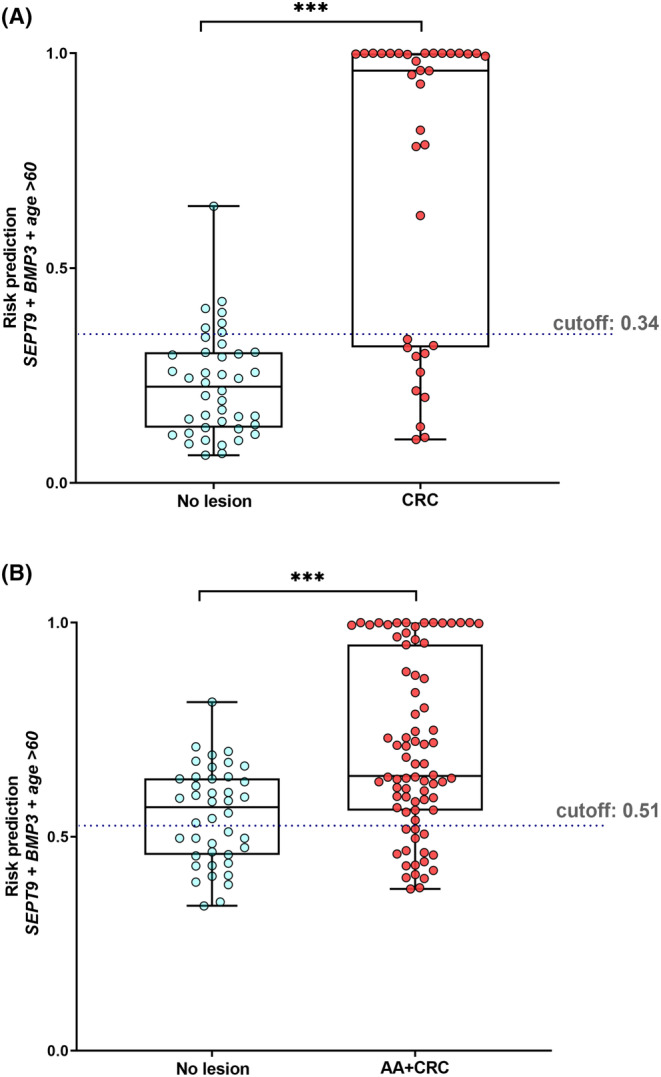
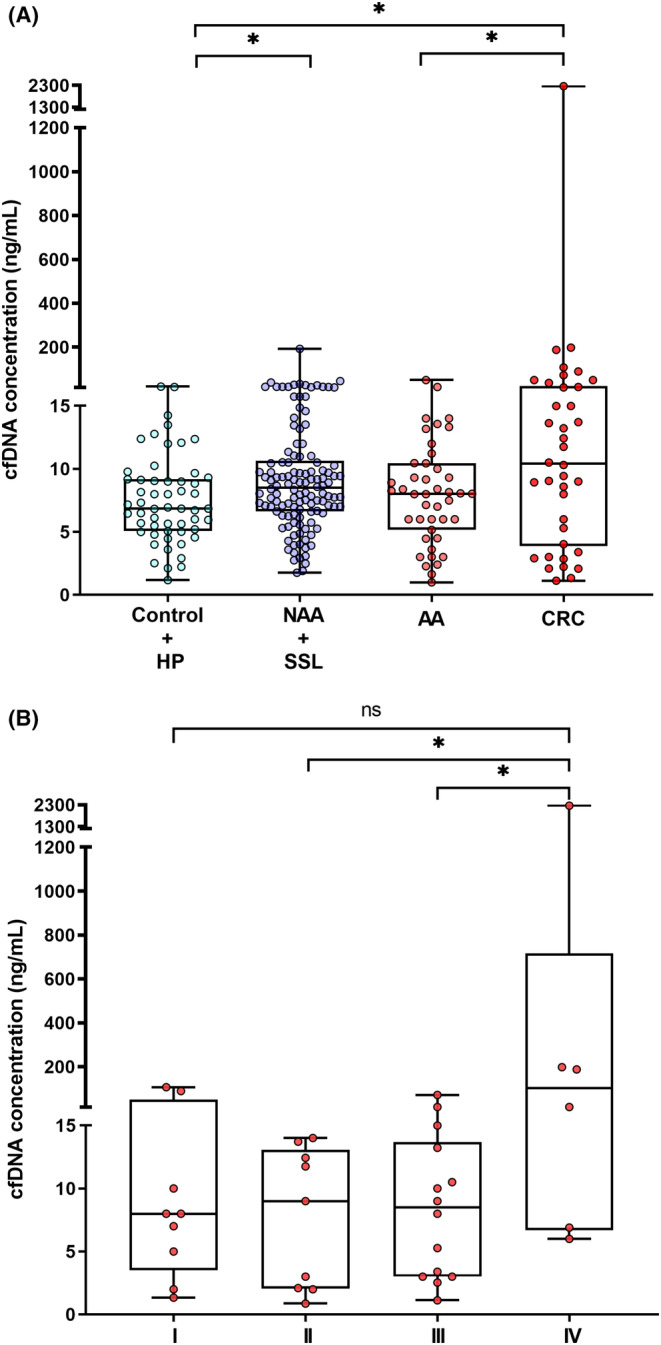
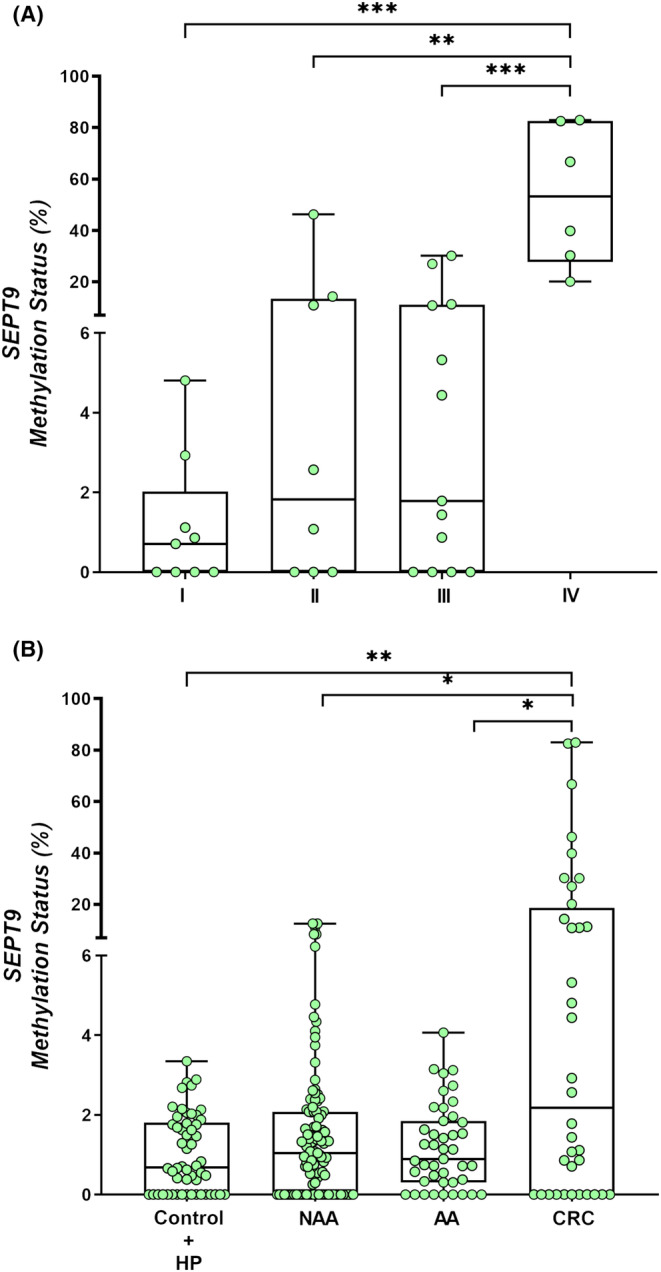
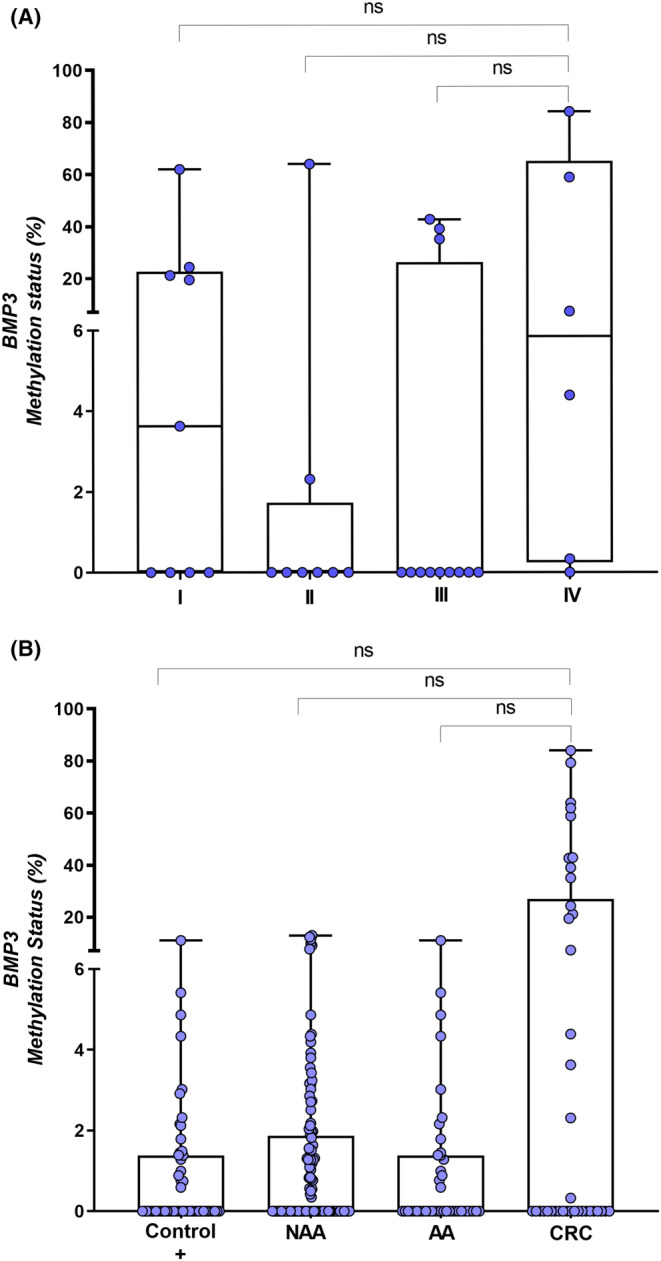
Among the 262 participants, 38 were diagnosed with CRC, 46 with advanced adenomas 119 with nonadvanced adenomas, three with sessile serrated lesions, and 13 with hyperplastic polyps. In 43 participants, no lesion was detected in the colonoscopy and were used as controls. The CRC group showed the highest cfDNA concentration (10.4 ng/mL). For the SEPT9 gene, a cutoff of 2.5% (AUC = 0.681) that discriminates between CRC and the control group resulted in CRC sensitivity and specificity of 50% and 90%, respectively. Concerning the BMP3 gene, a cutoff of 2.3% (AUC = 0.576) showed 40% and 90% of sensitivity and specificity for CRC detection, respectively. Combining SEPT9, BMP3 status, and age over 60 years resulted in a better performance for detecting CRC (AUC = 0.845) than the individual gene models, yielding 80% and 81% of sensitivity and specificity, respectively.
The present study suggests that a combination of SEPT9 and BMP3 plasma methylation, along with age over 60 years, showed the highest performance in detecting CRC in a Brazilian population. These noninvasive biomarkers can potentially serve as useful tools for CRC screening programs.
结直肠癌(CRC)筛查有助于降低其发病率和死亡率。非侵入性策略,如血浆分析表观遗传改变,可以构成 CRC 检测的重要生物标志物。
本研究旨在评估 SEPT9 和 BMP3 启动子的血浆甲基化状态作为巴西人群 CRC 及其前体病变检测的生物标志物。
分析了来自 Barretos 癌症医院 CRC 筛查计划的 262 名参与者的血浆样本,这些参与者的粪便潜血检测呈阳性,并接受了结肠镜检查和癌症患者。参与者根据结肠镜检查中发现的最严重病变进行分组。无细胞循环 DNA(cfDNA)经亚硫酸氢盐处理后,采用液滴数字 PCR 系统(ddPCR)分析 SEPT9 和 BMP3 甲基化状态。通过接收者操作特征(ROC)曲线分析计算最佳甲基化截断值以进行组间区分。
在 262 名参与者中,38 人被诊断为 CRC,46 人患有晚期腺瘤,119 人患有非晚期腺瘤,3 人患有平坦型锯齿状病变,13 人患有增生性息肉。在 43 名参与者中,结肠镜检查未发现病变,用作对照。CRC 组显示出最高的 cfDNA 浓度(10.4ng/mL)。对于 SEPT9 基因,区分 CRC 和对照组的截断值为 2.5%(AUC=0.681),导致 CRC 的敏感性和特异性分别为 50%和 90%。对于 BMP3 基因,截断值为 2.3%(AUC=0.576)时,检测 CRC 的敏感性和特异性分别为 40%和 90%。将 SEPT9、BMP3 状态和年龄超过 60 岁相结合,可提高检测 CRC 的性能(AUC=0.845),优于单个基因模型,敏感性和特异性分别为 80%和 81%。
本研究表明,SEPT9 和 BMP3 血浆甲基化与年龄超过 60 岁相结合,在巴西人群中对 CRC 的检测具有最高的性能。这些非侵入性生物标志物可能是 CRC 筛查计划的有用工具。