Tsai Chung-Che, Wang Chun-Yu, Chang Hsu-Hung, Chang Phebe Ting Syuan, Chang Chuan-Hsin, Chu Tin Yi, Hsu Po-Chih, Kuo Chan-Yen
Department of Research, Taipei Tzu Chi Hospital, Buddhist Tzu Chi Medical Foundation, New Taipei City 231, Taiwan.
Department of Dentistry, Taipei Tzu Chi Hospital, Buddhist Tzu Chi Medical Foundation, New Taipei City 231, Taiwan.
Biomedicines. 2024 Nov 21;12(12):2659. doi: 10.3390/biomedicines12122659.
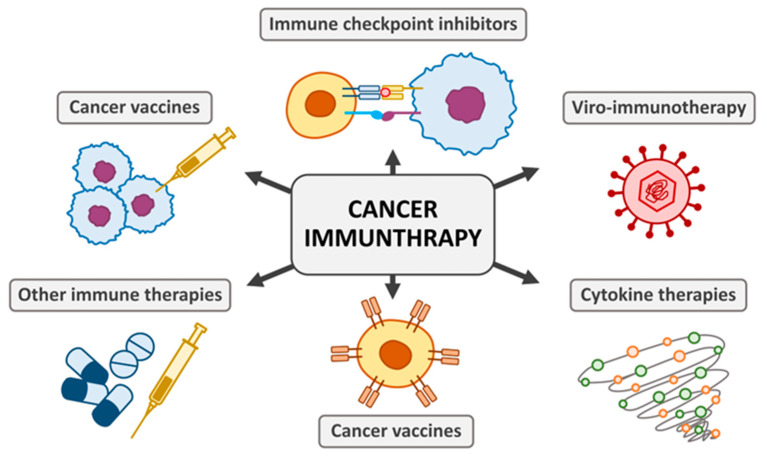
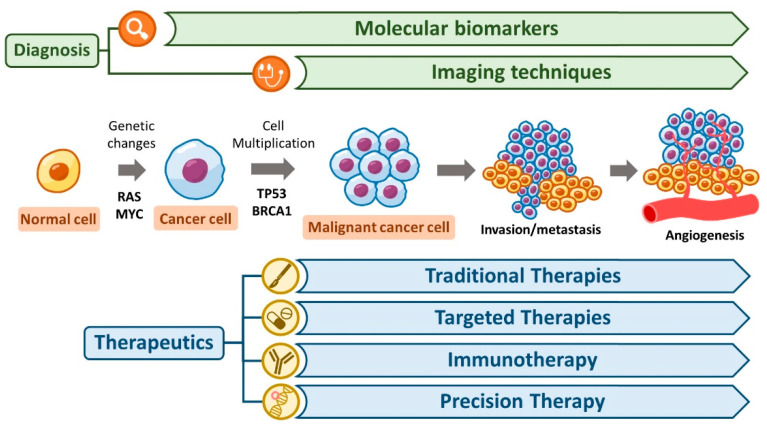
Malignant tumors remain one of the most significant global health challenges and contribute to high mortality rates across various cancer types. The complex nature of these tumors requires multifaceted diagnostic and therapeutic approaches. This review explores current advancements in diagnostic methods, including molecular imaging, biomarkers, and liquid biopsies. It also delves into the evolution of therapeutic strategies, including surgery, chemotherapy, radiation therapy, and novel targeted therapies such as immunotherapy and gene therapy. Although significant progress has been made in the understanding of cancer biology, the future of oncology lies in the integration of precision medicine, improved diagnostic tools, and personalized therapeutic approaches that address tumor heterogeneity. This review aims to provide a comprehensive overview of the current state of cancer diagnostics and treatments while highlighting emerging trends and challenges that lie ahead.
恶性肿瘤仍然是全球最重大的健康挑战之一,导致各种癌症类型的死亡率居高不下。这些肿瘤的复杂性需要多方面的诊断和治疗方法。本综述探讨了诊断方法的当前进展,包括分子成像、生物标志物和液体活检。它还深入研究了治疗策略的演变,包括手术、化疗、放疗以及免疫疗法和基因疗法等新型靶向疗法。尽管在癌症生物学的理解方面已经取得了重大进展,但肿瘤学的未来在于精准医学、改进的诊断工具以及应对肿瘤异质性的个性化治疗方法的整合。本综述旨在全面概述癌症诊断和治疗的现状,同时突出未来的新兴趋势和挑战。