1University of Minnesota Medical School, Minneapolis, MN.
2Institute for Aging Research, Albert Einstein College of Medicine, Bronx, NY.
Diabetes Care. 2023 Jul 1;46(7):1432-1442. doi: 10.2337/dc22-2539.
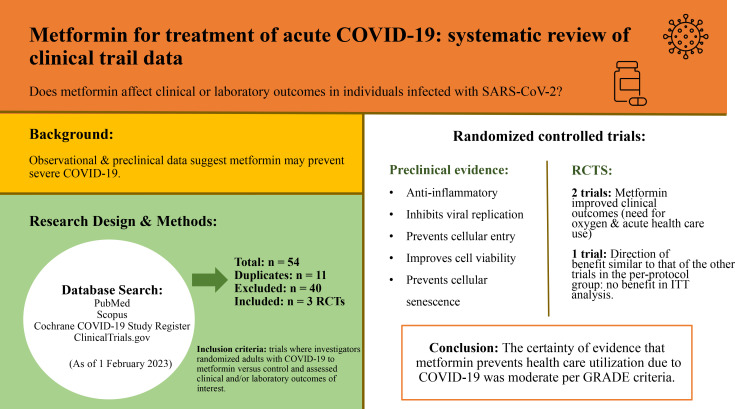
Observational and preclinical data suggest metformin may prevent severe coronavirus disease 2019 (COVID-19) outcomes.
We conducted a systematic review of randomized, placebo-controlled clinical trials of metformin treatment for COVID-19 to determine whether metformin affects clinical or laboratory outcomes in individuals infected with severe acute respiratory syndrome coronavirus 2 (SARS-CoV-2) and present a structured summary of preclinical data.
Two independent reviewers searched PubMed, Scopus, Cochrane COVID-19 Study Register, and ClinicalTrials.gov on 1 February 2023 with no date restrictions for trials where investigators randomized adults with COVID-19 to metformin versus control and assessed clinical and/or laboratory outcomes of interest. The Cochrane Risk of Bias 2 tool was used to assess bias.
Two reviewers extracted data pertaining to prespecified outcomes of each interest from each included trial.
The synthesis plan was developed a priori and was guided by Synthesis Without Meta-analysis (SWiM) guidelines. Summary tables and narrative synthesis were used (PROSPERO, 2022, CRD42022349896). Three randomized trials met inclusion criteria. In two of the trials investigators found that metformin improved clinical outcomes (prevented need for oxygen and prevented need for acute health care use), and in the third trial a larger portion of adults with diabetes were enrolled but results did show a direction of benefit similar to that of the other trials in the per-protocol group. In the largest trial, subjects were enrolled during the delta and omicron waves and vaccinated individuals were included. The certainty of evidence that metformin prevents health care use due to COVID-19 was moderate per Grading of Recommendations Assessment, Development and Evaluation (GRADE) criteria. Many preclinical studies have shown metformin to be effective against SARS-CoV-2.
Limitations include inclusion of only three trials and heterogeneity between trials.
Future trials will help define the role of metformin in COVID-19 treatment guidelines.
观察性和临床前数据表明,二甲双胍可能预防严重的 2019 年冠状病毒病(COVID-19)结局。
我们对二甲双胍治疗 COVID-19 的随机、安慰剂对照临床试验进行了系统评价,以确定二甲双胍是否会影响感染严重急性呼吸综合征冠状病毒 2(SARS-CoV-2)的个体的临床或实验室结局,并提供临床前数据的结构化总结。
两名独立审查员于 2023 年 2 月 1 日在 PubMed、Scopus、Cochrane COVID-19 研究注册中心和 ClinicalTrials.gov 上进行了无日期限制的检索,检索内容为研究人员将 COVID-19 成人随机分为二甲双胍组与对照组,并评估了感兴趣的临床和/或实验室结局的试验。使用 Cochrane 偏倚风险 2 工具评估偏倚。
两名审查员从每个纳入的试验中提取与每个感兴趣的预先指定结局相关的数据。
综合计划是事先制定的,并由无荟萃分析综合(SWiM)指南指导。使用摘要表和叙述性综合(PROSPERO,2022,CRD42022349896)。三项随机试验符合纳入标准。在两项试验中,研究人员发现二甲双胍改善了临床结局(预防了对氧气的需求和预防了对急性医疗保健的需求),而在第三项试验中,更多的糖尿病成人被纳入,但结果并未显示出与其他试验类似的受益方向在符合方案组中。在最大的试验中,受试者在 delta 和 omicron 波期间被招募,并且包括接种疫苗的个体。根据推荐评估、制定与评价(GRADE)标准,二甲双胍预防 COVID-19 导致的医疗保健使用的证据确定性为中等。许多临床前研究表明二甲双胍对 SARS-CoV-2 有效。
局限性包括仅纳入三项试验和试验之间的异质性。
未来的试验将有助于确定二甲双胍在 COVID-19 治疗指南中的作用。