Department of Immunology, School of Medicine, Isfahan University of Medical Sciences, Isfahan, Iran.
Cell Therapy and Hematopoietic Stem Cell Transplantation Research Center, Research Institute for Oncology, Hematology and Cell Therapy, Tehran University of Medical Sciences, Tehran, Iran.
BMC Immunol. 2023 Jun 20;24(1):10. doi: 10.1186/s12865-023-00548-1.
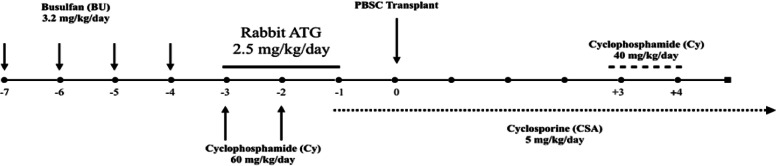
KIR/HLA mismatch in hematopoietic stem cell transplantation (HSCT), particularly in patients with acute myeloid leukemia (AML), was related to decreased recurrence rates, improved engraftment, and a reduction in graft-versus-host disease, according to recent research (GVHD). Uncertainty exists about the impact of KIR/HLA mismatch on haploidentical-HSCTs treated with post-transplant cyclophosphamide (PTCy). We attempted to analyze the effects of KIR/HLA mismatch on clinical outcomes on transplant outcomes using the cohort of 54 AML patients who received a haplo-HSCT with PTCy.
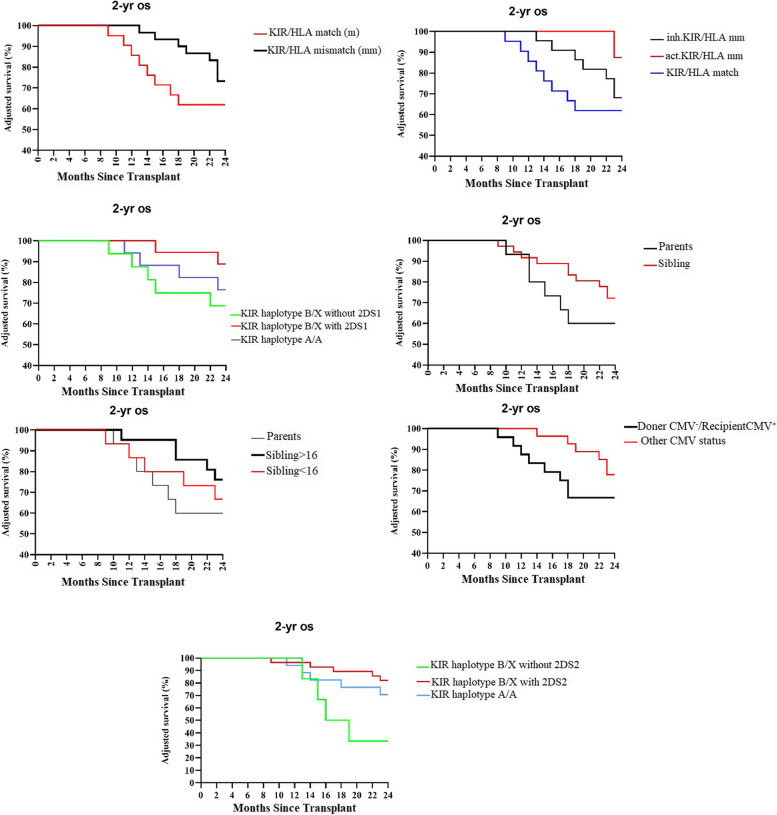
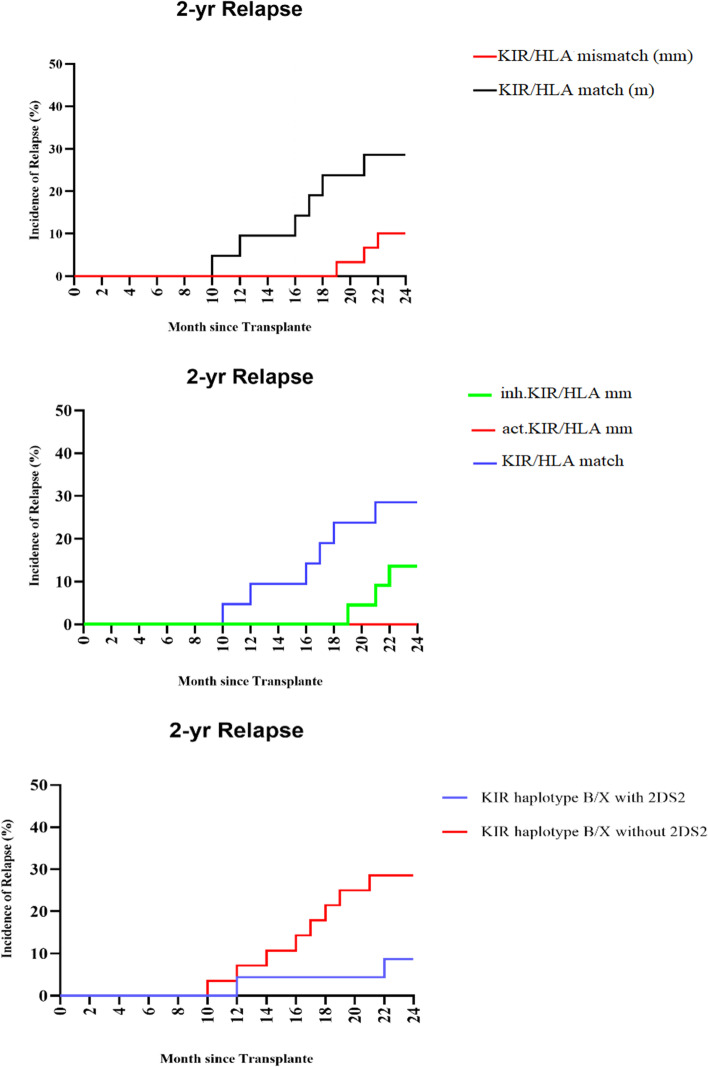
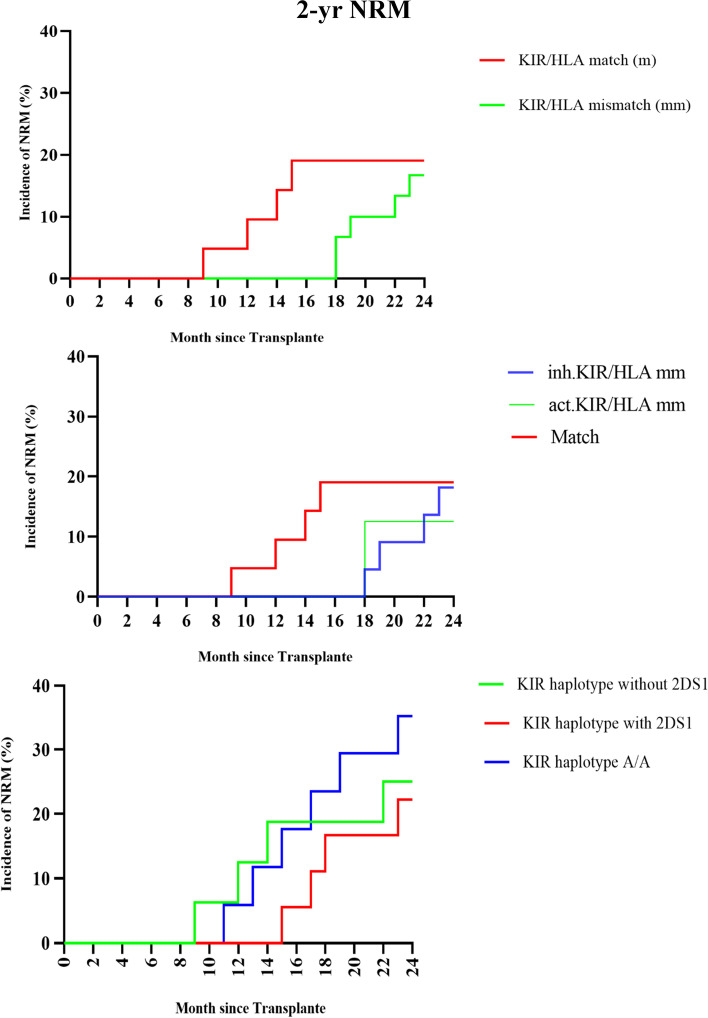
In contrast to KIR/HLA match, our findings showed that donor KIR/HLA mismatch was substantially associated with superior OS (HR, 2.92; (P = 0.04)). Moreover, donor KIR/HLA mismatch (KIR2DS1/C2 and KIR2DS2/C1 mismatch versus KIR2DL1/C2 mm, KIR2DL2/3/C1 mm and KIR3DL1/Bw4 mm) was correlated with the improvements in OS (HR, 0.74; P = 0.085) and activating. KIR/HLA mismatch versus KIR/HLA match was significantly correlated with improvements in OS (HR, .46; P = 0.03) and inhibitory. KIR/HLA mismatch versus KIR/HLA match was enhancement in the OS (HR, .93; P = 0.06). Despite a higher rate of aGvHD (grade I-IV) in the patients with KIR/HLA mismatch compared to KIR/HLA matched (57% vs. 33% (p = 0.04). However, the KIR/HLA mismatch group saw a decreased relapse rate (3.2% vs. 23%, p = 0.04).
This analysis shows the significance of KIR/HLA Incompatibility, other clinical variables like CMV, the relationship between donor/recipient and donor age, and the relationship between donor/recipient and donor age in the haplo-donor selection process. It also suggests that KIR and HLA mismatching between donor and recipient could be routinely performed for haplo-donor selection and may improve clinical outcomes after haplo-HSCTs with PTCy.
根据最近的研究(GVHD),造血干细胞移植(HSCT)中 KIR/HLA 不匹配,特别是在急性髓系白血病(AML)患者中,与降低复发率、改善植入和减少移植物抗宿主病(GVHD)有关。在接受移植后环磷酰胺(PTCy)治疗的半相合-HSCT 中,KIR/HLA 不匹配对移植结果的影响尚不确定。我们试图通过对 54 例接受 PTCy 半相合-HSCT 的 AML 患者的队列进行分析,来评估 KIR/HLA 不匹配对临床结局的影响。
与 KIR/HLA 匹配相比,我们的研究结果表明,供者 KIR/HLA 不匹配与更好的总生存(OS)显著相关(HR,2.92;(P=0.04))。此外,供者 KIR/HLA 不匹配(KIR2DS1/C2 和 KIR2DS2/C1 不匹配与 KIR2DL1/C2、KIR2DL2/3/C1 和 KIR3DL1/Bw4 不匹配)与 OS 的改善相关(HR,0.74;P=0.085)和激活。与 KIR/HLA 匹配相比,KIR/HLA 不匹配与 OS 的改善显著相关(HR,0.46;P=0.03)和抑制。KIR/HLA 不匹配与 OS 的改善显著相关(HR,0.93;P=0.06)。尽管与 KIR/HLA 匹配的患者相比,KIR/HLA 不匹配的患者发生更严重的移植物抗宿主病(aGvHD)(I-IV 级)的比例更高(57% vs. 33%(p=0.04)。然而,KIR/HLA 不匹配组的复发率较低(3.2% vs. 23%,p=0.04)。
这项分析表明,在半相合供者选择过程中,KIR/HLA 不相容性、其他临床变量(如 CMV)、供者/受者之间的关系以及供者/受者之间的关系、供者年龄等因素对临床结局有重要影响。此外,供受者之间的 KIR 和 HLA 不匹配可以常规用于半相合供者选择,并可能改善接受 PTCy 的半相合 HSCT 后的临床结局。