Nam Jiung, Schirmer Amelia U, Loh Chelsea, Drewry David H, Macias Everardo
Department of Pathology, Duke University School of Medicine, Durham, NC 27710, USA.
Structural Genomics Consortium and Division of Chemical Biology and Medicinal Chemistry, Eshelman School of Pharmacy, University of North Carolina at Chapel Hill, Chapel Hill, NC 27599, USA.
Cancers (Basel). 2023 May 18;15(10):2817. doi: 10.3390/cancers15102817.
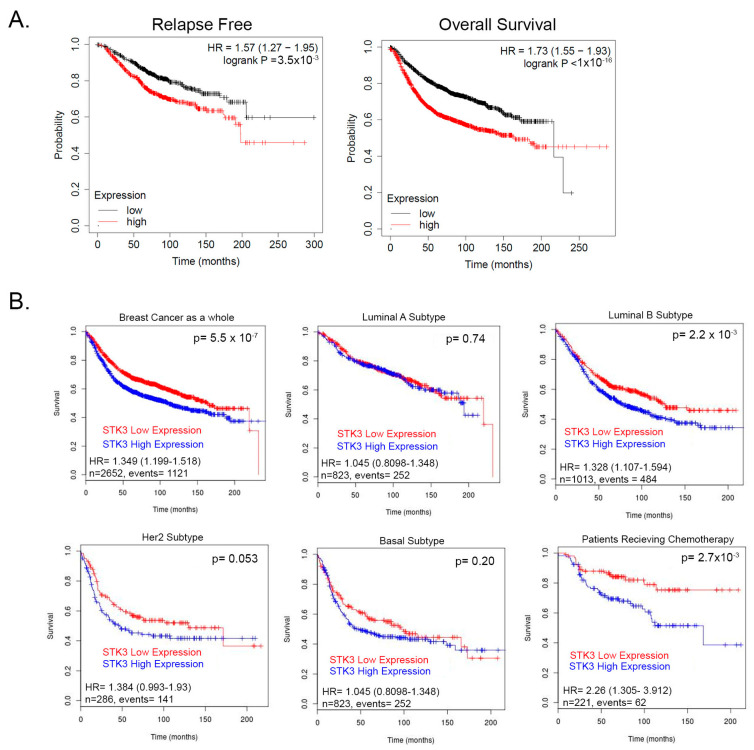
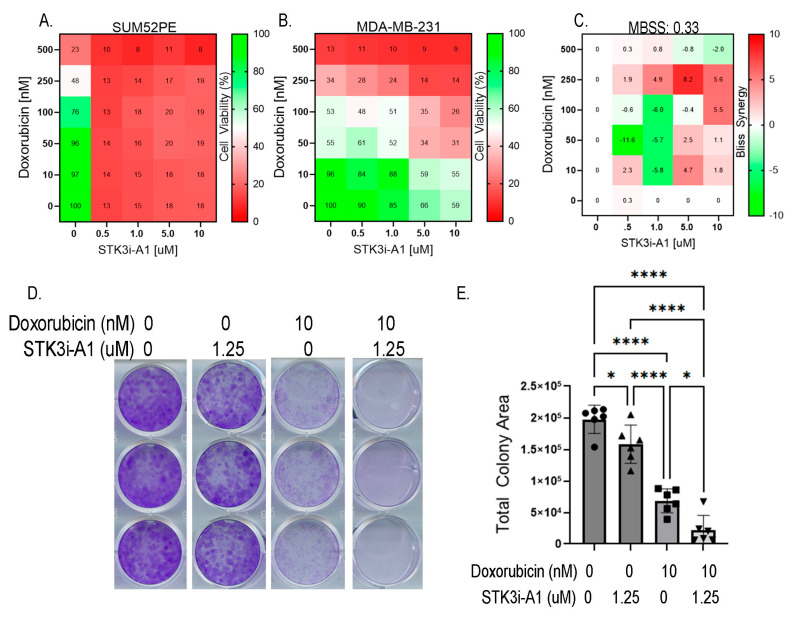
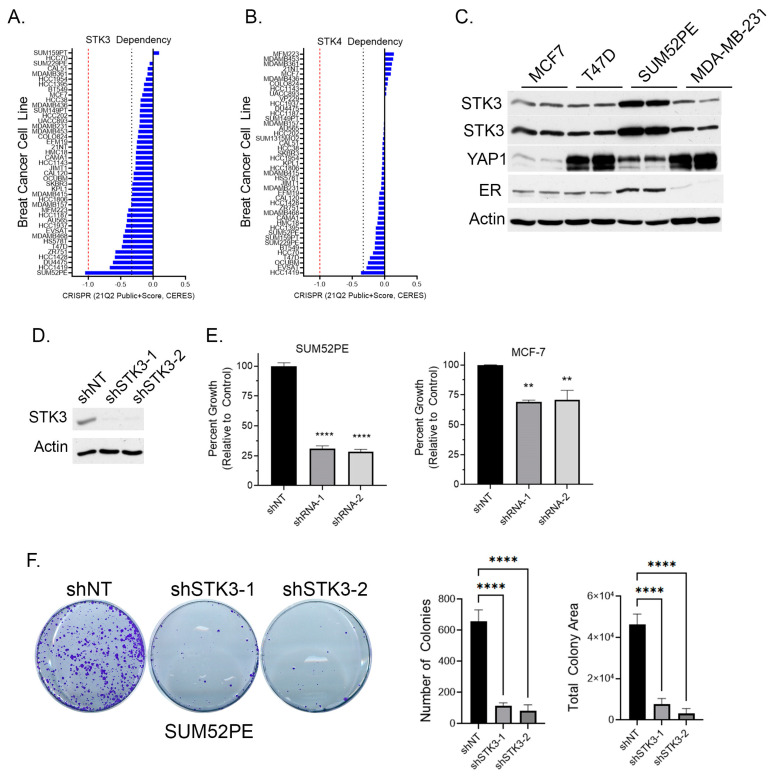
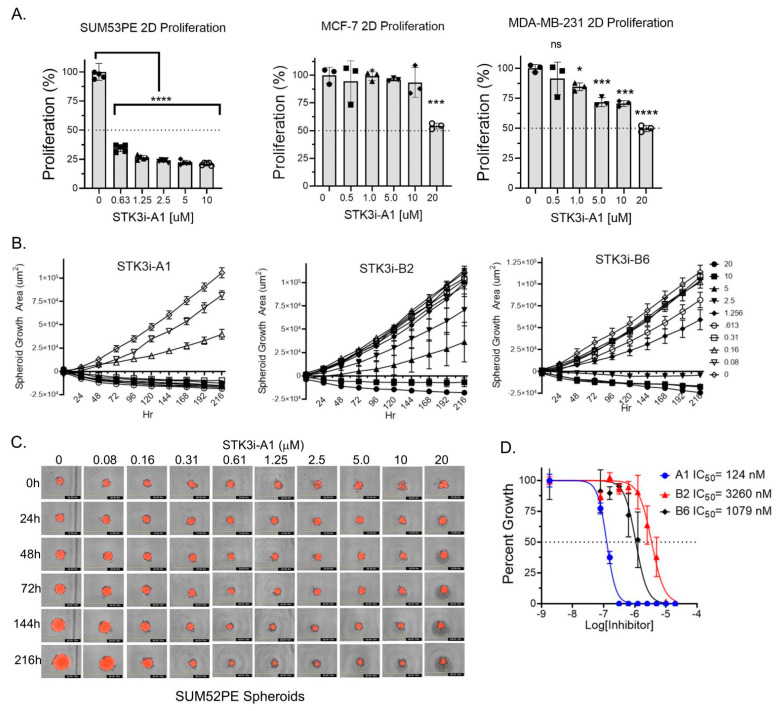
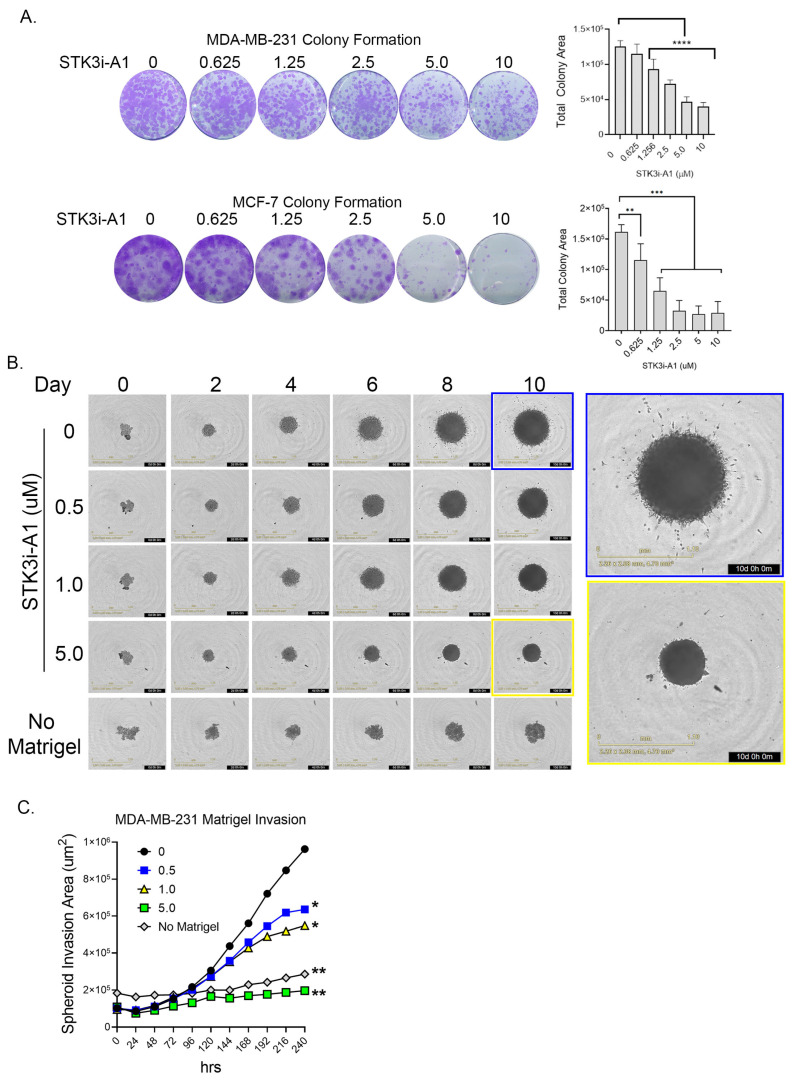
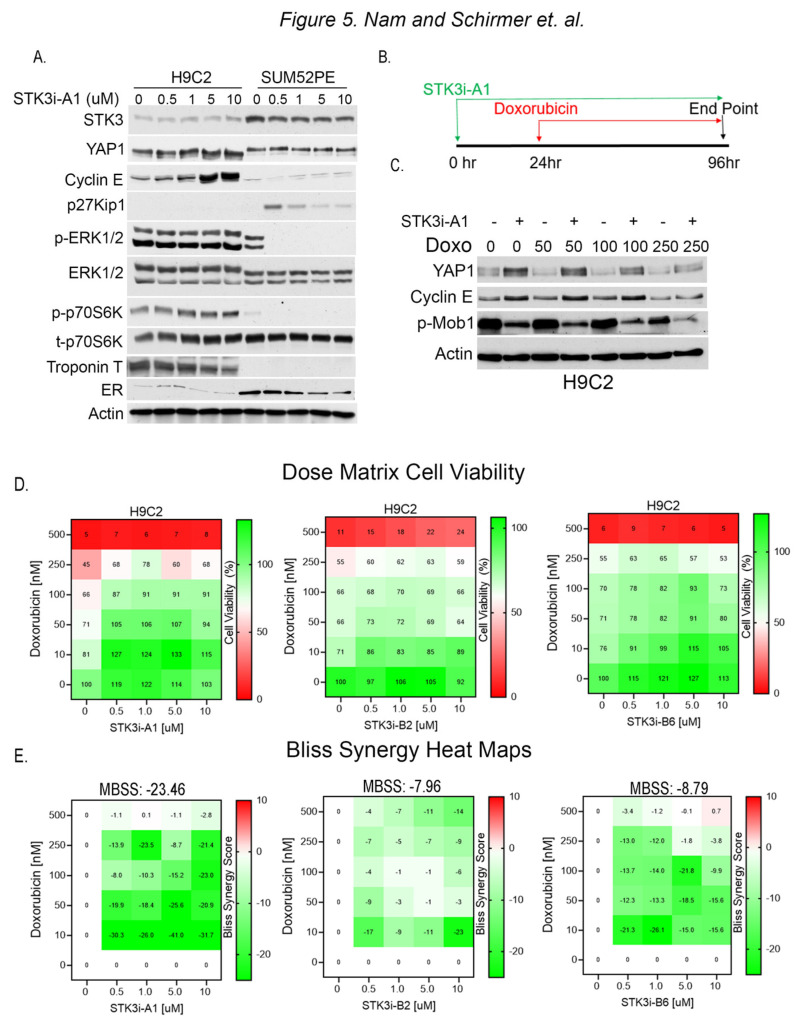
Breast cancer (BCa) is the most prevalent type of cancer in women. Several therapies used in the treatment of breast cancer are associated with clinically important rates of cardiovascular toxicity during or after treatment exposure, including anthracyclines. There is a need for new BCa therapeutics and treatments that mitigate chemotherapy-induced cardiotoxicity in BCa. In this study, we examine the effects of Serine/Threonine Kinase 3 (STK3) inhibition in the context of BCa therapy and cardioprotection from doxorubicin. STK3 (also known as MST2) is a key member of the Hippo Tumor-Suppressor Pathway, which regulates cell growth and proliferation by inhibiting YAP/TAZ co-transcription factors. Canonically, STK3 should restrict BCa growth; however, we observed that STK3 is amplified in BCa and associated with worse patient outcomes, suggesting a noncanonical pro-tumorigenic role. We found BCa cell lines have varying dependence on STK3. SUM52PE cells had the highest expression and dependence on STK3 in genetic and pharmacological assays. MCF-7 and MDA-MB-231 were less sensitive to STK3 targeting in standard proliferation assays, but were STK3 dependent in colony formation and matrigel invasion assays. In contrast, STK3 inhibition mitigated the toxic effects of doxorubicin in H9C2 rat cardiomyocytes by increasing YAP expression. Importantly, STK3 inhibition in BCa cells did not interfere with the therapeutic effects of doxorubicin. Our studies highlight STK3 is a potential molecular target for BCa with dual therapeutic effects: suppression of BCa growth and progression, and chemoprotection in cardiomyocytes.
乳腺癌(BCa)是女性中最常见的癌症类型。用于治疗乳腺癌的几种疗法在治疗期间或治疗暴露后与临床上重要的心血管毒性发生率相关,包括蒽环类药物。需要新的乳腺癌治疗方法和治疗手段来减轻乳腺癌化疗引起的心脏毒性。在本研究中,我们研究了丝氨酸/苏氨酸激酶3(STK3)抑制在乳腺癌治疗和对阿霉素心脏保护方面的作用。STK3(也称为MST2)是Hippo肿瘤抑制途径的关键成员,该途径通过抑制YAP/TAZ共转录因子来调节细胞生长和增殖。正常情况下,STK3应该限制乳腺癌的生长;然而,我们观察到STK3在乳腺癌中扩增,并且与更差的患者预后相关,这表明其具有非经典的促肿瘤作用。我们发现乳腺癌细胞系对STK3的依赖性各不相同。在基因和药理学试验中,SUM52PE细胞对STK3的表达和依赖性最高。在标准增殖试验中,MCF-7和MDA-MB-231对靶向STK3的敏感性较低,但在集落形成和基质胶侵袭试验中依赖于STK3。相反,STK3抑制通过增加YAP表达减轻了阿霉素对H9C2大鼠心肌细胞的毒性作用。重要的是,在乳腺癌细胞中抑制STK3并不干扰阿霉素的治疗效果。我们的研究强调STK3是乳腺癌的一个潜在分子靶点,具有双重治疗作用:抑制乳腺癌的生长和进展,以及对心肌细胞的化学保护作用。