Department of Mechanical, Electronics and Chemical Engineering, Faculty of Technology, Art and Design, OsloMet-Oslo Metropolitan University, Oslo, Norway.
Department of Research, Innovation and Education, Oslo University Hospital, Oslo, Norway.
Acta Neuropathol. 2023 Aug;146(2):227-244. doi: 10.1007/s00401-023-02597-7. Epub 2023 Jun 22.
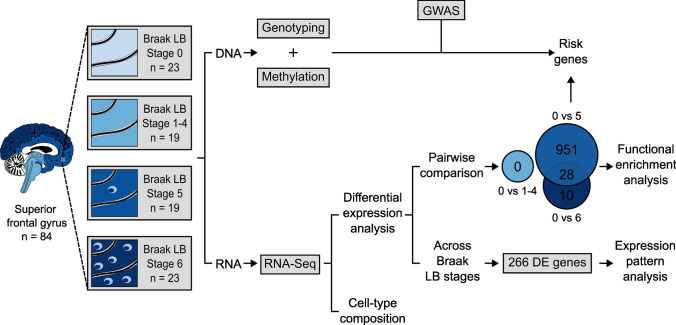
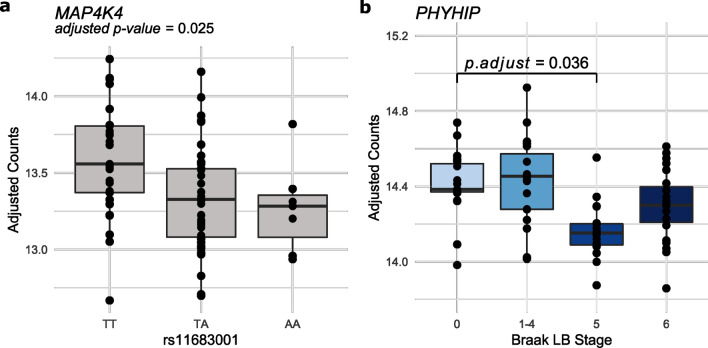
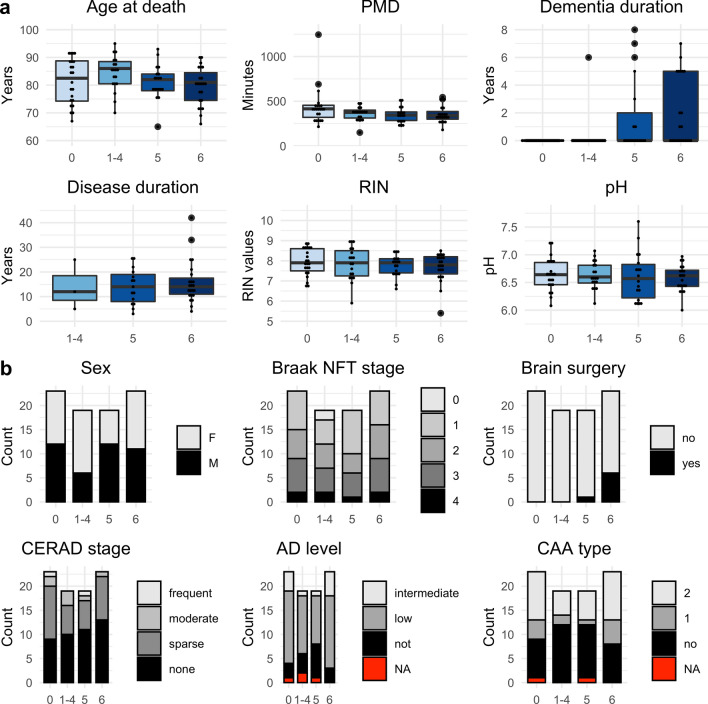
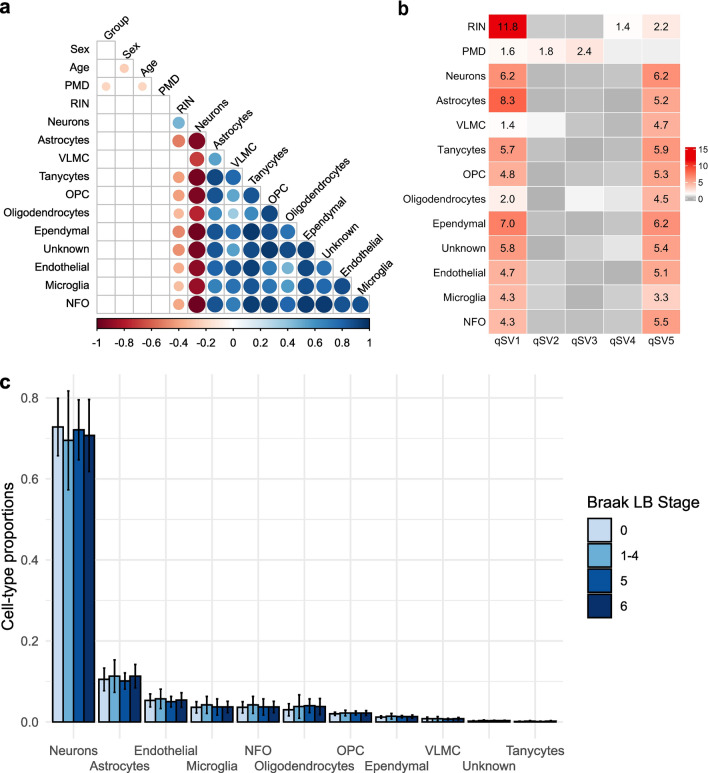
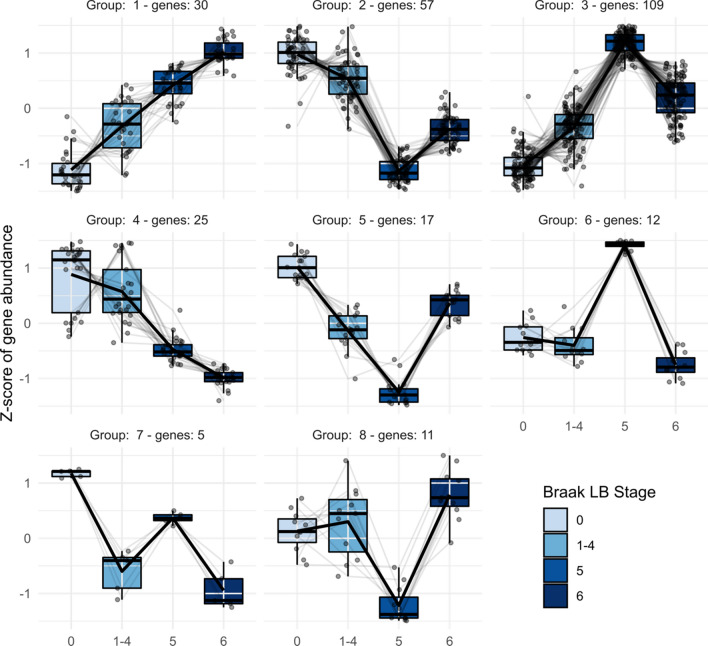
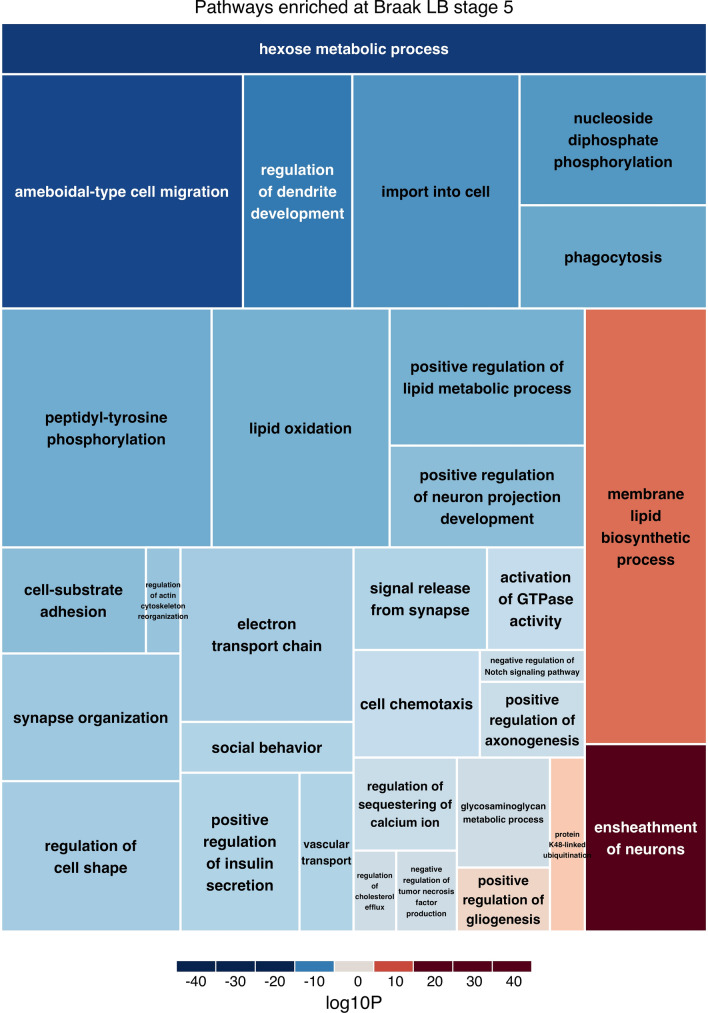
Parkinson´s disease (PD) is a progressive neurodegenerative disorder characterized by both motor and non-motor symptoms. Aggravation of symptoms is mirrored by accumulation of protein aggregates mainly composed by alpha-synuclein in different brain regions, called Lewy bodies (LB). Previous studies have identified several molecular mechanisms as autophagy and inflammation playing a role in PD pathogenesis. Increased insights into mechanisms involved in early disease stages and driving the progression of the LB pathology are required for the development of disease-modifying strategies. Here, we aimed to elucidate disease stage-specific transcriptomic changes in brain tissue of well-characterized PD and control donors. We collected frontal cortex samples from 84 donors and sequenced both the coding and non-coding RNAs. We categorized our samples into groups based on their degree of LB pathology aiming to recapitulate a central aspect of disease progression. Using an analytical pipeline that corrected for sex, age at death, RNA quality, cell composition and unknown sources of variation, we found major disease stage-specific transcriptomic changes. Gene expression changes were most pronounced in donors at the disease stage when microscopic LB changes first occur in the sampled brain region. Additionally, we identified disease stage-specific enrichment of brain specific pathways and immune mechanisms. On the contrary, we showed that mitochondrial mechanisms are enriched throughout the disease course. Our data-driven approach also suggests a role for several poorly characterized lncRNAs in disease development and progression of PD. Finally, by combining genetic and epigenetic information, we highlighted two genes (MAP4K4 and PHYHIP) as candidate genes for future functional studies. Together our results indicate that transcriptomic dysregulation and associated functional changes are highly disease stage-specific, which has major implications for the study of neurodegenerative disorders.
帕金森病(PD)是一种进行性神经退行性疾病,其特征是既有运动症状,也有非运动症状。症状的加重反映了不同脑区中主要由α-突触核蛋白组成的蛋白聚集体的积累,这些聚集体被称为路易体(LB)。先前的研究已经确定了几种分子机制,如自噬和炎症在 PD 的发病机制中发挥作用。为了开发疾病修饰策略,需要深入了解早期疾病阶段涉及的机制,并推动 LB 病理学的进展。在这里,我们旨在阐明在经过充分特征描述的 PD 和对照供体的脑组织中与疾病阶段相关的转录组变化。我们从 84 名供体中收集额皮质样本,并对编码和非编码 RNA 进行测序。我们根据 LB 病理学的程度将我们的样本分类,旨在重现疾病进展的一个核心方面。使用一种分析流程,该流程校正了性别、死亡时的年龄、RNA 质量、细胞组成和未知的变异来源,我们发现了主要的与疾病阶段相关的转录组变化。在供体处于疾病阶段时,即 LB 在采样脑区中首次发生微观变化时,基因表达变化最为明显。此外,我们还确定了与大脑特异性途径和免疫机制相关的疾病阶段特异性富集。相反,我们表明,线粒体机制在整个疾病过程中都得到了富集。我们的数据驱动方法还表明,几个尚未充分描述的 lncRNA 在 PD 的发病和进展中发挥作用。最后,通过结合遗传和表观遗传信息,我们强调了两个候选基因(MAP4K4 和 PHYHIP)作为未来功能研究的候选基因。总的来说,我们的研究结果表明,转录组失调及其相关的功能变化与疾病阶段高度相关,这对神经退行性疾病的研究具有重要意义。