Imrie Fergus, Cebere Bogdan, McKinney Eoin F, van der Schaar Mihaela
Department of Electrical and Computer Engineering, University of California, Los Angeles, California, United States of America.
Department of Applied Mathematics and Theoretical Physics, University of Cambridge, Cambridge, United Kingdom.
PLOS Digit Health. 2023 Jun 22;2(6):e0000276. doi: 10.1371/journal.pdig.0000276. eCollection 2023 Jun.
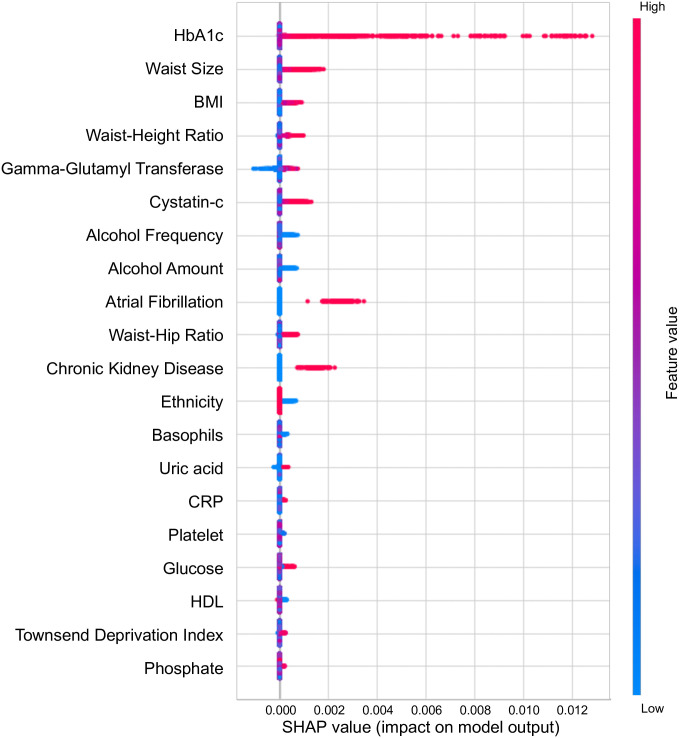
Diagnostic and prognostic models are increasingly important in medicine and inform many clinical decisions. Recently, machine learning approaches have shown improvement over conventional modeling techniques by better capturing complex interactions between patient covariates in a data-driven manner. However, the use of machine learning introduces technical and practical challenges that have thus far restricted widespread adoption of such techniques in clinical settings. To address these challenges and empower healthcare professionals, we present an open-source machine learning framework, AutoPrognosis 2.0, to facilitate the development of diagnostic and prognostic models. AutoPrognosis leverages state-of-the-art advances in automated machine learning to develop optimized machine learning pipelines, incorporates model explainability tools, and enables deployment of clinical demonstrators, without requiring significant technical expertise. To demonstrate AutoPrognosis 2.0, we provide an illustrative application where we construct a prognostic risk score for diabetes using the UK Biobank, a prospective study of 502,467 individuals. The models produced by our automated framework achieve greater discrimination for diabetes than expert clinical risk scores. We have implemented our risk score as a web-based decision support tool, which can be publicly accessed by patients and clinicians. By open-sourcing our framework as a tool for the community, we aim to provide clinicians and other medical practitioners with an accessible resource to develop new risk scores, personalized diagnostics, and prognostics using machine learning techniques. Software: https://github.com/vanderschaarlab/AutoPrognosis.
诊断和预后模型在医学中日益重要,并为许多临床决策提供依据。最近,机器学习方法通过以数据驱动的方式更好地捕捉患者协变量之间的复杂相互作用,已显示出优于传统建模技术的性能。然而,机器学习的应用带来了技术和实际挑战,这些挑战迄今为止限制了此类技术在临床环境中的广泛应用。为应对这些挑战并赋能医疗保健专业人员,我们提出了一个开源机器学习框架AutoPrognosis 2.0,以促进诊断和预后模型的开发。AutoPrognosis利用自动化机器学习的最新进展来开发优化的机器学习管道,纳入模型可解释性工具,并能够部署临床示范模型,而无需大量技术专业知识。为展示AutoPrognosis 2.0,我们提供了一个示例应用,即使用英国生物银行(一项对502,467名个体的前瞻性研究)构建糖尿病的预后风险评分。我们的自动化框架生成的模型对糖尿病的区分能力优于专家临床风险评分。我们已将我们的风险评分实现为基于网络的决策支持工具,患者和临床医生可以公开访问该工具。通过将我们的框架作为社区工具开源,我们旨在为临床医生和其他医学从业者提供一个可获取的资源,以便使用机器学习技术开发新的风险评分、个性化诊断和预后模型。软件:https://github.com/vanderschaarlab/AutoPrognosis