College of Veterinary Medicine, Seoul National University, Seoul, Republic of Korea.
College of Pharmacy, Gachon University, Incheon, Republic of Korea.
Redox Biol. 2023 Aug;64:102783. doi: 10.1016/j.redox.2023.102783. Epub 2023 Jun 15.
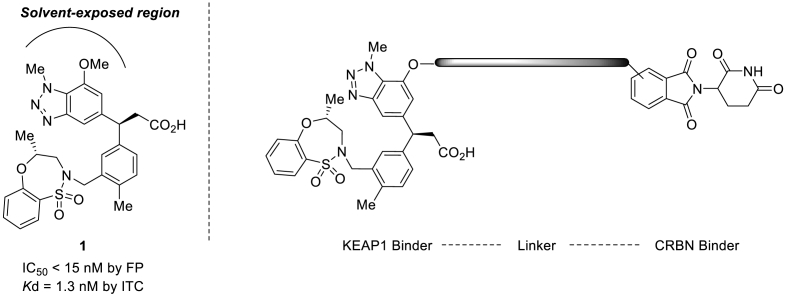
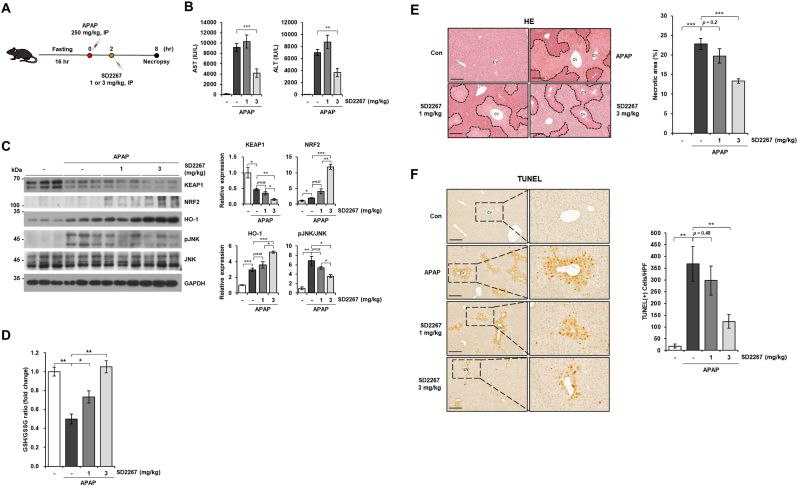
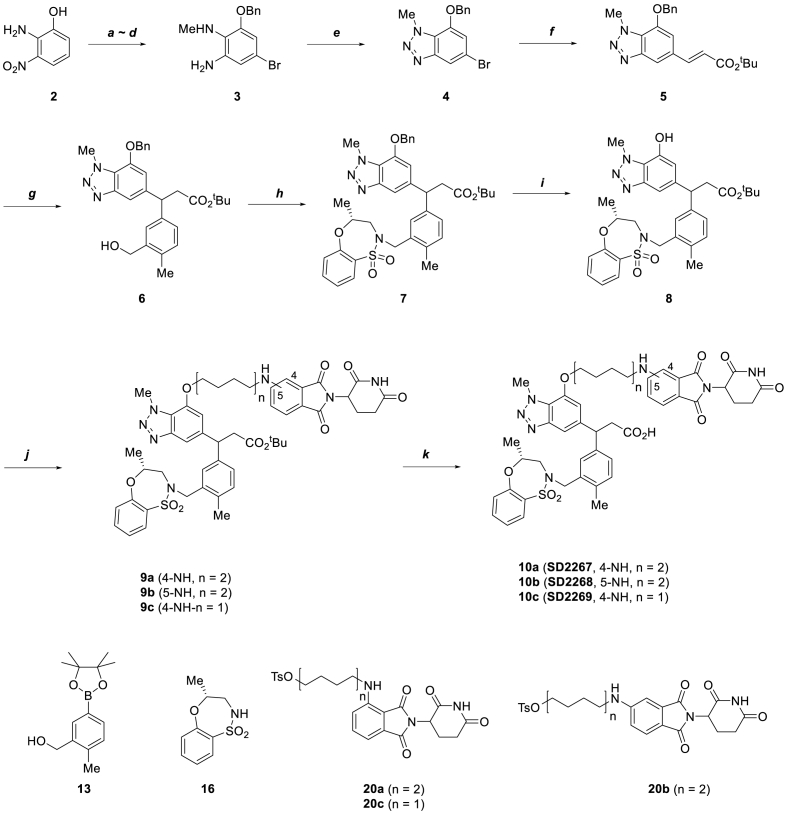
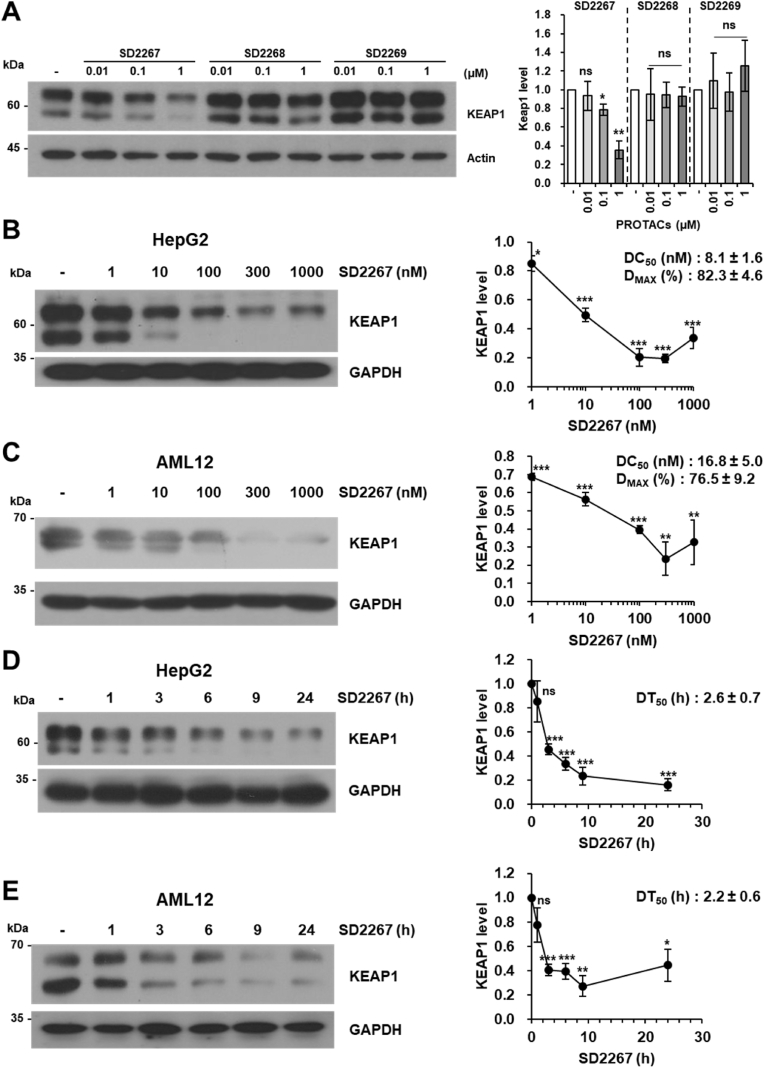
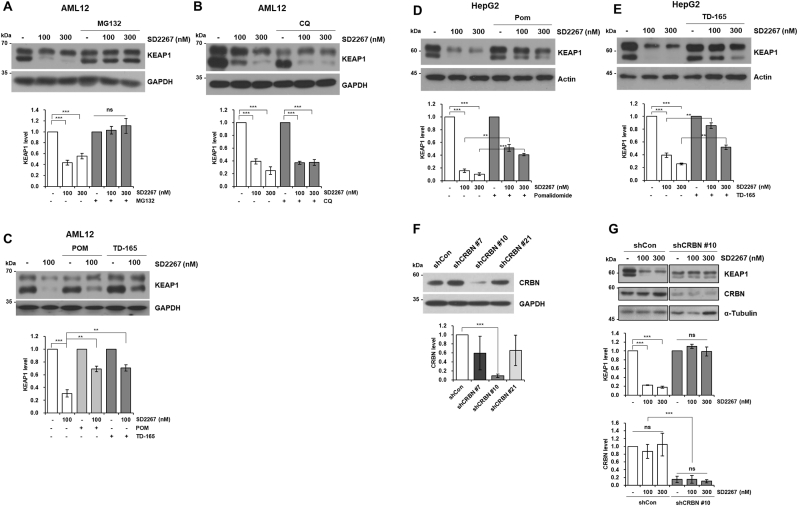
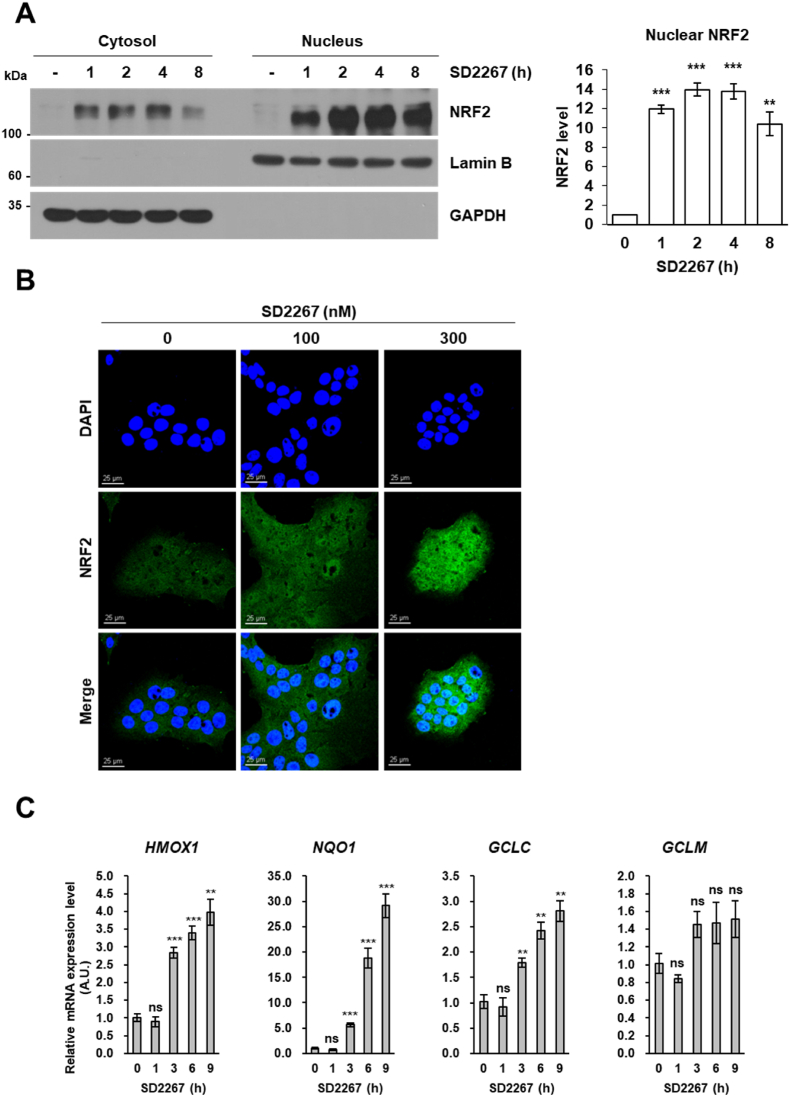
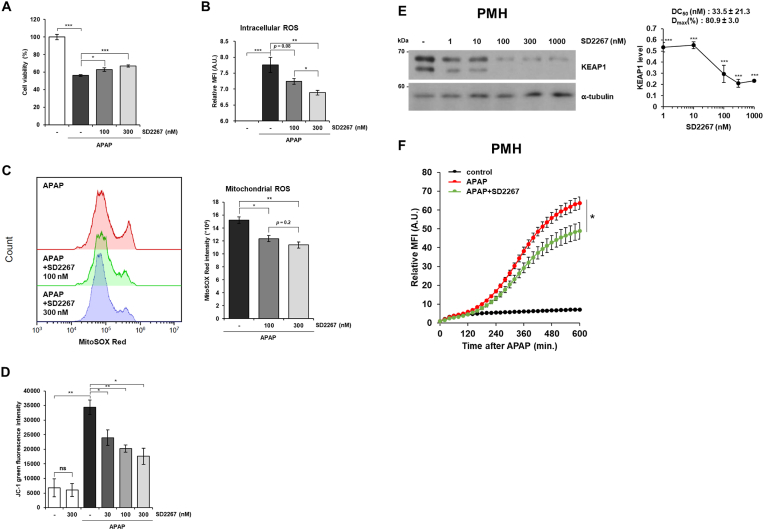
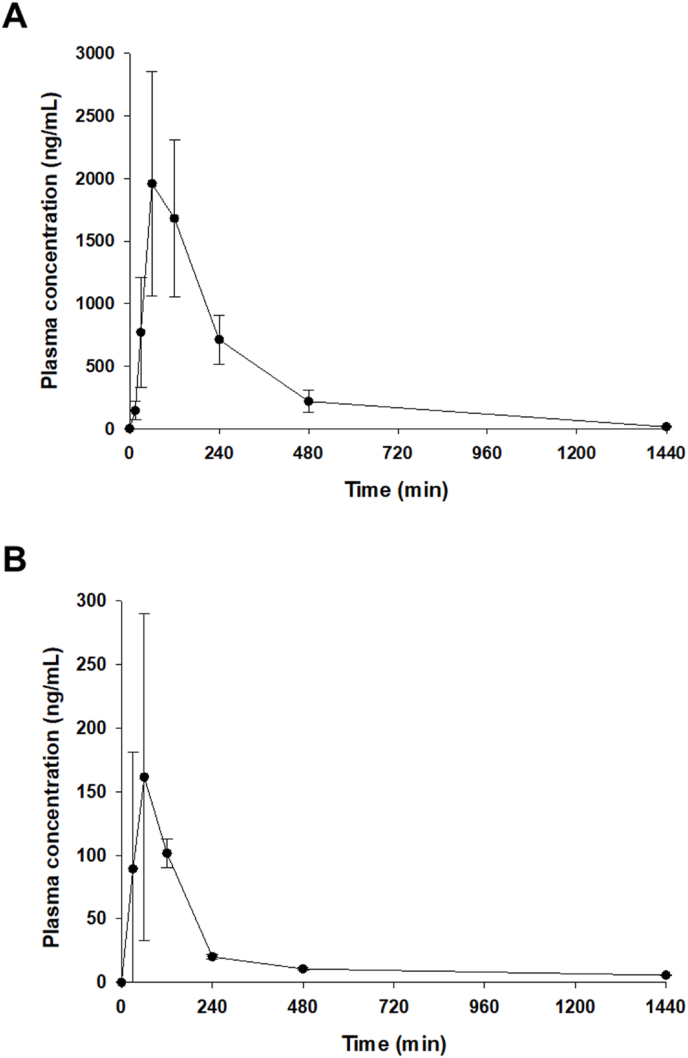
Oxidative stress due to abnormal accumulation of reactive oxygen species (ROS) is an initiator of a large number of human diseases, and thus, the elimination and prevention of excessive ROS are important aspects of preventing the development of such diseases. Nuclear factor erythroid 2-related factor 2 (NRF2) is an essential transcription factor that defends against oxidative stress, and its function is negatively controlled by Kelch-like ECH-associated protein 1 (KEAP1). Therefore, activating NRF2 by inhibiting KEAP1 is viewed as a strategy for combating oxidative stress-related diseases. Here, we generated a cereblon (CRBN)-based proteolysis-targeting chimera (PROTAC), which we named SD2267, that induces the proteasomal degradation of KEAP1 and leads to NRF2 activation. As was intended, SD2267 bound to KEAP1, recruited CRBN, and induced the degradation of KEAP1. Furthermore, the KEAP1 degradation efficacy of SD2267 was diminished by MG132 (a proteasomal degradation inhibitor) but not by chloroquine (an autophagy inhibitor), which suggested that KEAP1 degradation by SD2267 was proteasomal degradation-dependent and autophagy-independent. Following KEAP1 degradation, SD2267 induced the nuclear translocation of NRF2, which led to the expression of NRF2 target genes and attenuated ROS accumulation induced by acetaminophen (APAP) in hepatocytes. Based on in vivo pharmacokinetic study, SD2267 was injected intraperitoneally at 1 or 3 mg/kg in APAP-induced liver injury mouse model. We observed that SD2267 degraded hepatic KEAP1 and attenuated APAP-induced liver damage. Summarizing, we described the synthesis of a KEAP1-targeting PROTAC (SD2267) and its efficacy and mode of action in vitro and in vivo. The results obtained suggest that SD2267 could be used to treat hepatic diseases related to oxidative stress.
由于活性氧(ROS)异常积累引起的氧化应激是许多人类疾病的诱因,因此,消除和预防过多的 ROS 是预防此类疾病发展的重要方面。核因子红细胞 2 相关因子 2(NRF2)是一种重要的转录因子,可抵抗氧化应激,其功能受 Kelch 样 ECH 相关蛋白 1(KEAP1)的负调控。因此,通过抑制 KEAP1 激活 NRF2 被视为对抗与氧化应激相关的疾病的一种策略。在这里,我们生成了一种基于 cereblon(CRBN)的蛋白水解靶向嵌合体(PROTAC),我们将其命名为 SD2267,它可诱导 KEAP1 的蛋白酶体降解并导致 NRF2 激活。正如预期的那样,SD2267 与 KEAP1 结合,募集 CRBN,并诱导 KEAP1 的降解。此外,SD2267 对 KEAP1 的降解效力被 MG132(蛋白酶体降解抑制剂)而不是氯喹(自噬抑制剂)减弱,这表明 SD2267 对 KEAP1 的降解是依赖于蛋白酶体降解且不依赖于自噬的。KEAP1 降解后,SD2267 诱导 NRF2 核转位,导致 NRF2 靶基因的表达,并减轻了乙酰氨基酚(APAP)在肝细胞中诱导的 ROS 积累。基于体内药代动力学研究,SD2267 以 1 或 3mg/kg 的剂量经腹腔注射到 APAP 诱导的肝损伤小鼠模型中。我们观察到 SD2267 降解了肝 KEAP1 并减轻了 APAP 诱导的肝损伤。综上所述,我们描述了一种 KEAP1 靶向 PROTAC(SD2267)的合成及其在体外和体内的功效和作用模式。结果表明,SD2267 可用于治疗与氧化应激相关的肝脏疾病。