Division of Oncology, Lund University, 22185, Lund, Sweden.
Department of Biomedical Sciences, University of Guelph, Guelph, Canada.
Syst Rev. 2023 Jun 22;12(1):103. doi: 10.1186/s13643-023-02252-y.
Cervical cancer is a major global health issue, with 89% of cases occurring in low- and middle-income countries (LMICs). Human papillomavirus (HPV) self-sampling tests have been suggested as an innovative way to improve cervical cancer screening uptake and reduce the burden of disease. The objective of this review was to examine the effect of HPV self-sampling on screening uptake compared to any healthcare provider sampling in LMICs. The secondary objective was to estimate the associated costs of the various screening methods.
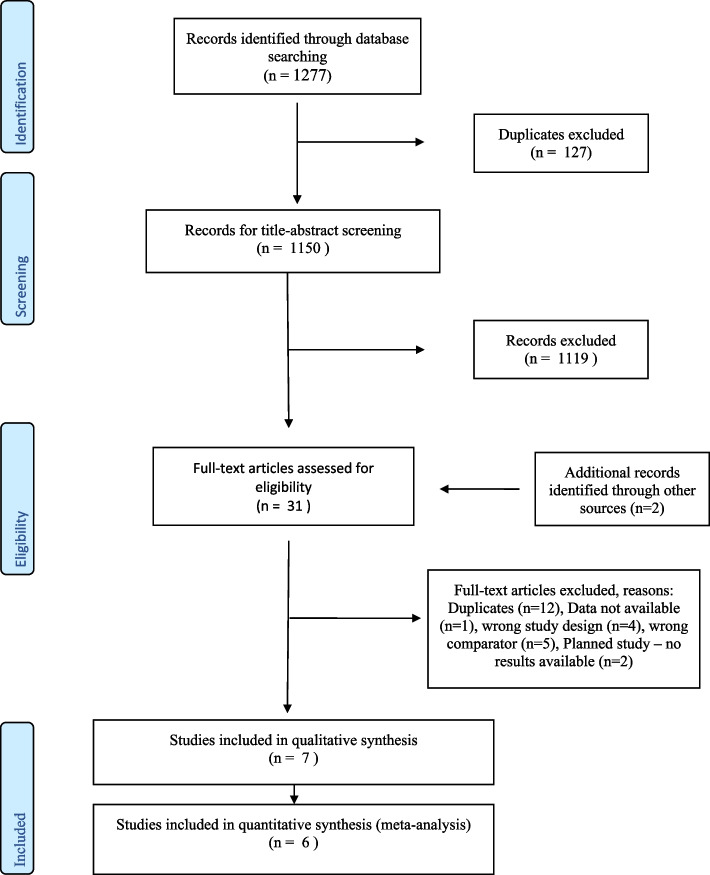
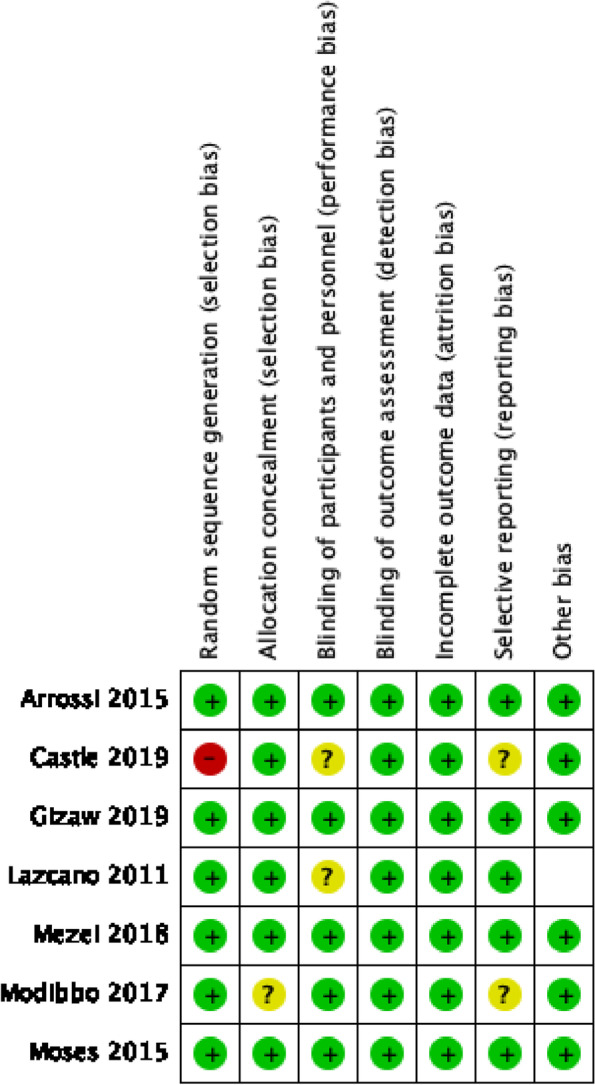
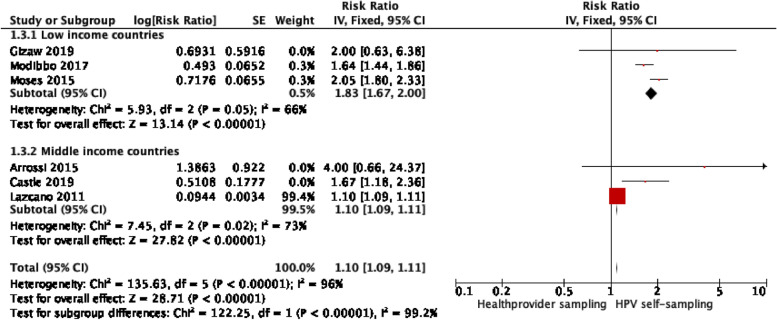
Studies were retrieved from PubMed, Embase, CINAHL, CENTRAL (by Cochrane), Web of Science, and ClinicalTrials.gov up until April 14, 2022, and a total of six trials were included in the review. Meta-analyses were performed mainly using the inverse variance method, by pooling effect estimates of the proportion of women who accepted the screening method offered. Subgroup analyses were done comparing low- and middle-income countries, as well as low- and high-risk bias studies. Heterogeneity of the data was assessed using I. Cost data was collected for analysis from articles and correspondence with authors.
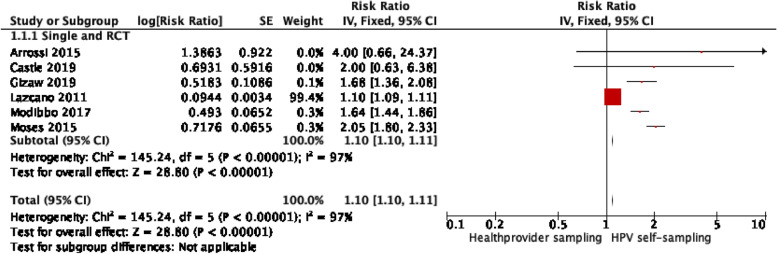
We found a small but significant difference in screening uptake in our primary analysis: RR 1.11 (95% CI: 1.10-1.11; I = 97%; 6 trials; 29,018 participants). Our sensitivity analysis, which excluded one trial that measured screening uptake differently than the other trials, resulted in a clearer effect in screening uptake: RR: 1.82 (95% CI: 1.67-1.99; I = 42%; 5 trials; 9590 participants). Two trials reported costs; thus, it was not possible to make a direct comparison of costs. One found self-sampling more cost-effective than the provider-required visual inspection with acetic acid method, despite the test and running costs being higher for HPV self-sampling.
Our review indicates that self-sampling improves screening uptake, particularly in low-income countries; however, to this date, there remain few trials and associated cost data. We recommend further studies with proper cost data be conducted to guide the incorporation of HPV self-sampling into national cervical cancer screening guidelines in low- and middle-income countries.
PROSPERO CRD42020218504.
宫颈癌是一个重大的全球健康问题,89%的病例发生在低收入和中等收入国家(LMICs)。人乳头瘤病毒(HPV)自我采样检测已被提议作为一种创新方法,以提高宫颈癌筛查的参与度并降低疾病负担。本研究的目的是评估 HPV 自我采样与任何医疗保健提供者采样在 LMICs 中对筛查参与度的影响。次要目的是估计各种筛查方法的相关成本。
研究人员从 PubMed、Embase、CINAHL、CENTRAL(由 Cochrane 提供)、Web of Science 和 ClinicalTrials.gov 检索了截至 2022 年 4 月 14 日的文献,共有 6 项试验纳入了本综述。主要使用逆方差法进行荟萃分析,通过汇总接受提供的筛查方法的女性比例的效应估计值来进行。进行了亚组分析,比较了低收入和中等收入国家,以及低和高风险偏倚的研究。使用 I2 评估数据的异质性。成本数据是从文章中收集的,并与作者进行了通信。
我们的主要分析发现,筛查参与度存在微小但显著的差异:RR 1.11(95%CI:1.10-1.11;I=97%;6 项试验;29018 名参与者)。我们的敏感性分析排除了一项与其他试验测量筛查参与度方式不同的试验,结果显示筛查参与度的效果更加明显:RR:1.82(95%CI:1.67-1.99;I=42%;5 项试验;9590 名参与者)。两项试验报告了成本,因此无法直接比较成本。一项研究发现,自我采样比医疗保健提供者要求的醋酸视觉检查方法更具成本效益,尽管 HPV 自我采样的检测和运行成本更高。
我们的综述表明,自我采样可提高筛查参与度,尤其是在低收入国家;然而,迄今为止,此类试验和相关成本数据仍然较少。我们建议开展进一步的研究,并纳入适当的成本数据,以指导将 HPV 自我采样纳入低收入和中等收入国家的国家宫颈癌筛查指南。
PROSPERO CRD42020218504。