Department of Food Science and Technology, University of California Davis, 1139 Robert Mondavi Institute, Davis, CA, 95616, USA.
Foods for Health Institute, University of California Davis, Davis, CA, USA.
BMC Pediatr. 2023 Jun 24;23(1):320. doi: 10.1186/s12887-023-04132-9.
In May of 2022, parents living in the United States experienced a dramatic infant formula shortage caused by supply chain issues and the recall of several infant formula products over contamination concerns.
An anonymous, electronic, cross-sectional survey was designed to understand infant feeding practices, parental experience and perceived support during the crisis.
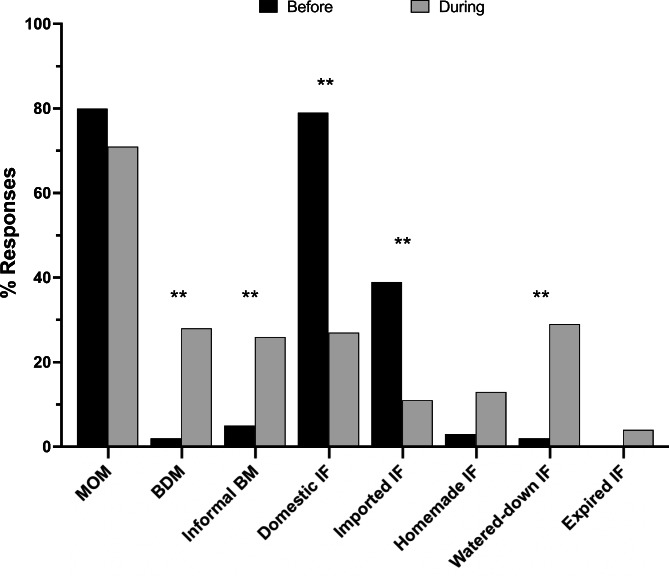
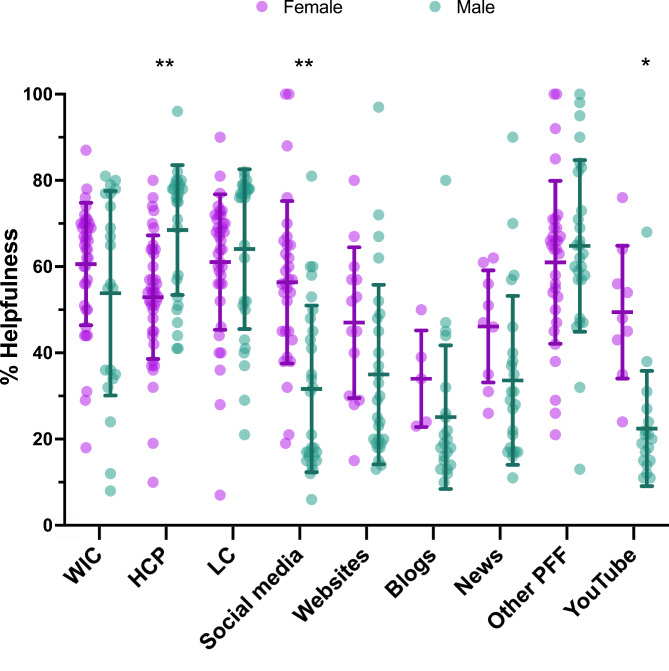
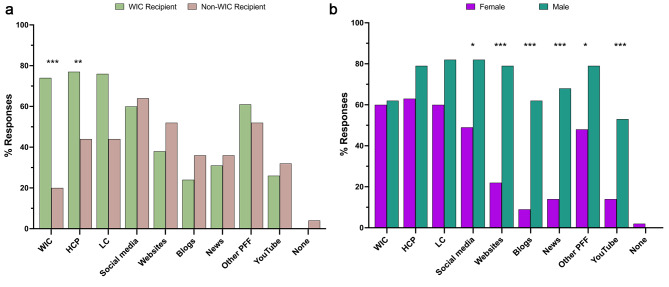
Ninety-nine parents that lived in the U.S. and fulfilled study criteria completed the survey. 66% of respondents were female, and 75% of respondents were recipients of the Special Supplemental Nutrition Program for Women Infant Children (WIC). Parental mean age was 30.0 years, and the mean infant age was 26.8 weeks. The number of individuals that used at least one unsafe infant feeding practice increased from 8% before the infant formula shortage to 48.5% during the shortage (p < 0.001). 79% of parents fed their infants U.S. infant formula brands and 39% of parents fed their infants imported infant formula brands before the shortage which were significantly reduced during the shortage to 27% (p < 0.005) and 11% (p < 0.005), respectively. The percentage of parents that reported infant feeding practices before and during the infant formula shortage significantly increased from 2 to 28% for banked donor milk use (p < 0.005); 5-26% for use of human milk from informal sharing (p < 0.005); and 2-29% for use of watered-down infant formula (p < 0.005). The resources that parents reported as most helpful in navigating the crisis differed by parental sex and WIC recipient status and included other parents, friends, and family; lactation consultants; healthcare providers; and WIC.
Our study found that feeding practices in response to the infant formula shortage may pose health risks to infants including nutrition and food insecurity. These data suggest the need for policy changes within regulatory and the healthcare system to provide families with clinical prenatal and postnatal lactation support, access to pasteurized banked donor milk, and access to more commercially available products.
2022 年 5 月,居住在美国的父母经历了一场严重的婴儿配方奶粉短缺,原因是供应链问题以及数种婴儿配方奶粉因污染问题被召回。
设计了一项匿名、电子、横断面调查,以了解危机期间婴儿喂养习惯、父母的经验和感知支持。
99 名居住在美国且符合研究标准的父母完成了调查。66%的受访者为女性,75%的受访者为妇女、婴儿和儿童特别补充营养计划(WIC)的接受者。父母的平均年龄为 30.0 岁,婴儿的平均年龄为 26.8 周。在婴儿配方奶粉短缺期间,使用至少一种不安全婴儿喂养方式的人数从短缺前的 8%增加到 48.5%(p<0.001)。79%的父母给婴儿喂食美国婴儿配方奶粉品牌,39%的父母给婴儿喂食进口婴儿配方奶粉品牌,在短缺期间,这两个数字分别显著下降至 27%(p<0.005)和 11%(p<0.005)。在婴儿配方奶粉短缺前后,报告婴儿喂养方式的父母比例从 2%显著增加到 28%(使用银行捐赠奶)(p<0.005);从 5%到 26%(使用非正式分享的人乳)(p<0.005);以及从 2%到 29%(使用稀释的婴儿配方奶粉)(p<0.005)。父母报告的在应对婴儿配方奶粉短缺方面最有帮助的资源因父母性别和 WIC 接受者身份而异,包括其他父母、朋友和家人;哺乳顾问;医疗保健提供者;和 WIC。
我们的研究发现,应对婴儿配方奶粉短缺的喂养方式可能会给婴儿带来健康风险,包括营养和粮食不安全。这些数据表明,需要在监管和医疗保健系统内进行政策改革,为家庭提供产前和产后临床哺乳支持、获得巴氏消毒的银行捐赠奶以及更多商业上可获得的产品。