Infection Disease Research Center, KRIBB, Daejeon, South Korea.
Department of Plant Medicine, Chungbuk National University, Cheongju, South Korea.
Microbiol Spectr. 2023 Aug 17;11(4):e0278022. doi: 10.1128/spectrum.02780-22. Epub 2023 Jun 26.
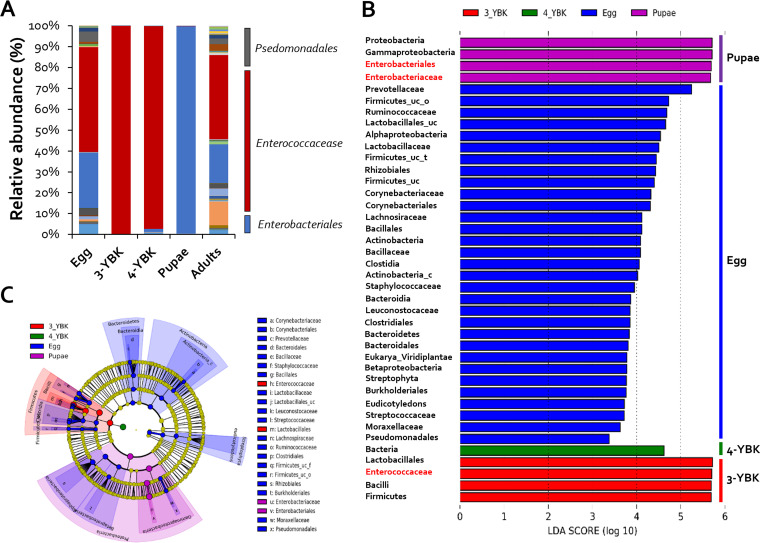
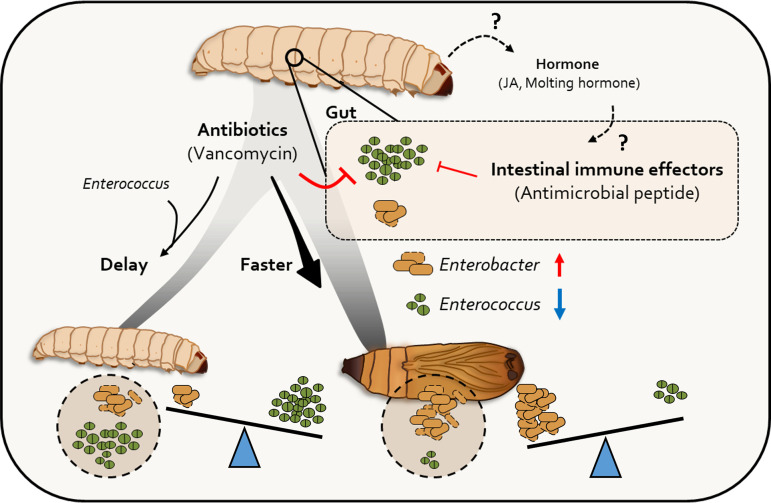
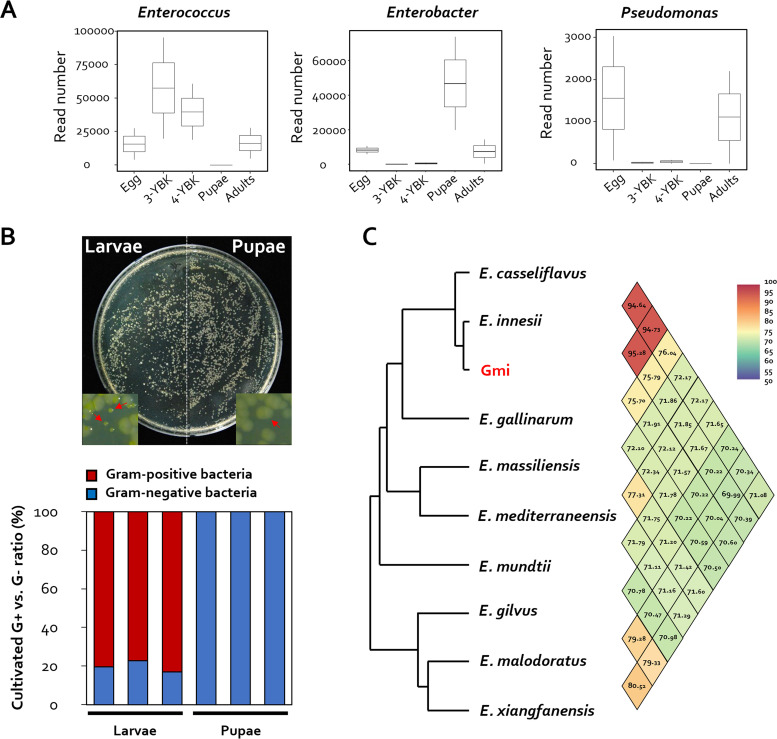
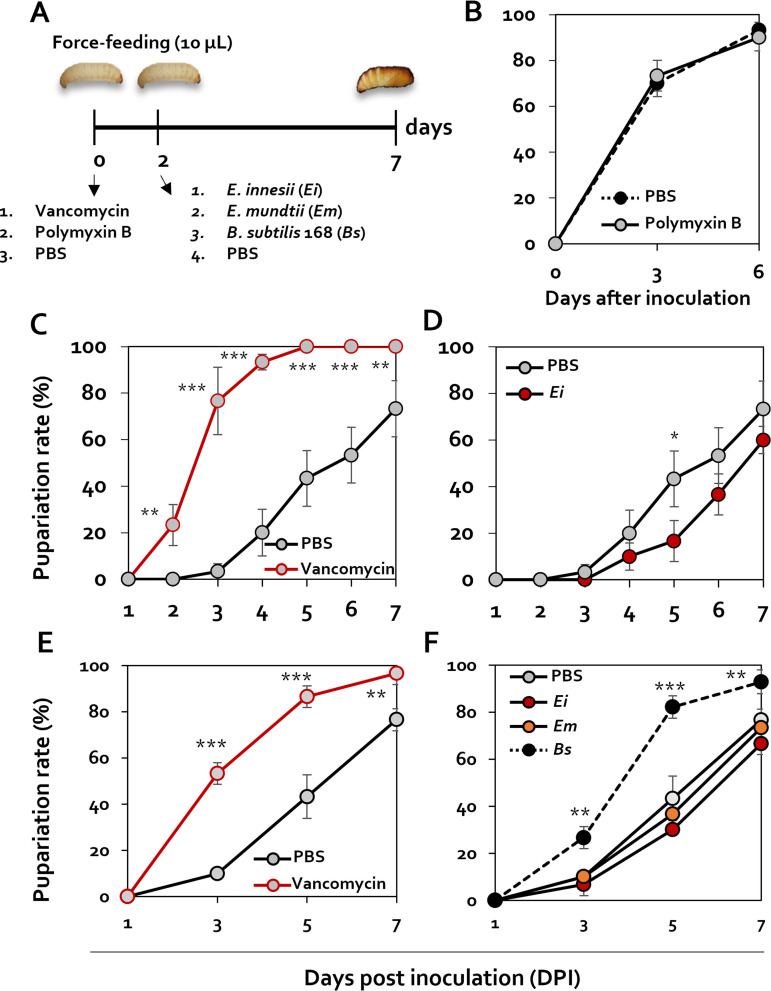
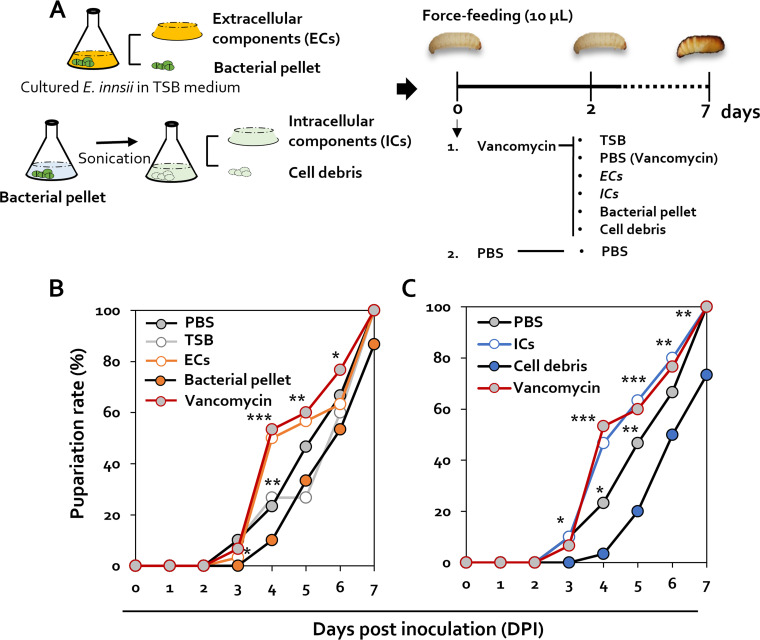
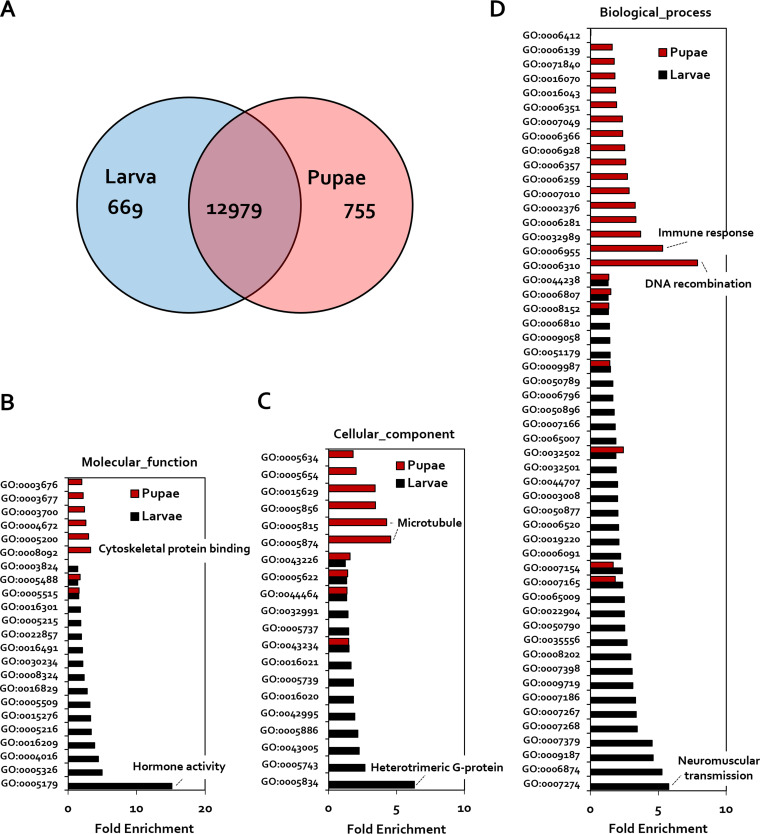
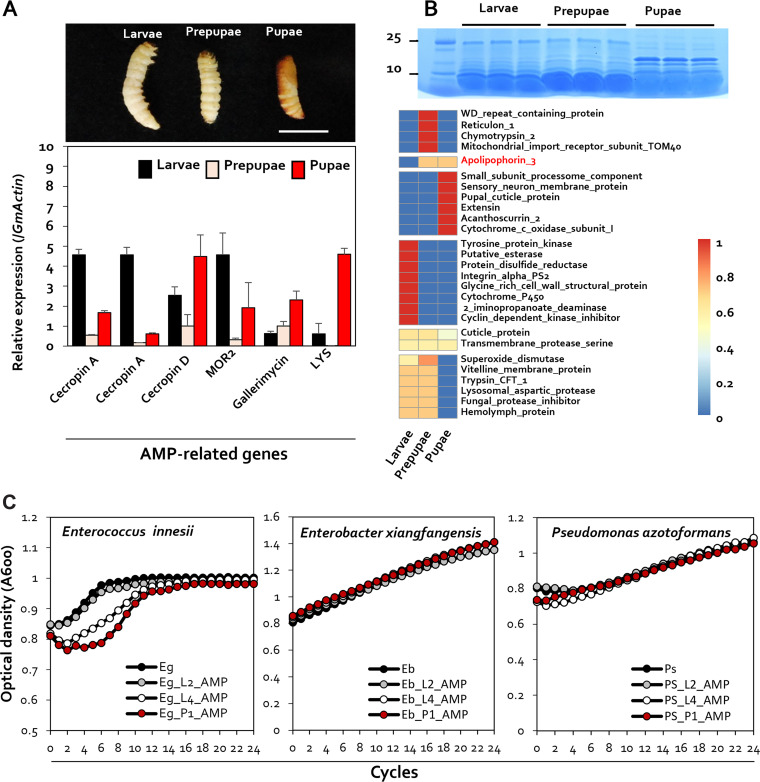
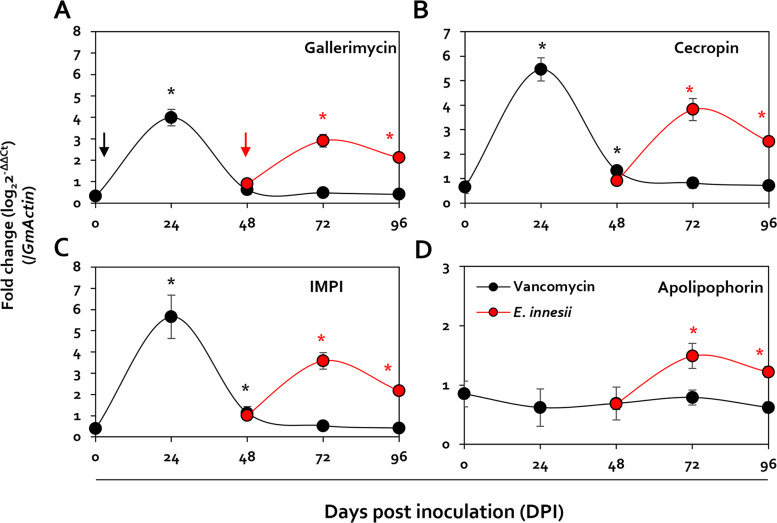
Microbes found in the digestive tracts of insects are known to play an important role in their host's behavior. Although Lepidoptera is one of the most varied insect orders, the link between microbial symbiosis and host development is still poorly understood. In particular, little is known about the role of gut bacteria in metamorphosis. Here, we explored gut microbial biodiversity throughout the life cycle of Galleria mellonella, using amplicon pyrosequencing with the V1 to V3 regions, and found that spp. were abundant in larvae, while Enterobacter spp. were predominant in pupae. Interestingly, eradication of spp. from the digestive system accelerated the larval-to-pupal transition. Furthermore, host transcriptome analysis demonstrated that immune response genes were upregulated in pupae, whereas hormone genes were upregulated in larvae. In particular, regulation of antimicrobial peptide production in the host gut correlated with developmental stage. Certain antimicrobial peptides inhibited the growth of Enterococcus innesii, a dominant bacterial species in the gut of G. mellonella larvae. Our study highlights the importance of gut microbiota dynamics on metamorphosis as a consequence of the active secretion of antimicrobial peptides in the G. mellonella gut. First, we demonstrated that the presence of spp. is a driving force for insect metamorphosis. RNA sequencing and peptide production subsequently revealed that antimicrobial peptides targeted against microorganisms in the gut of Galleria mellonella (wax moth) did not kill species, but did kill species, when the moth was at a certain stage of growth, and this promoted moth pupation.
昆虫消化道中的微生物被认为在宿主行为中发挥着重要作用。尽管鳞翅目是昆虫中最多样化的目之一,但微生物共生与宿主发育之间的联系仍知之甚少。特别是,肠道细菌在变态中的作用知之甚少。在这里,我们通过使用 V1 到 V3 区域的扩增子焦磷酸测序,在欧洲山蜂幼虫的整个生命周期中探索了肠道微生物的生物多样性,结果发现 spp. 在幼虫中丰富,而肠杆菌 spp. 在蛹中占优势。有趣的是,从消化系统中消除 spp. 加速了幼虫到蛹的转变。此外,宿主转录组分析表明,免疫反应基因在蛹中上调,而激素基因在幼虫中上调。特别是,宿主肠道中抗菌肽产生的调节与发育阶段相关。某些抗菌肽抑制了肠球菌的生长,肠球菌是欧洲山蜂幼虫肠道中的优势细菌。我们的研究强调了肠道微生物群动态对变态的重要性,这是宿主肠道中抗菌肽主动分泌的结果。首先,我们证明了 spp. 的存在是昆虫变态的驱动力。随后的 RNA 测序和肽产生表明,针对 Galleria mellonella(蜜蜡蛾)肠道中微生物的抗菌肽不会杀死 spp. ,但当蛾处于生长的某个阶段时,会杀死 spp. ,这促进了蛾的化蛹。