Carvalho Danilo Silva, Felipe Lucas Lopes, Albuquerque Priscila Costa, Zicker Fabio, Fonseca Bruna de Paula
Center for Technological Development in Health (CDTS), Oswaldo Cruz Foundation (Fiocruz), Av. Brasil 4036, Rio de Janeiro, RJ 21040-361 Brazil.
Post Graduation Program in Informatics (PPGI), Department of Computer Science, Federal University of Rio de Janeiro (UFRJ), Cidade Universitária, Av. Athos da Silveira Ramos 274, Rio de Janeiro, RJ 21941-916 Brazil.
Scientometrics. 2023 Jun 5:1-17. doi: 10.1007/s11192-023-04754-x.
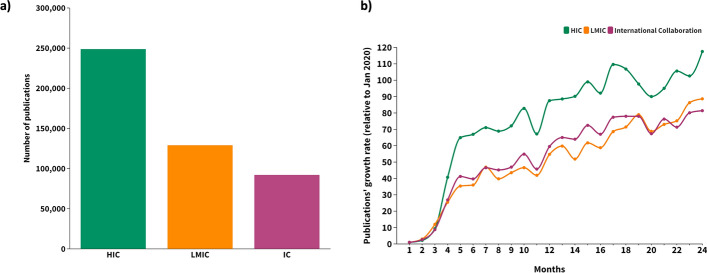
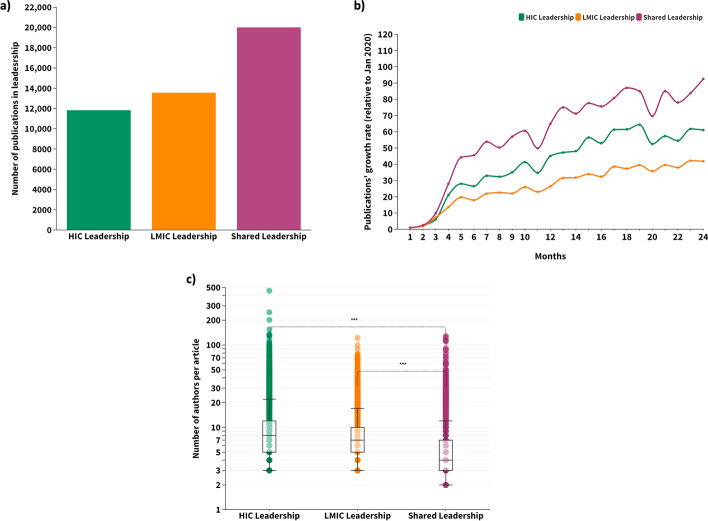
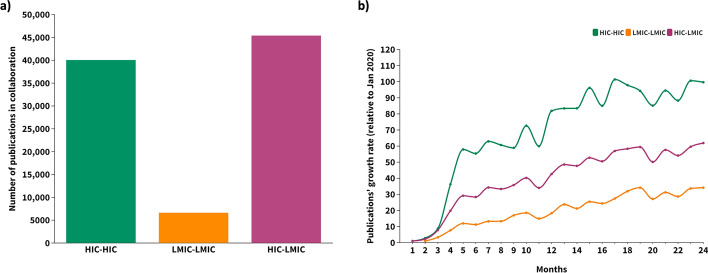
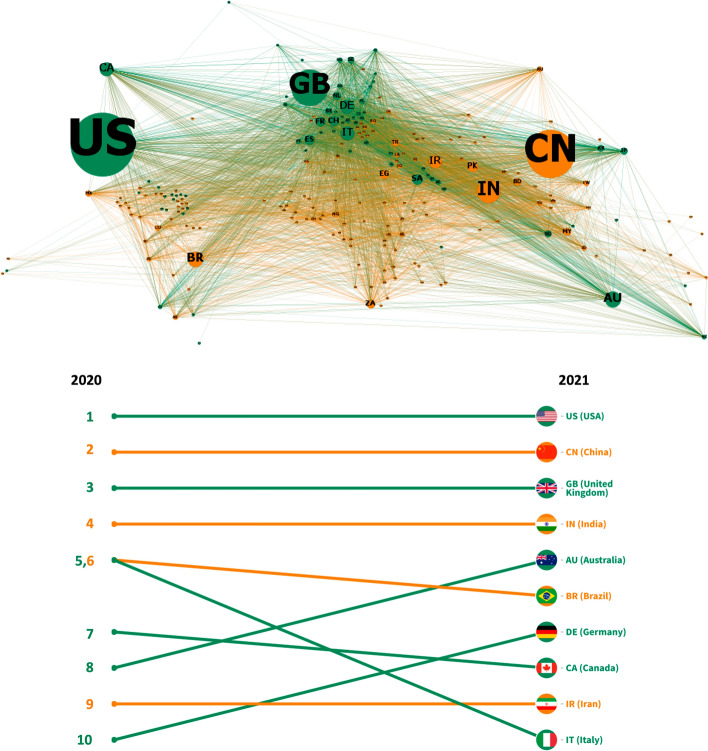
The COVID-19 pandemic triggered unprecedented scientific efforts worldwide and launched several initiatives to promote international cooperation. Because international scientific collaborations between high-income countries (HICs) and low- and middle-income countries (LMICs) are not always balanced, analyzing research leadership helps to understand the global dynamics of knowledge production during COVID-19. In this study, we focused on HIC-LMIC collaborations on COVID-19 research in 469,937 scientific publications during the first 2 years of the pandemic (2020-2021). Co-authorship and authors' affiliation were used to identify international collaborations, according to country income level. The leadership analysis considered the countries of the first and last authors of publications. The results show that (i) most publications with international collaborations (49.3%) involved researchers from HICs and LMICs; (ii) collaborative research between HICs and LMICs addressed relevant public health needs; (iii) HIC-LMIC collaborations were primarily led by researchers from the United States, China, the United Kingdom, and India; (iv) most HIC-LMIC publications (44%) had shared leadership, with research interests linked to national expertise and global interests. This study contributes to the analysis of research collaborations on COVID-19 and sheds light on North-South relations in the production and dissemination of scientific knowledge.
新冠疫情在全球引发了前所未有的科研努力,并启动了多项促进国际合作的倡议。由于高收入国家(HICs)与低收入和中等收入国家(LMICs)之间的国际科学合作并不总是平衡的,分析研究主导权有助于了解新冠疫情期间全球知识生产的动态。在本研究中,我们聚焦于疫情头两年(2020 - 2021年)469,937篇科学出版物中关于新冠研究的高收入国家与低收入和中等收入国家间的合作。根据国家收入水平,共同作者身份和作者所属机构被用于识别国际合作。主导权分析考虑了出版物第一作者和最后作者所在的国家。结果表明:(i)大多数有国际合作的出版物(49.3%)涉及高收入国家和低收入及中等收入国家的研究人员;(ii)高收入国家与低收入和中等收入国家之间的合作研究满足了相关公共卫生需求;(iii)高收入国家与低收入和中等收入国家间的合作主要由来自美国、中国、英国和印度的研究人员主导;(iv)大多数高收入国家与低收入和中等收入国家间的出版物(44%)具有共同主导权,其研究兴趣与国家专业知识和全球利益相关。本研究有助于对新冠研究合作进行分析,并揭示科学知识生产与传播中的南北关系。