Department of Animal Ecology and Tropical Biology, Biocenter, University of Würzburg, Würzburg, Germany.
NaturKonzept, Pfullingen, Germany.
Oecologia. 2023 Jul;202(3):465-480. doi: 10.1007/s00442-023-05399-6. Epub 2023 Jun 26.
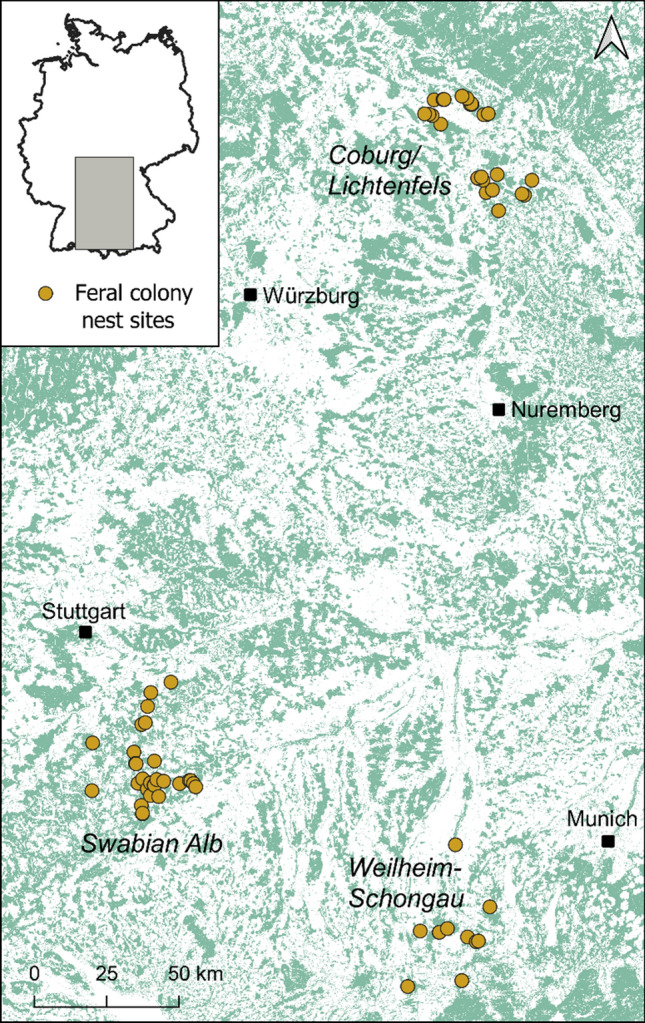
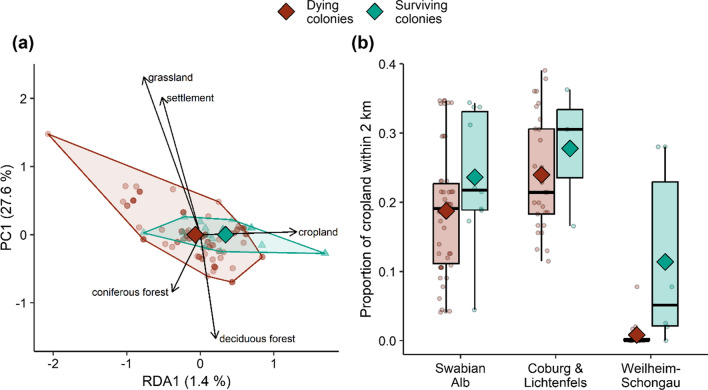
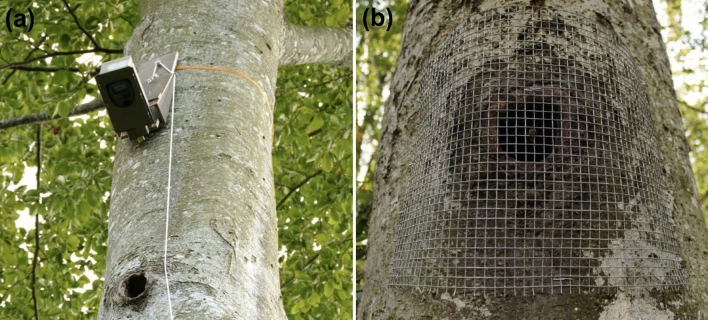
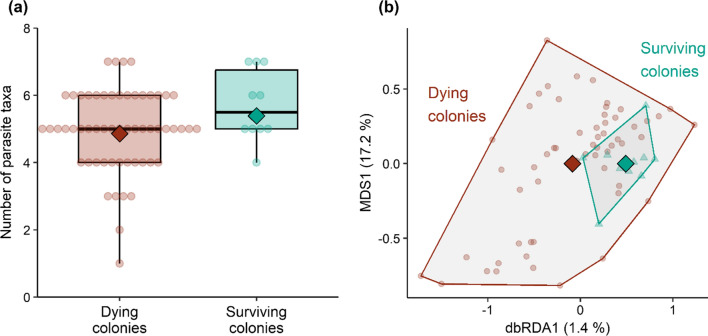
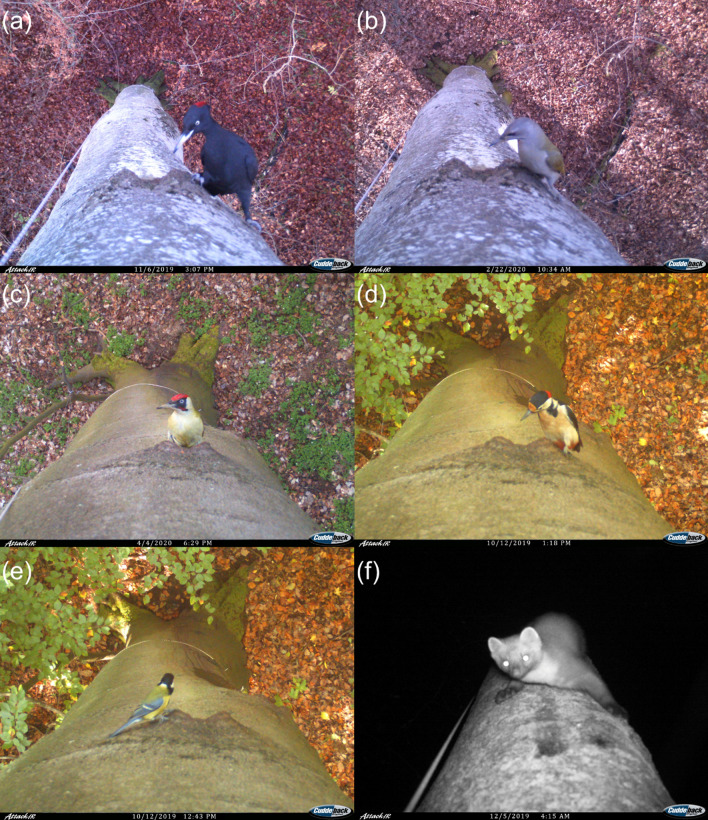
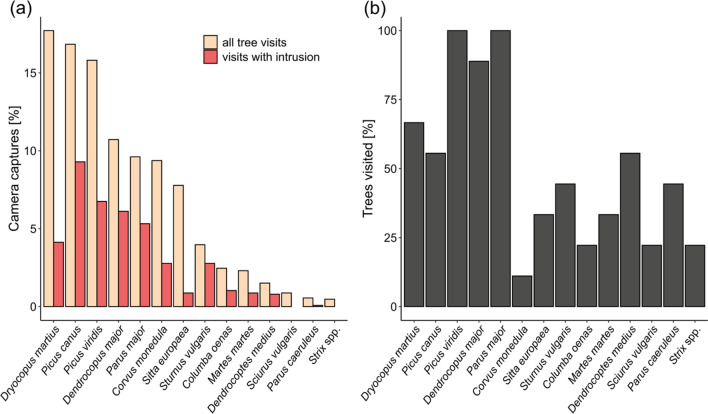
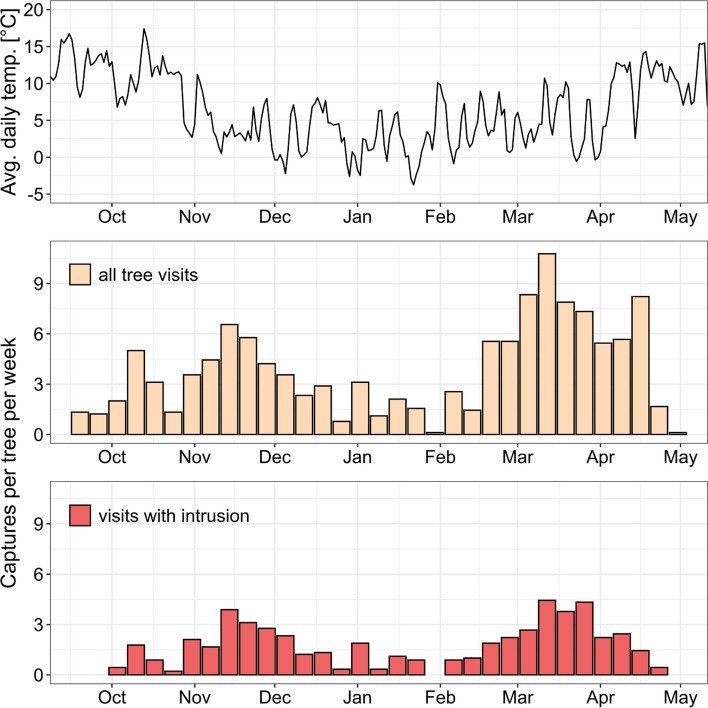
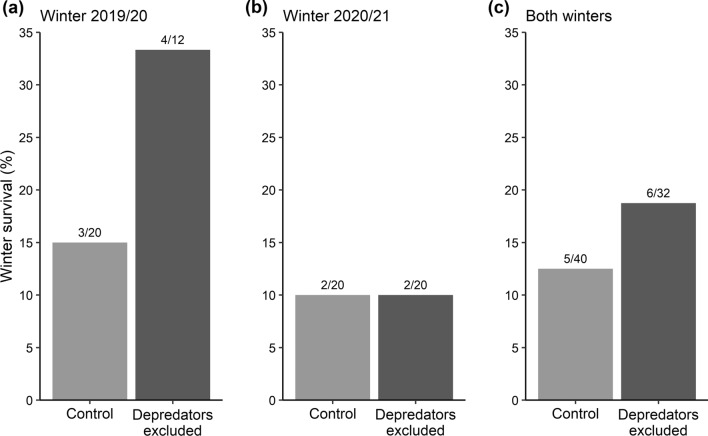
Wild honeybees (Apis mellifera) are considered extinct in most parts of Europe. The likely causes of their decline include increased parasite burden, lack of high-quality nesting sites and associated depredation pressure, and food scarcity. In Germany, feral honeybees still colonize managed forests, but their survival rate is too low to maintain viable populations. Based on colony observations collected during a monitoring study, data on parasite prevalence, experiments on nest depredation, and analyses of land cover maps, we explored whether parasite pressure, depredation or expected landscape-level food availability explain feral colony winter mortality. Considering the colony-level occurrence of 18 microparasites in the previous summer, colonies that died did not have a higher parasite burden than colonies that survived. Camera traps installed at cavity trees revealed that four woodpecker species, great tits, and pine martens act as nest depredators. In a depredator exclusion experiment, the winter survival rate of colonies in cavities with protected entrances was 50% higher than that of colonies with unmanipulated entrances. Landscapes surrounding surviving colonies contained on average 6.4 percentage points more cropland than landscapes surrounding dying colonies, with cropland being known to disproportionately provide forage for bees in our study system. We conclude that the lack of spacious but well-protected nesting cavities and the shortage of food are currently more important than parasites in limiting populations of wild-living honeybees in German forests. Increasing the density and diversity of large tree cavities and promoting bee forage plants in forests will probably promote wild-living honeybees despite parasite pressure.
野生蜜蜂(Apis mellifera)在欧洲大部分地区已被认为灭绝。其数量减少的可能原因包括寄生虫负担增加、缺乏高质量的筑巢地点以及相关的掠夺压力、食物短缺。在德国,野生蜜蜂仍在管理森林中筑巢,但它们的存活率太低,无法维持种群的生存。基于监测研究中收集的蜂群观察数据、寄生虫流行率数据、巢掠夺实验以及土地覆盖图分析,我们探讨了寄生虫压力、掠夺或预期的景观水平食物供应是否解释了野生蜂群的冬季死亡率。考虑到上一年夏季 18 种微寄生虫在蜂群中的发生情况,死亡的蜂群寄生虫负担并不高于幸存的蜂群。安置在树洞中的摄像机捕捉到四种啄木鸟、大山雀和松貂是巢掠夺者。在一个掠夺者排除实验中,带有受保护入口的树洞中的蜂群冬季存活率比未受干扰的入口树洞中的蜂群高 50%。与死亡蜂群周围的景观相比,幸存蜂群周围的景观平均多 6.4 个百分点的耕地,在我们的研究系统中,耕地被认为不成比例地为蜜蜂提供了饲料。我们得出的结论是,缺乏宽敞但保护良好的筑巢洞穴以及食物短缺目前比寄生虫更能限制德国森林中野生蜜蜂的种群数量。增加大型树洞的密度和多样性,并在森林中推广蜜蜂饲料植物,可能会促进野生蜜蜂的生存,尽管寄生虫的压力仍然存在。