Instituto de Microelectrónica de Sevilla (IMSE-CSIC), Av. Americo Vespuccio 24, 41092 Sevilla, Spain.
Departamento de Tecnología Electrónica, ETSII, Universidad de Sevilla, Av. Reina Mercedes sn, 41012 Sevilla, Spain.
Biosensors (Basel). 2023 Jun 20;13(6):668. doi: 10.3390/bios13060668.
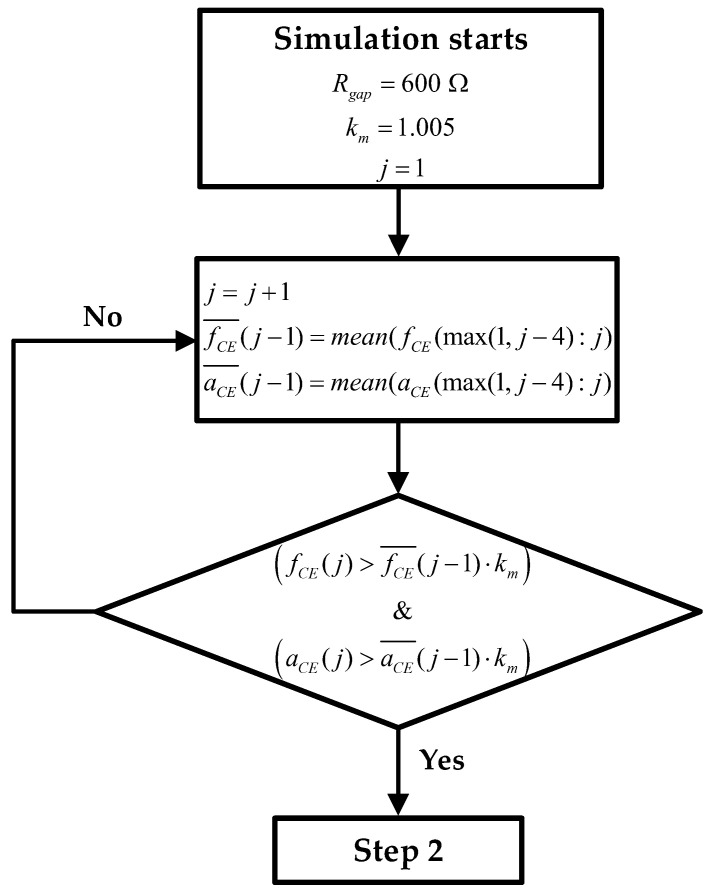
Obtaining cell concentration measurements from a culture assay by using bioimpedance is a very useful method that can be used to translate impedances to cell concentration values. The purpose of this study was to find a method to obtain the cell concentration values of a given cell culture assay in real time by using an oscillator as the measurement circuit. From a basic cell-electrode model, enhanced models of a cell culture immersed in a saline solution (culture medium) were derived. These models were used as part of a fitting routine to estimate the cell concentration in a cell culture in real time by using the oscillation frequency and amplitude delivered by the measurement circuits proposed by previous authors. Using real experimental data (the frequency and amplitude of oscillations) that were obtained by connecting the cell culture to an oscillator as the load, the fitting routine was simulated, and real-time data of the cell concentration were obtained. These results were compared to concentration data that were obtained by using traditional optical methods for counting. In addition, the error that we obtained was divided and analyzed in two parts: the first part of the experiment (when the few cells were adapting to the culture medium) and the second part of the experiment (when the cells exponentially grew until they completely covered the well). Low error values were obtained during the growth phase of the cell culture (the relevant phase); therefore, the results obtained were considered promising and show that the fitting routine is valid and that the cell concentration can be measured in real time by using an oscillator.
通过生物阻抗从培养测定中获得细胞浓度测量值是一种非常有用的方法,可以将阻抗转换为细胞浓度值。本研究的目的是找到一种方法,通过使用振荡器作为测量电路,实时获得给定细胞培养测定的细胞浓度值。从基本的细胞-电极模型出发,推导出了浸入盐溶液(培养基)中的细胞培养的增强模型。这些模型被用作拟合例程的一部分,通过使用以前作者提出的测量电路的振荡频率和幅度来实时估计细胞培养中的细胞浓度。使用通过将细胞培养物连接到振荡器作为负载获得的实际实验数据(振荡的频率和幅度),模拟了拟合例程,并获得了细胞浓度的实时数据。将这些结果与使用传统光学方法计数获得的浓度数据进行了比较。此外,我们获得的误差被分为两部分进行分析:实验的第一部分(当少量细胞适应培养基时)和实验的第二部分(当细胞指数增长直到它们完全覆盖孔时)。在细胞培养物的生长阶段(相关阶段)获得了低误差值;因此,认为结果有希望,表明拟合例程是有效的,并且可以通过使用振荡器实时测量细胞浓度。