Bazzani Liliana, Imperia Elena, Scarpa Fabio, Sanna Daria, Casu Marco, Borsetti Alessandra, Pascarella Stefano, Petrosillo Nicola, Cella Eleonora, Giovanetti Marta, Ciccozzi Massimo
Sciences and Technologies for Sustainable Development and One Health, University Campus Bio-Medico of Rome, 00128 Rome, Italy.
Unit of Medical Statistics and Molecular Epidemiology, University Campus Bio-Medico of Rome, 00128 Rome, Italy.
Infect Dis Rep. 2023 May 24;15(3):292-298. doi: 10.3390/idr15030029.
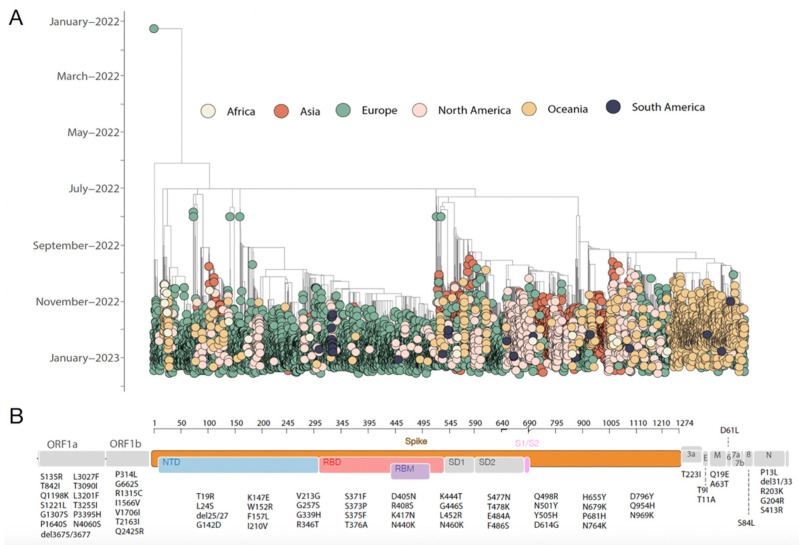
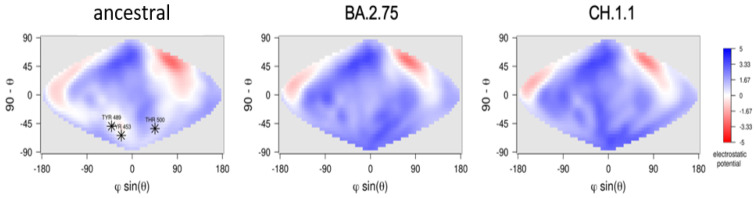
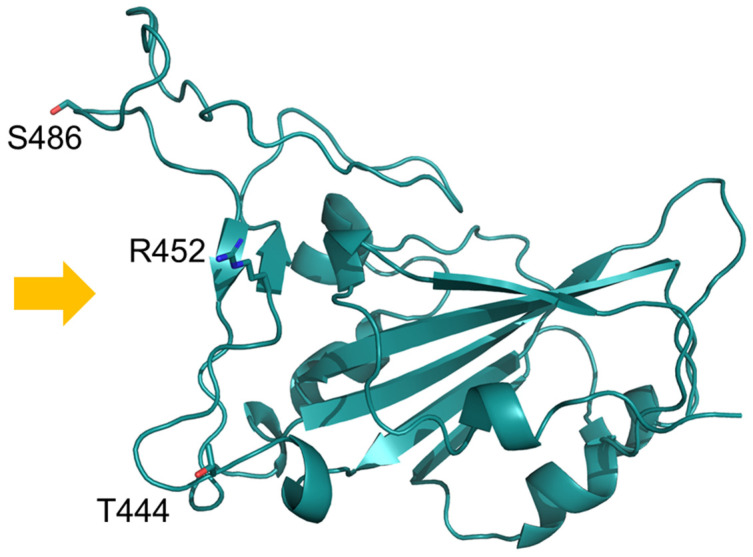
In early February 2023, the Omicron subvariant XBB.1.5, also known as "Kraken", accounted for more than 44% of new COVID-19 cases worldwide, whereas a relatively new Omicron subvariant named CH.1.1, deemed "Orthrus", accounted for less than 6% of new COVID-19 cases during the subsequent weeks. This emerging variant carries a mutation, L452R, previously observed in the highly pathogenic Delta and the highly transmissible BA.4 and BA.5 variants, necessitating a shift to active surveillance to assure adequate preparedness for likely future epidemic peaks. We provide a preliminary understanding of the global distribution of this emerging SARS-CoV-2 variant by combining genomic data with structural molecular modeling. In addition, we shield light on the number of specific point mutations in this lineage that may have functional significance, thereby increasing the risk of disease severity, vaccine resistance, and increased transmission. This variant shared about 73% of the mutations with Omicron-like strains. Our homology modeling analysis revealed that CH.1.1 may have a weakened interaction with ACE2 and that its electrostatic potential surface appears to be more positive than that of the reference ancestral virus. Finally, our phylogenetic analysis revealed that this likely-emerging variant was already cryptically circulating in European countries prior to its first detection, highlighting the importance of having access to whole genome sequences for detecting and controlling emerging viral strains.
2023年2月初,奥密克戎亚型毒株XBB.1.5(也称为“章鱼”)占全球新增新冠病毒病例的44%以上,而一种相对较新的奥密克戎亚型毒株CH.1.1(被称为“双头犬”)在随后几周的新增新冠病毒病例中占比不到6%。这种新出现的变种携带一种名为L452R的突变,此前在高致病性的德尔塔毒株以及高传播性的BA.4和BA.5变种中也有发现,因此有必要转向主动监测,以确保为未来可能出现的疫情高峰做好充分准备。我们通过将基因组数据与结构分子建模相结合,初步了解了这种新出现的新冠病毒变种在全球的分布情况。此外,我们还揭示了该谱系中可能具有功能意义的特定点突变数量,从而增加了疾病严重程度、疫苗抗性和传播性增加的风险。该变种与奥密克戎样毒株约有73%的突变相同。我们的同源建模分析表明,CH.1.1与血管紧张素转换酶2(ACE2)的相互作用可能减弱,其静电势表面似乎比参考原始病毒的更呈阳性。最后,我们的系统发育分析表明,这种可能新出现的变种在首次检测之前就已经在欧洲国家悄然传播,这凸显了获取全基因组序列对于检测和控制新出现的病毒株的重要性。