Department of Pharmacology, School of Biomedical Sciences, Faculty of Medicine and Health, UNSW Sydney, Sydney, NSW, Australia.
Sydney Pharmacy School, The University of Sydney, Sydney, NSW, 2006, Australia.
Pharmaceut Med. 2023 Sep;37(5):385-394. doi: 10.1007/s40290-023-00483-x. Epub 2023 Jun 27.
In Australia, facilitated regulatory pathways (FRPs) became available with the introduction of priority review (PR) in 2017 and provisional approval (PA) in 2018, which aim to facilitate expedited review and approval for novel medicines. The pathways were developed in consultation with a wide range of stakeholders and have since been utilised by pharmaceutical companies for various therapeutic products. However, the perceptions of the firsthand users of these pathways have not been evaluated in Australia.
We have conducted a survey of Australian regulatory professionals aiming to solicit the perceived benefits, barriers to utilisation, shortcomings and proposed modifications to utilising these pathways. We have also solicited the users' perspective on key aspects of the pathways, including overall satisfaction, regulatory burden, availability and ease of use of guidelines, regulator support, impact on company strategy and recommendations for improvement.
A survey was developed and distributed to Australian regulatory professionals from the pharmaceutical industry who had submission experience of new medicine applications via either PR, PA or the standard registration pathway to the Therapeutic Goods Administration (TGA). The questionnaire consisted of 44 questions with a skip logic and the option for free text comments.
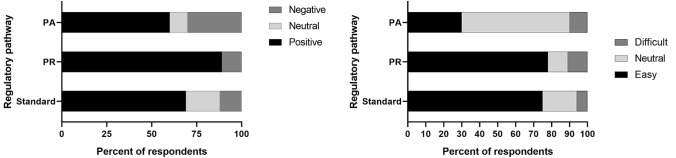
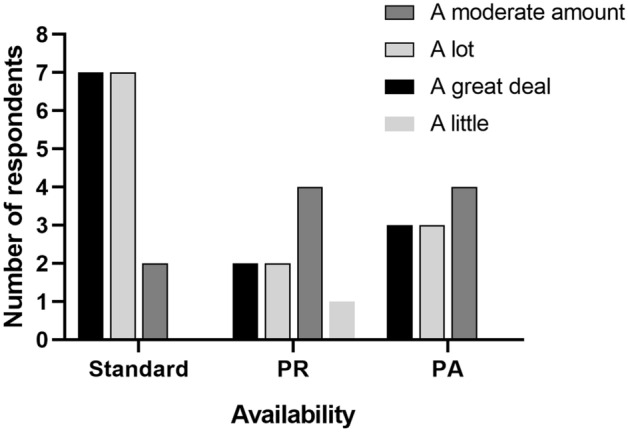
We received responses from 16/42 companies that had utilised these new pathways. Nine respondents had experience with the PR pathway and ten with the PA pathway. The respondents were generally satisfied with the effectiveness of the PR process in expediting registration approvals, but they were ambivalent towards the PA pathway in terms of overall satisfaction and timelines. Respondents expressed a desire for further improvements in the speed of approval, earlier access for patients across various pathways and introduction of new Health Technology Assessment processes for medicines approved under PA.
While the FRPs have been an important and positive development in the Australian regulatory landscape, there remain opportunities for further improvements, some of which have been highlighted by this study and may help inform future regulatory decisions.
在澳大利亚,随着 2017 年优先审查(PR)和 2018 年临时批准(PA)的引入,出现了便利监管途径(FRP),旨在加快对新型药物的审查和批准。该途径是在与广泛的利益相关者协商后制定的,此后制药公司已将其用于各种治疗产品。然而,这些途径的第一手用户的看法在澳大利亚尚未得到评估。
我们对澳大利亚监管专业人员进行了调查,旨在征求他们对利用这些途径的益处、障碍、缺点和修改建议的看法。我们还征求了用户对途径关键方面的看法,包括总体满意度、监管负担、指南的可用性和易用性、监管机构的支持、对公司战略的影响以及改进建议。
开发了一份问卷并分发给澳大利亚监管专业人员,他们来自制药行业,曾通过 PR、PA 或标准注册途径向治疗用品管理局(TGA)提交新药申请。问卷包括 44 个问题,带有跳题逻辑和自由文本评论选项。
我们收到了 16/42 家曾利用这些新途径的公司的回复。9 名受访者有 PR 途径的经验,10 名有 PA 途径的经验。受访者普遍对 PR 流程在加快注册审批方面的有效性感到满意,但对 PA 途径的总体满意度和时间安排持矛盾态度。受访者表示希望进一步提高审批速度,使各途径的患者更早获得药物,并为 PA 批准的药物引入新的卫生技术评估流程。
虽然 FRP 是澳大利亚监管领域的一个重要和积极的发展,但仍有进一步改进的机会,其中一些已在本研究中提出,可能有助于为未来的监管决策提供信息。