Department of Immunology, Erasmus University Medical Center, Rotterdam, The Netherlands.
Department of Rheumatology and Clinical Immunology, Freiburg University Medical Center, University of Freiburg, Freiburg, Germany.
Blood. 2023 Sep 28;142(13):1113-1130. doi: 10.1182/blood.2023019721.
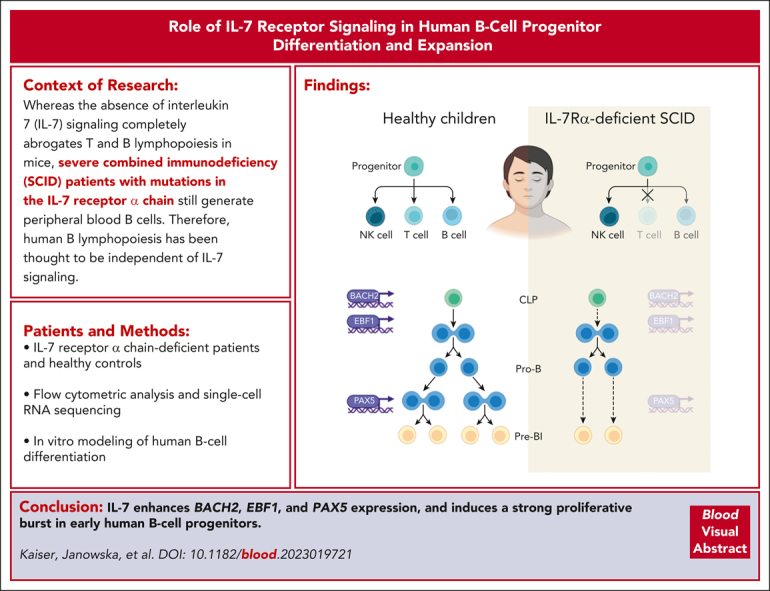
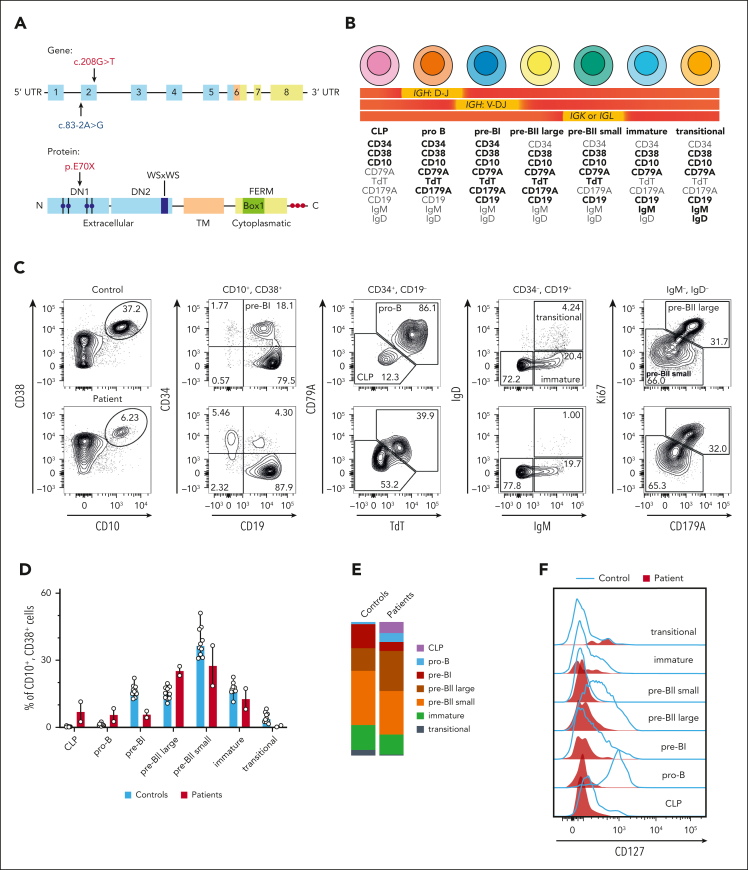
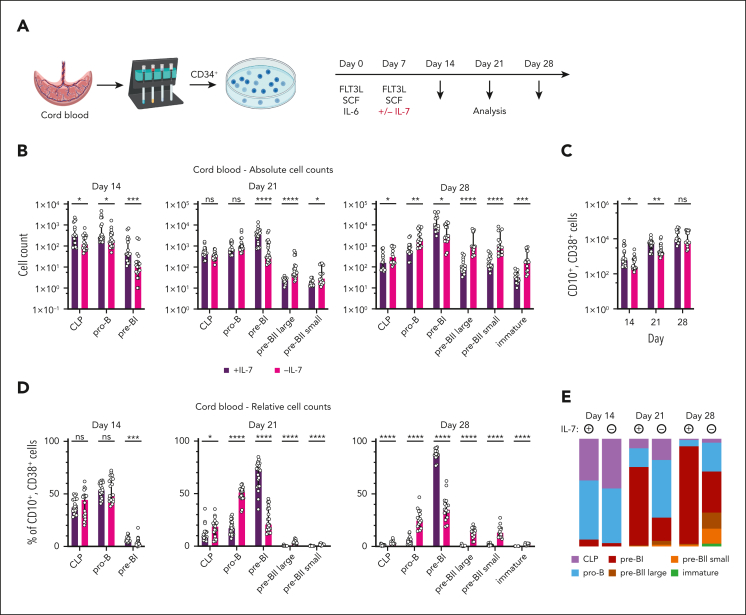
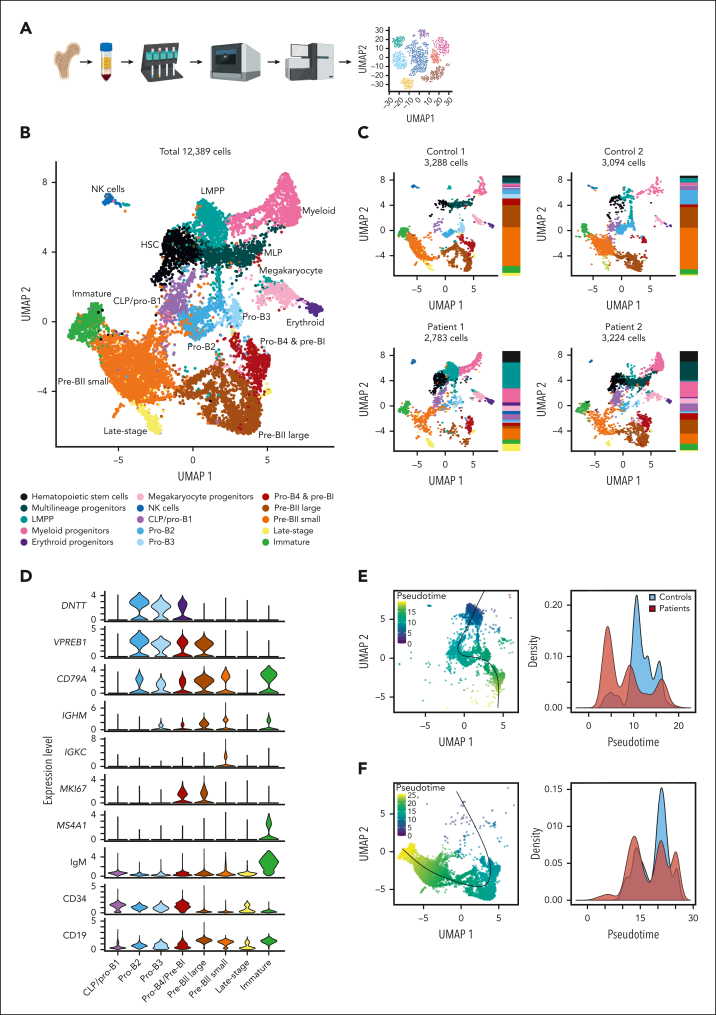
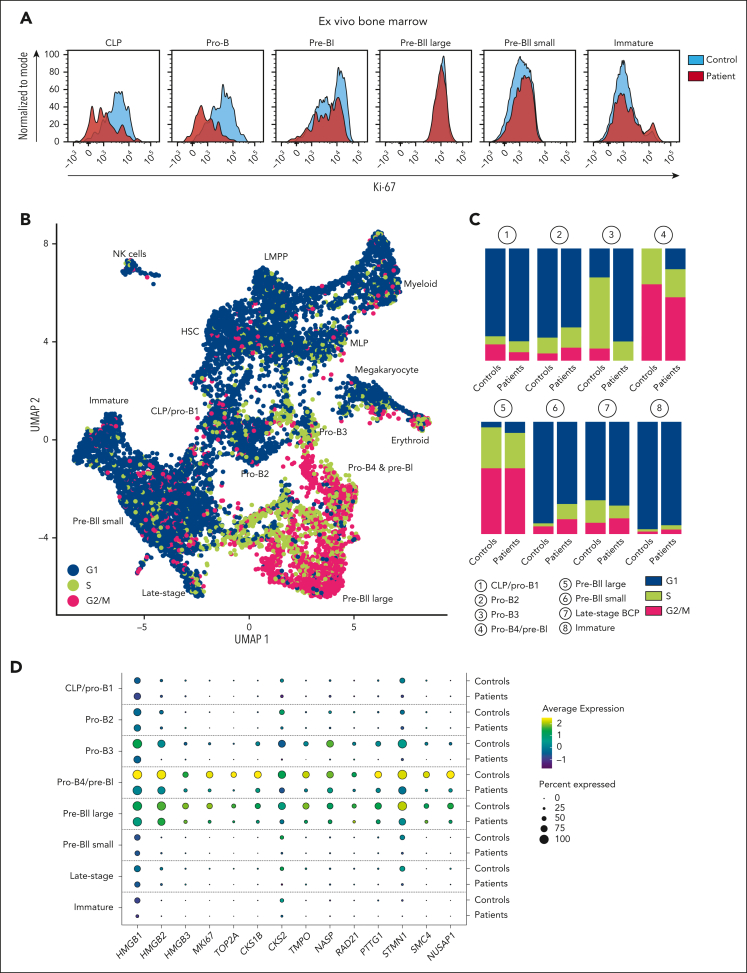
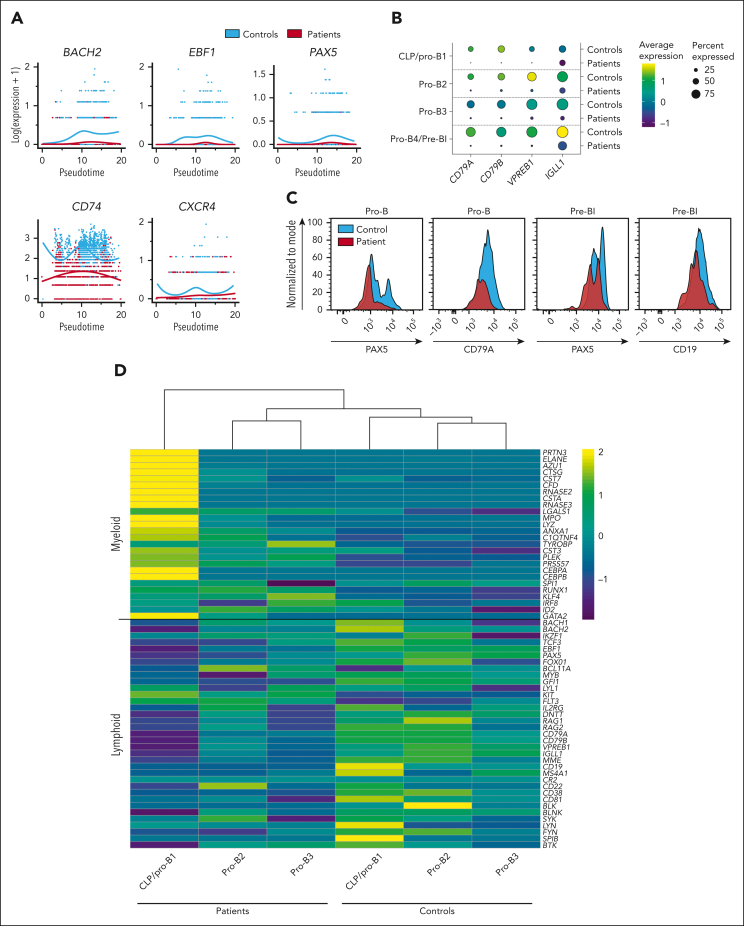
Although absence of interleukin-7 (IL-7) signaling completely abrogates T and B lymphopoiesis in mice, patients with severe combined immunodeficiency caused by mutations in the IL-7 receptor α chain (IL-7Rα) still generate peripheral blood B cells. Consequently, human B lymphopoiesis has been thought to be independent of IL-7 signaling. Using flow cytometric analysis and single-cell RNA sequencing of bone marrow samples from healthy controls and patients who are IL-7Rα deficient, in combination with in vitro modeling of human B-cell differentiation, we demonstrate that IL-7R signaling plays a crucial role in human B lymphopoiesis. IL-7 drives proliferation and expansion of early B-cell progenitors but not of pre-BII large cells and has a limited role in the prevention of cell death. Furthermore, IL-7 guides cell fate decisions by enhancing the expression of BACH2, EBF1, and PAX5, which jointly orchestrate the specification and commitment of early B-cell progenitors. In line with this observation, early B-cell progenitors of patients with IL-7Rα deficiency still expressed myeloid-specific genes. Collectively, our results unveil a previously unknown role for IL-7 signaling in promoting the B-lymphoid fate and expanding early human B-cell progenitors while defining important differences between mice and humans. Our results have implications for hematopoietic stem cell transplantation strategies in patients with T- B+ severe combined immunodeficiency and provide insights into the role of IL-7R signaling in leukemogenesis.
尽管白细胞介素-7(IL-7)信号的缺失完全阻断了小鼠的 T 和 B 淋巴发生,但由于 IL-7 受体 α 链(IL-7Rα)突变导致的严重联合免疫缺陷患者仍会产生外周血 B 细胞。因此,人们曾认为人类 B 淋巴发生独立于 IL-7 信号。通过对来自健康对照者和 IL-7Rα 缺陷患者的骨髓样本进行流式细胞分析和单细胞 RNA 测序,并结合人类 B 细胞分化的体外建模,我们证明了 IL-7R 信号在人类 B 淋巴发生中起着至关重要的作用。IL-7 驱动早期 B 细胞祖细胞的增殖和扩增,但不驱动前 BII 大细胞的增殖和扩增,并且在防止细胞死亡方面作用有限。此外,IL-7 通过增强 BACH2、EBF1 和 PAX5 的表达来指导细胞命运决定,这些基因共同协调早期 B 细胞祖细胞的特化和定型。与此观察一致,IL-7Rα 缺陷患者的早期 B 细胞祖细胞仍表达髓系特异性基因。总的来说,我们的研究结果揭示了 IL-7 信号在促进 B 淋巴细胞发生和扩增早期人类 B 细胞祖细胞方面的先前未知作用,同时也确定了小鼠和人类之间的重要差异。我们的研究结果对 T-B+严重联合免疫缺陷患者的造血干细胞移植策略具有重要意义,并为 IL-7R 信号在白血病发生中的作用提供了新的见解。