Gul Bushra, Sana Maria, Saleem Aneela, Mustafa Zia Ul, Salman Muhammad, Khan Yusra Habib, Mallhi Tauqeer Hussain, Sono Tiyani Milta, Meyer Johanna C, Godman Brian B
Department of Medicines, Tehsil Head Quarter (THQ) Hospital, District Bhakkar, Darya Khan 3000, Punjab, Pakistan.
Department of Medicine, Faisalabad Medical University, Faisalabad 38000, Punjab, Pakistan.
Antibiotics (Basel). 2023 Jun 6;12(6):1018. doi: 10.3390/antibiotics12061018.
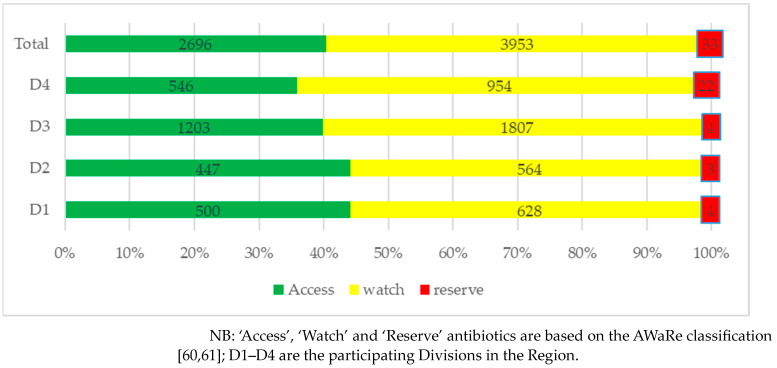
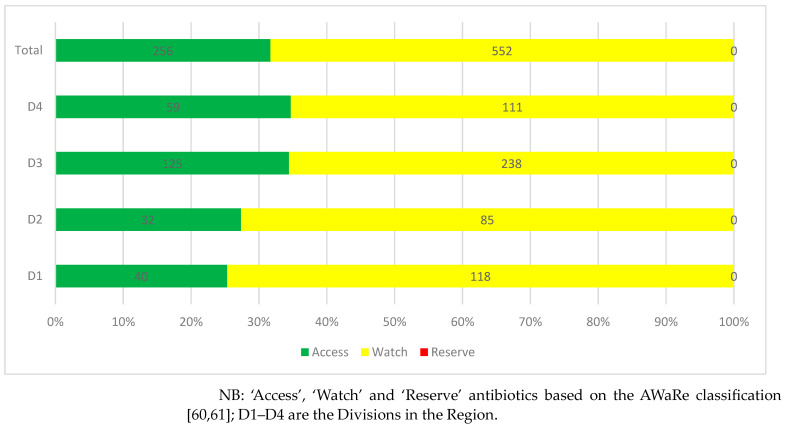
Antibiotics are one of the most frequently dispensed classes of medicines. However, excessive misuse and abuse enhances antimicrobial resistance (AMR). Previous studies in Pakistan have documented extensive dispensing of 'Watch' and 'Reserve' antibiotics, which is a concern. In view of this, there is a need to assess current dispensing patterns following COVID-19 in Pakistan. A cross-sectional study was undertaken, collecting dispensing data from 39 pharmacies and 53 drug stores from November 2022 to February 2023. Outlets were principally in urban areas (60.9%), with pharmacists/pharmacy technicians present in 32.6% of outlets. In total, 11,092 prescriptions were analyzed; 67.1% of patients were supplied at least one antimicrobial, 74.3% antibiotics, 10.2% antifungals and 7.9% anthelmintics. A total of 33.2% of antimicrobials were supplied without a prescription. Common indications for dispensed antibiotics were respiratory (34.3%) and gastrointestinal (16.8%) infections, which can be self-limiting. In addition, 12% of antibiotics were dispensed for the prevention or treatment of COVID-19. The most frequent antibiotics dispensed were ceftriaxone (18.4%) and amoxicillin (15.4%). Overall, 59.2% antibiotics were 'Watch' antibiotics, followed by 'Access' (40.3%) and 'Reserve' (0.5%) antibiotics. Of the total antibiotics dispensed for treating COVID-19, 68.3% were 'Watch' and 31.7% 'Access'. Overall, there appeared to be an appreciable number of antibiotics dispensed during the recent pandemic, including for patients with COVID-19, alongside generally extensive dispensing of 'Watch' antibiotics. This needs to be urgently addressed with appropriate programs among pharmacists/pharmacy technicians to reduce AMR.
抗生素是最常配发的药品类别之一。然而,过度滥用会增强抗菌药物耐药性(AMR)。巴基斯坦此前的研究记录了“观察类”和“储备类”抗生素的大量配发情况,这令人担忧。有鉴于此,有必要评估巴基斯坦在新冠疫情后当前的配药模式。开展了一项横断面研究,于2022年11月至2023年2月收集了39家药店和53家药房的配药数据。销售点主要位于城市地区(60.9%),32.6%的销售点有药剂师/药房技术员。总共分析了11,092份处方;67.1%的患者至少获得了一种抗菌药物,74.3%为抗生素,10.2%为抗真菌药,7.9%为驱虫药。共有33.2%的抗菌药物是在没有处方的情况下配发的。配发抗生素的常见适应症是呼吸道感染(34.3%)和胃肠道感染(16.8%),这些感染可能是自限性的。此外,12%的抗生素用于预防或治疗新冠。最常配发的抗生素是头孢曲松(18.4%)和阿莫西林(15.4%)。总体而言,59.2%的抗生素是“观察类”抗生素,其次是“可及类”(40.3%)和“储备类”(0.5%)抗生素。在用于治疗新冠的所有抗生素中,68.3%是“观察类”,31.7%是“可及类”。总体而言,在最近的疫情期间,似乎有相当数量的抗生素被配发,包括给新冠患者,同时“观察类”抗生素的配发普遍广泛。这需要通过针对药剂师/药房技术员的适当项目来紧急解决,以降低抗菌药物耐药性。