Bednarčuk Nataša, Golić Jelić Ana, Stoisavljević Šatara Svjetlana, Stojaković Nataša, Marković Peković Vanda, Stojiljković Miloš P, Popović Nina, Škrbić Ranko
Faculty of Medicine, University of Banja Luka, 78000 Banja Luka, The Republic of Srpska, Bosnia and Herzegovina.
Department of Pharmacology, Toxicology and Clinical Pharmacology, Faculty of Medicine, University of Banja Luka, 78000 Banja Luka, The Republic of Srpska, Bosnia and Herzegovina.
Antibiotics (Basel). 2023 Feb 2;12(2):308. doi: 10.3390/antibiotics12020308.
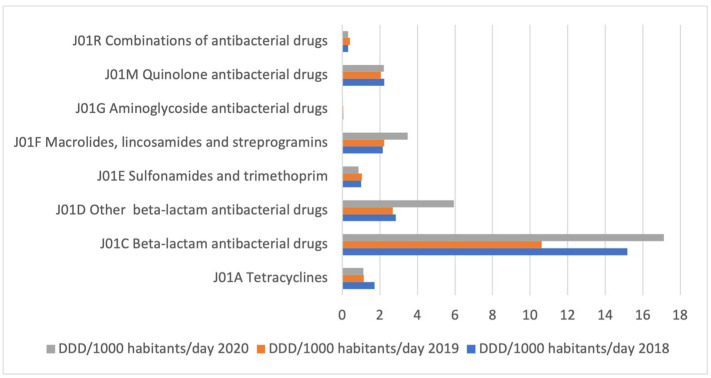
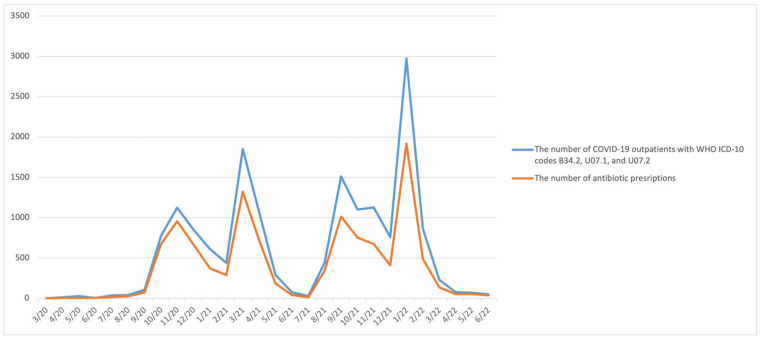
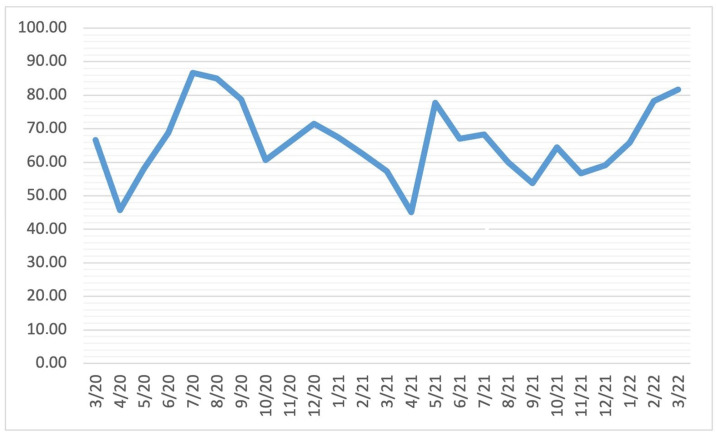
The aims of this study were to analyze the utilization of antibiotics before (2018, 2019) and during the COVID-19 pandemic (2020) and the practice of prescribing antibiotics in outpatient settings for COVID-19 patients during the 2020-2022 period. The Anatomical Therapeutic Chemical Classification/Defined Daily Dose methodology was used for the analysis of outpatient antibiotic utilization in the Republic of Srpska. The data was expressed in DDD/1000 inhabitants/day. The rate of antibiotics prescribed to COVID-19 outpatients was analyzed using medical record data from 16,565 patients registered with B34.2, U07.1, and U07.2 World Health Organization International Classification of Diseases 10th revision codes. During 2020, outpatient antibiotic utilization increased by 53.80% compared to 2019. At least one antibiotic was prescribed for 91.04%, 83.05%, and 73.52% of COVID-19 outpatients during 2020, 2021, and the first half of 2022, respectively. On a monthly basis, at least one antibiotic was prescribed for more than 55% of COVID-19 outpatients. The three most commonly prescribed antibiotics were azithromycin, amoxicillin/clavulanic acid, and doxycycline. The trend of repurposing antibiotics for COVID-19 and other diseases treatment might be a double-edged sword. The long-term effect of this practice might be an increase in antimicrobial resistance and a loss of antibiotic effectiveness.
本研究的目的是分析2018年、2019年新冠疫情之前以及2020年新冠疫情期间抗生素的使用情况,以及2020年至2022年期间新冠患者门诊抗生素的处方情况。采用解剖治疗化学分类/限定日剂量方法分析了塞族共和国门诊抗生素的使用情况。数据以DDD/1000居民/天表示。使用来自16565名登记为B34.2、U07.1和U07.2世界卫生组织国际疾病分类第10版编码患者的病历数据,分析了新冠门诊患者的抗生素处方率。2020年,门诊抗生素使用量比2019年增加了53.80%。2020年、2021年和2022年上半年,分别有91.04%、83.05%和73.52%的新冠门诊患者至少开具了一种抗生素。按月计算,超过55%的新冠门诊患者至少开具了一种抗生素。最常开具的三种抗生素是阿奇霉素、阿莫西林/克拉维酸和强力霉素。将抗生素重新用于治疗新冠及其他疾病的趋势可能是一把双刃剑。这种做法的长期影响可能是抗菌药物耐药性增加和抗生素效力丧失。