Colombo Ilaria, Karakasis Katherine, Suku Sneha, Oza Amit M
Oncology Institute of Southern Switzerland (IOSI), Ente Ospedaliero Cantonale (EOC), Via A. Gallino, 6500 Bellinzona, Switzerland.
Princess Margaret Cancer Centre, University Health Network, 610 University Avenue, Toronto, ON M5G 2M9, Canada.
Cancers (Basel). 2023 Jun 16;15(12):3220. doi: 10.3390/cancers15123220.
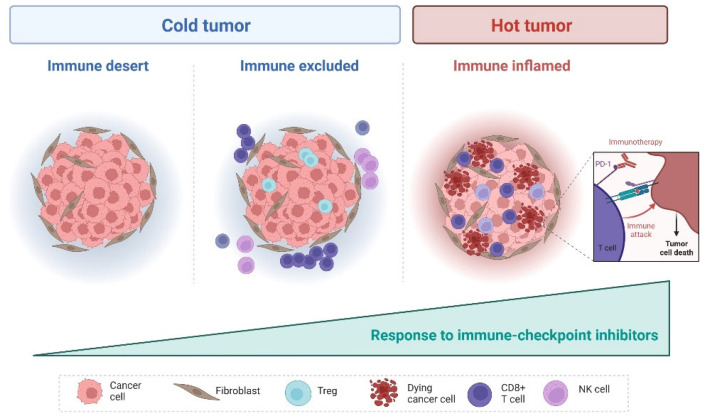
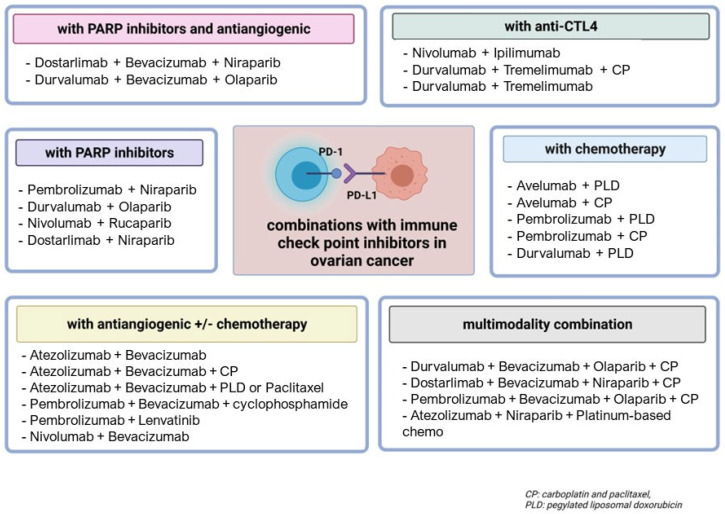
A deep understanding of the tumor microenvironment and the recognition of tumor-infiltrating lymphocytes as a prognostic factor have resulted in major milestones in immunotherapy that have led to therapeutic advances in treating many cancers. Yet, the translation of this knowledge to clinical success for ovarian cancer remains a challenge. The efficacy of immune checkpoint inhibitors as single agents or combined with chemotherapy has been unsatisfactory, leading to the exploration of alternative combination strategies with targeted agents (e.g., poly-ADP-ribose inhibitors (PARP)and angiogenesis inhibitors) and novel immunotherapy approaches. Among the different histological subtypes, clear cell ovarian cancer has shown a higher sensitivity to immunotherapy. A deeper understanding of the mechanism of immune resistance within the context of ovarian cancer and the identification of predictive biomarkers remain central discovery benchmarks to be realized. This will be critical to successfully define the precision use of immune checkpoint inhibitors for the treatment of ovarian cancer.
对肿瘤微环境的深入理解以及将肿瘤浸润淋巴细胞识别为预后因素,促成了免疫治疗的重大里程碑,推动了多种癌症治疗的进展。然而,将这一知识转化为卵巢癌的临床成功仍面临挑战。免疫检查点抑制剂作为单一药物或与化疗联合使用的疗效并不理想,这促使人们探索与靶向药物(如聚ADP-核糖抑制剂(PARP)和血管生成抑制剂)的替代联合策略以及新型免疫治疗方法。在不同的组织学亚型中,透明细胞卵巢癌对免疫治疗表现出更高的敏感性。在卵巢癌背景下更深入了解免疫抵抗机制并识别预测性生物标志物,仍然是有待实现的核心发现基准。这对于成功确定免疫检查点抑制剂在卵巢癌治疗中的精准应用至关重要。