Roterman Irena, Konieczny Leszek
Department of Bioinformatics and Telemedicine, Jagiellonian University-Medical College, Medyczna 7, 30-688 Kraków, Poland.
Chair of Medical Biochemistry, Jagiellonian University-Medical College, Kopernika 7, 31-034 Kraków, Poland.
Entropy (Basel). 2023 May 26;25(6):850. doi: 10.3390/e25060850.
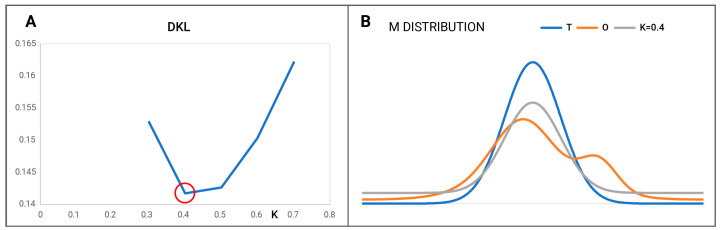
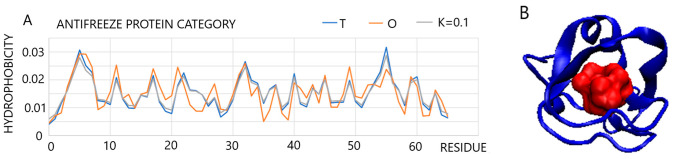
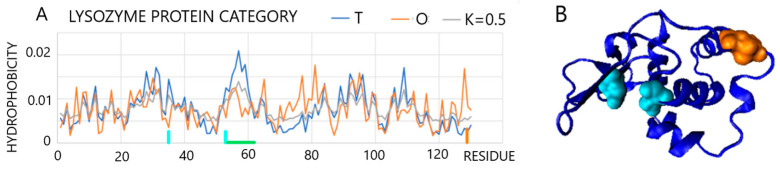
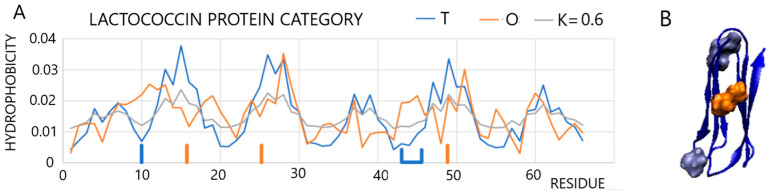
Interpreting biological phenomena at the molecular and cellular levels reveals the ways in which information that is specific to living organisms is processed: from the genetic record contained in a strand of DNA, to the translation process, and then to the construction of proteins that carry the flow and processing of information as well as reveal evolutionary mechanisms. The processing of a surprisingly small amount of information, i.e., in the range of 1 GB, contains the record of human DNA that is used in the construction of the highly complex system that is the human body. This shows that what is important is not the quantity of information but rather its skillful use-in other words, this facilitates proper processing. This paper describes the quantitative relations that characterize information during the successive steps of the "biological dogma", illustrating a transition from the recording of information in a DNA strand to the production of proteins exhibiting a defined specificity. It is this that is encoded in the form of information and that determines the unique activity, i.e., the measure of a protein's "intelligence". In a situation of information deficit at the transformation stage of a primary protein structure to a tertiary or quaternary structure, a particular role is served by the environment as a supplier of complementary information, thus leading to the achievement of a structure that guarantees the fulfillment of a specified function. Its quantitative evaluation is possible via using a "fuzzy oil drop" (FOD), particularly with respect to its modified version. This can be achieved when taking into account the participation of an environment other than water in the construction of a specific 3D structure (FOD-M). The next step of information processing on the higher organizational level is the construction of the proteome, where the interrelationship between different functional tasks and organism requirements can be generally characterized by homeostasis. An open system that maintains the stability of all components can be achieved exclusively in a condition of automatic control that is realized by negative feedback loops. This suggests a hypothesis of proteome construction that is based on the system of negative feedback loops. The purpose of this paper is the analysis of information flow in organisms with a particular emphasis on the role of proteins in this process. This paper also presents a model introducing the component of changed conditions and its influence on the protein folding process-since the specificity of proteins is coded in their structure.
在分子和细胞水平上解释生物现象,揭示了生物体特有的信息是如何被处理的:从DNA链中包含的遗传记录,到翻译过程,再到构建携带信息流动和处理以及揭示进化机制的蛋白质。令人惊讶的少量信息(即1GB范围内)的处理,包含了用于构建人体这个高度复杂系统的人类DNA记录。这表明重要的不是信息的数量,而是其巧妙的运用——换句话说,这有助于进行适当的处理。本文描述了在“生物学中心法则”的连续步骤中表征信息的定量关系,说明了从DNA链中的信息记录到产生具有明确特异性的蛋白质的转变。正是这些以信息形式编码并决定独特活性(即蛋白质“智能”的度量)的内容。在初级蛋白质结构转变为三级或四级结构的信息不足情况下,环境作为补充信息的提供者发挥着特殊作用,从而导致实现保证特定功能得以履行的结构。通过使用“模糊油滴”(FOD),特别是其改进版本,可以对其进行定量评估。当考虑到除水以外的环境参与特定三维结构(FOD-M)的构建时,就可以实现这一点。在更高组织层次上信息处理的下一步是蛋白质组的构建,其中不同功能任务与生物体需求之间的相互关系通常可以通过稳态来表征。一个维持所有组分稳定性的开放系统只能在由负反馈回路实现的自动控制条件下实现。这提出了一个基于负反馈回路系统的蛋白质组构建假说。本文的目的是分析生物体中的信息流,特别强调蛋白质在此过程中的作用。本文还提出了一个引入变化条件成分及其对蛋白质折叠过程影响的模型——因为蛋白质的特异性是由其结构编码的。