
操纵子的上调调控凝固酶阴性菌的生物膜形成
Upregulation of Operon Governs Biofilm Formation by a Coagulase-Negative .
作者信息
Oknin Hilla, Kroupitski Yulia, Shemesh Moshe, Blum Shlomo
机构信息
Institute for Postharvest Technology and Food Sciences, Department of Food Science, Agricultural Research Organization, Volcani Institute, Rishon LeZion 7505101, Israel.
Department of Bacteriology and Mycology, Kimron Veterinary Institute, Rishon LeZion 7534503, Israel.
出版信息
Microorganisms. 2023 Jun 9;11(6):1533. doi: 10.3390/microorganisms11061533.
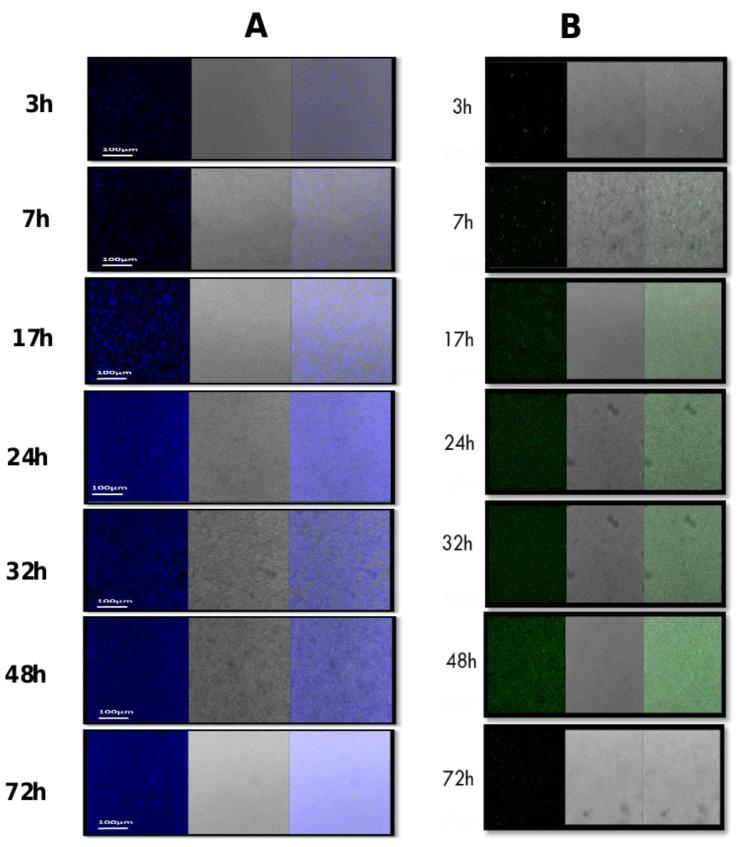
is a Gram-positive, coagulase-negative staphylococci (CoNS), which appears as commensal in the skin, as well as a prevalent mastitis pathogen of goats. Occasionally, it is also associated with infections in humans. Biofilm formation has been identified as a putative virulence factor in . Biofilms are multicellular communities protected by a self-produced extracellular matrix (ECM), which facilitates the resistance of bacterial cells to antimicrobial treatments. The ECM is constructed by exopolysaccharides, including the major exopolysaccharide-polysaccharide intercellular adhesion (PIA), regulated by the operon in species. The aim of this study was to characterize the expression of the operon in relation to biofilm formation in . Results showed that within a few hours of growth, could adhere to polystyrene surfaces, start to accumulate, and form biofilm. Peak biofilm biomass and maturation were reached after 48 h, followed by a reduction in biomass after 72 h. Confocal laser scanning microscopy showed the expression of matrix-associated proteins and polysaccharides at various time points. The expression dynamics of the operon were investigated using real-time reverse transcriptase PCR (RT)-qPCR, which showed elevated expression during the early stages of biofilm formation and subsequent downregulation throughout the biofilm aging process. In conclusion, our results show that the operon is essential in regulating biofilm formation in , similar to other species. Furthermore, the robustness of the observed biofilm phenotype could account for the successful intramammary colonization and may explain disease persistence caused by this pathogenic bacterium.
是一种革兰氏阳性、凝固酶阴性葡萄球菌(CoNS),它在皮肤中作为共生菌存在,也是山羊中常见的乳腺炎病原体。偶尔,它也与人类感染有关。生物膜形成已被确定为其一种假定的毒力因子。生物膜是由自身产生的细胞外基质(ECM)保护的多细胞群落,这有利于细菌细胞对抗菌治疗产生抗性。ECM由胞外多糖构建而成,包括主要的胞外多糖——胞间多糖黏附素(PIA),它由该物种中的操纵子调控。本研究的目的是表征该操纵子在与生物膜形成相关方面的表达情况。结果表明,在生长的几个小时内,它能够黏附于聚苯乙烯表面,开始积累并形成生物膜。48小时后达到生物膜生物量峰值和成熟度,随后在72小时后生物量减少。共聚焦激光扫描显微镜显示了在不同时间点与基质相关的蛋白质和多糖的表达。使用实时逆转录聚合酶链反应(RT)-qPCR研究了该操纵子的表达动态,结果显示在生物膜形成的早期阶段表达升高,随后在整个生物膜老化过程中表达下调。总之,我们的结果表明,该操纵子在调节生物膜形成方面至关重要,这与其他物种类似。此外,观察到的生物膜表型的稳健性可能解释了其成功的乳腺内定植,并可能解释了由这种病原菌引起的疾病持续性。



 Zotero 插件