Chen Jianfang, Wu Shuang, Peng Yu, Zhao Yang, Dong Yan, Ran Fengwei, Geng Haofei, Zhang Kang, Li Jianjun, Huang Shuo, Wang Zhe
Department of Oncology and Southwest Cancer Center, Southwest Hospital, Third Military Medical University (Army Medical University), Chongqing, China.
Front Pharmacol. 2023 Jun 12;14:1200017. doi: 10.3389/fphar.2023.1200017. eCollection 2023.
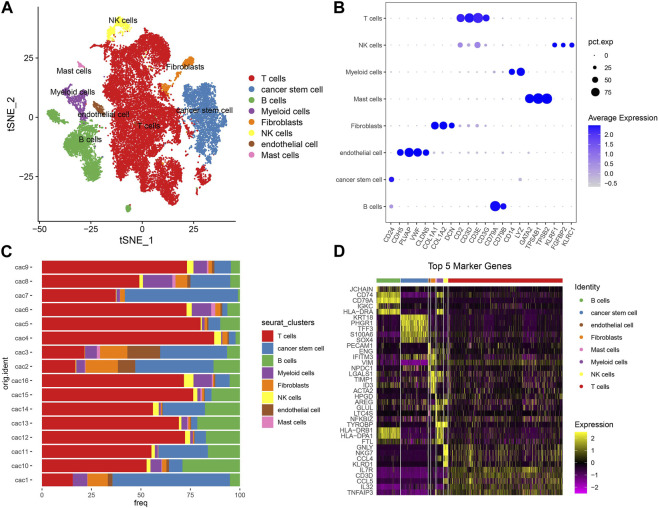
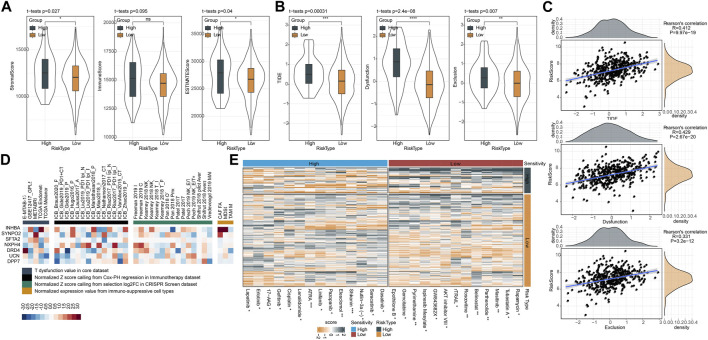
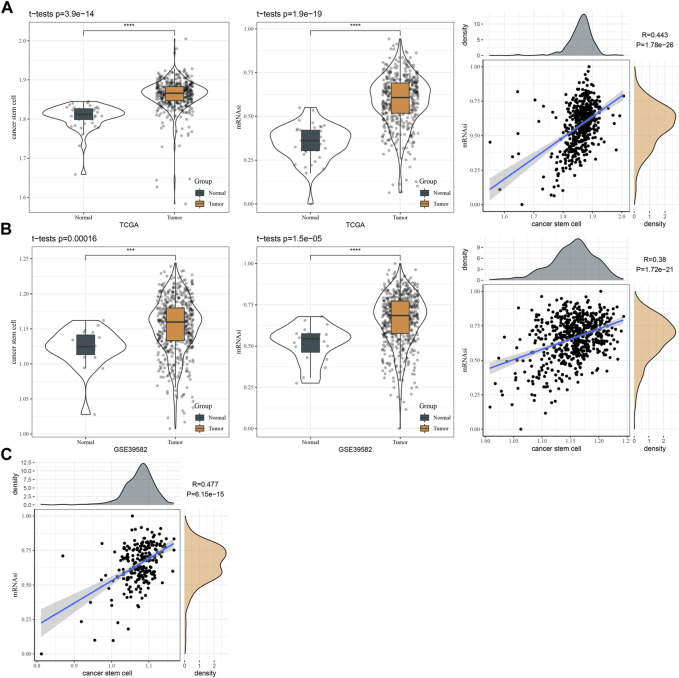
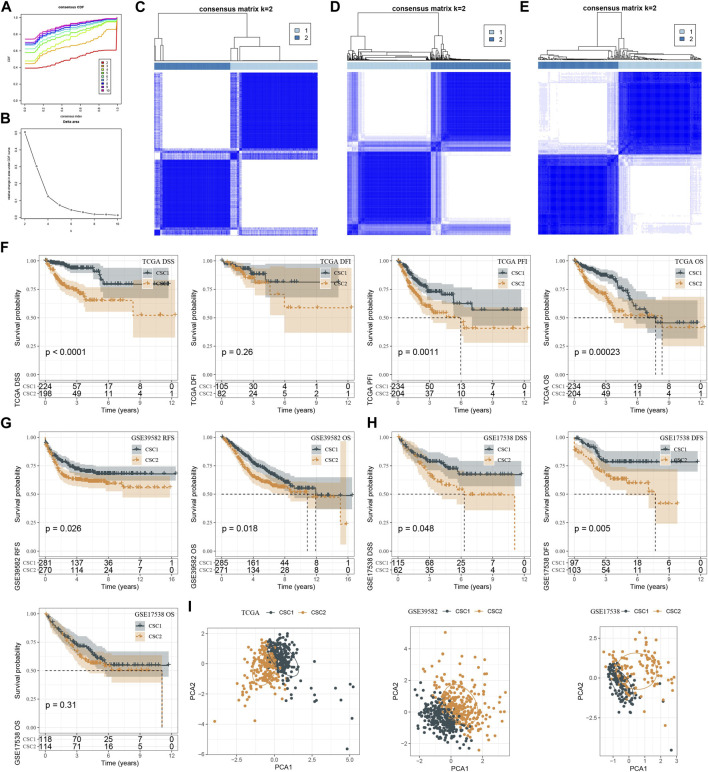
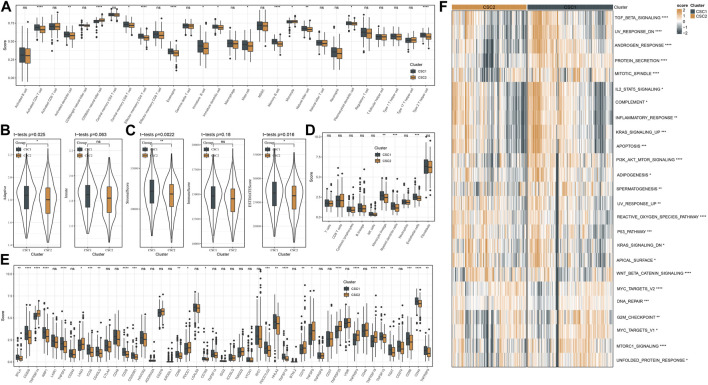
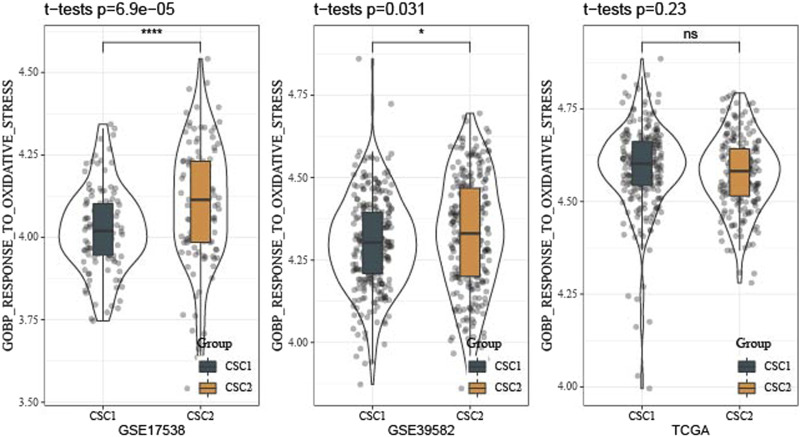
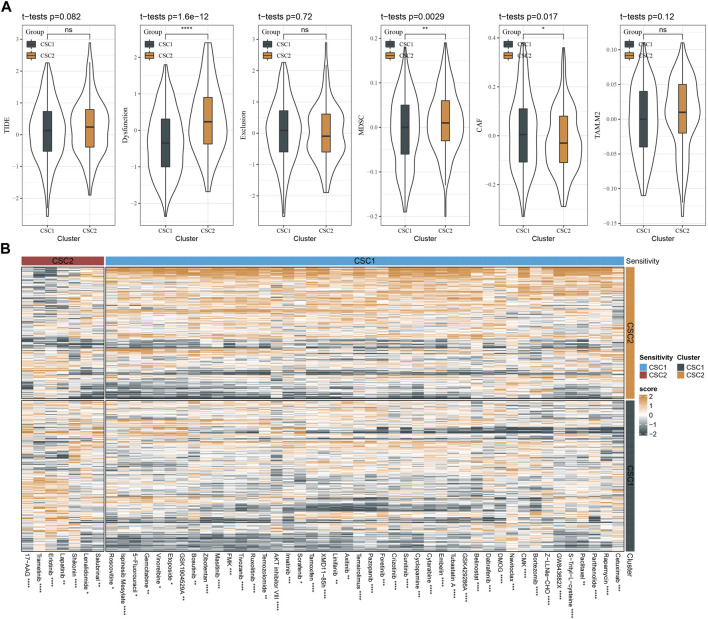
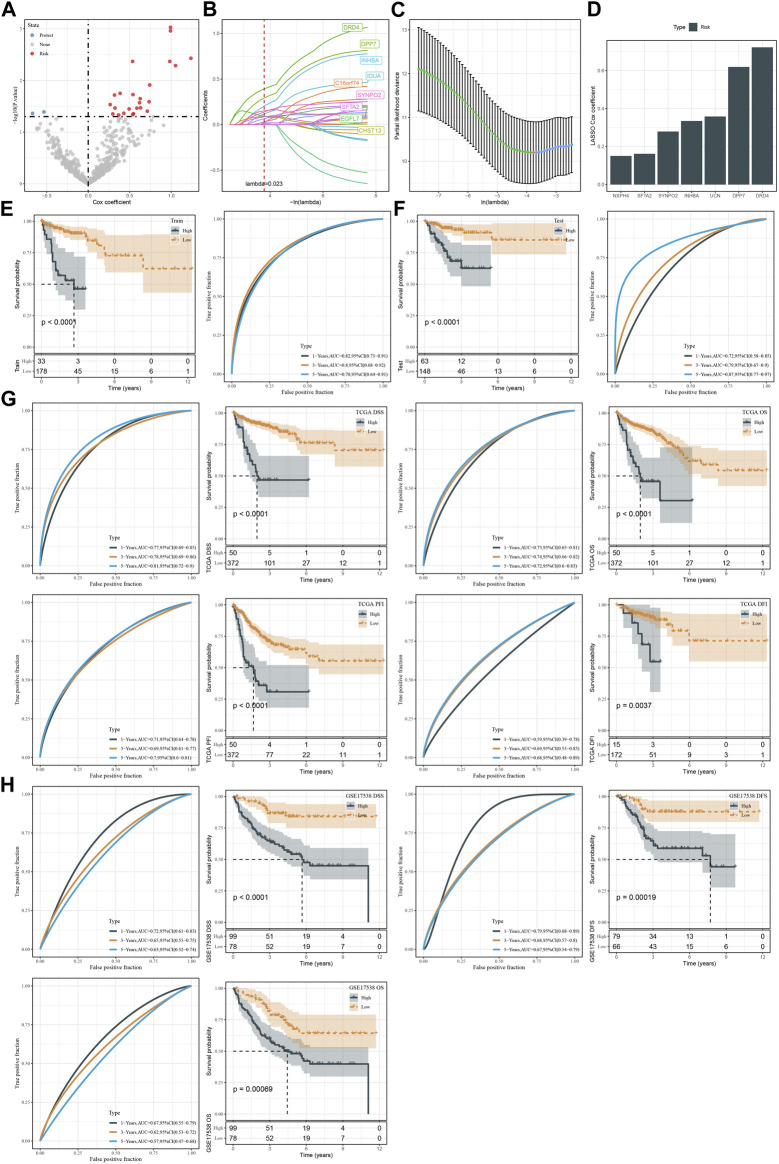
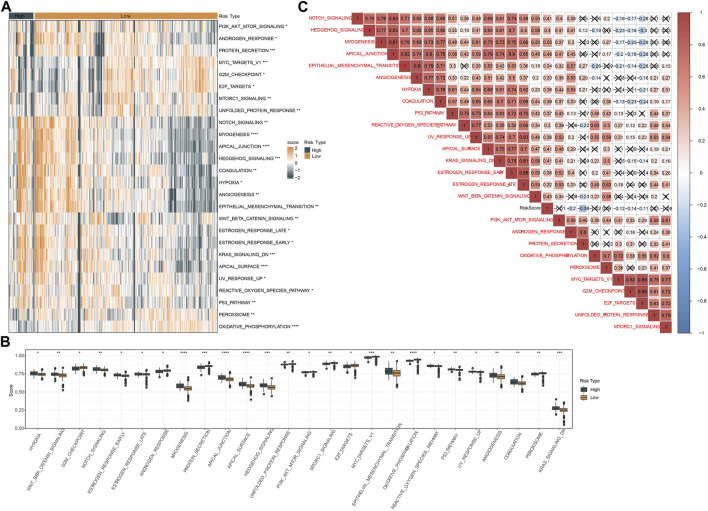
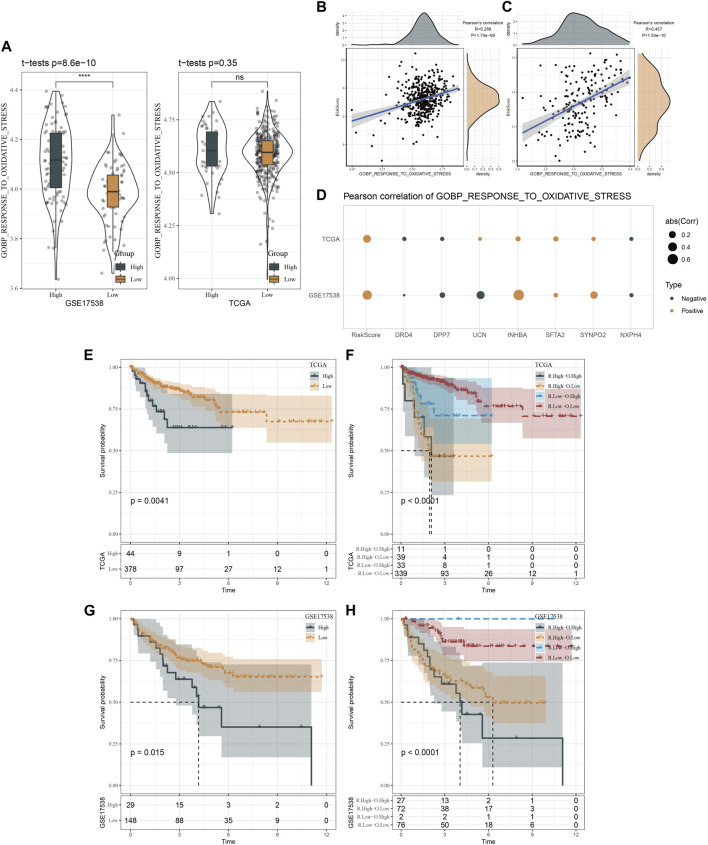
Colorectal cancer (CRC) ranks the second malignancy with high incidence and mortality worldwide. Cancer stem cells (CSCs) function critically in cancer progression and metastasis via the interplay with immune cells in tumor microenvironment. This study aimed to identify important CSC marker genes and parsed the role of these marker genes in CRC. CRC samples' single-cell RNA sequencing data and bulk transcriptome data were utilized. Seurat R package annotated CSCs and identified CSC marker genes. Consensus clustering subtyped CRC samples based on CSC marker genes. Immune microenvironment, pathway and oxidative stress analysis was performed using ESTIMATE, MCP-counter analysis and ssGSEA analysis. A prognostic model was established by Lasso and stepAIC. Sensitivity to chemotherapeutic drugs was determined by the biochemical half maximal inhibitory concentration with pRRophetic R package. We identified a total of 29 CSC marker genes related to disease-specific survival (DSS). Two clusters (CSC1 and CSC2) were determined, and CSC2 showed shorter DSS, a larger proportion of late-stage samples, and higher oxidative stress response. Two clusters exhibited differential activation of biological pathways associated with immune response and oncogenic signaling. Drug sensitivity analysis showed that 44 chemotherapy drugs were more sensitive to CSC2 that those in CSC1. We constructed a seven-gene prognostic model (DRD4, DPP7, UCN, INHBA, SFTA2, SYNPO2, and NXPH4) that was effectively to distinguish high-risk and low-risk patients. 14 chemotherapy drugs were more sensitive to high-risk group and 13 chemotherapy drugs were more sensitive to low-risk group. Combination of higher oxidative stress and risk score indicated dismal prognosis. The CSC marker genes we identified may help to further decipher the role of CSCs in CRC development and progression. The seven-gene prognostic model could serve as an indicator for predicting the response to immunotherapy and chemotherapy as well as prognosis of CRC patients.
结直肠癌(CRC)是全球发病率和死亡率均较高的第二大恶性肿瘤。癌症干细胞(CSCs)通过与肿瘤微环境中的免疫细胞相互作用,在癌症进展和转移中发挥关键作用。本研究旨在鉴定重要的癌症干细胞标记基因,并解析这些标记基因在结直肠癌中的作用。利用了结直肠癌样本的单细胞RNA测序数据和批量转录组数据。Seurat R软件包对癌症干细胞进行注释并鉴定癌症干细胞标记基因。基于癌症干细胞标记基因对结直肠癌样本进行一致性聚类分型。使用ESTIMATE、MCP-counter分析和单样本基因集富集分析(ssGSEA)进行免疫微环境、信号通路和氧化应激分析。通过套索回归和逐步AIC法建立预后模型。使用pRRophetic R软件包通过生化半数最大抑制浓度来确定对化疗药物的敏感性。我们总共鉴定出29个与疾病特异性生存(DSS)相关的癌症干细胞标记基因。确定了两个聚类(CSC1和CSC2),CSC2显示出较短的疾病特异性生存时间、较大比例的晚期样本以及更高的氧化应激反应。两个聚类在与免疫反应和致癌信号相关的生物途径中表现出不同的激活状态。药物敏感性分析表明,44种化疗药物对CSC2的敏感性高于CSC1。我们构建了一个七基因预后模型(DRD4、DPP7、UCN、INHBA、SFTA2、SYNPO2和NXPH4),该模型可有效区分高风险和低风险患者。14种化疗药物对高风险组更敏感,13种化疗药物对低风险组更敏感。较高的氧化应激与风险评分相结合表明预后不良。我们鉴定出的癌症干细胞标记基因可能有助于进一步阐明癌症干细胞在结直肠癌发生和发展中的作用。该七基因预后模型可作为预测结直肠癌患者免疫治疗和化疗反应以及预后的指标。