Department of Civil and Mineral Engineering, University of Toronto, Toronto, Canada M5S 1A4.
School of Architecture, Civil and Environmental Engineering, École Polytechnique Fedérale de Lausanne, 1015 Lausanne, Switzerland.
Environ Sci Technol. 2023 Jul 11;57(27):10030-10038. doi: 10.1021/acs.est.3c00756. Epub 2023 Jun 28.
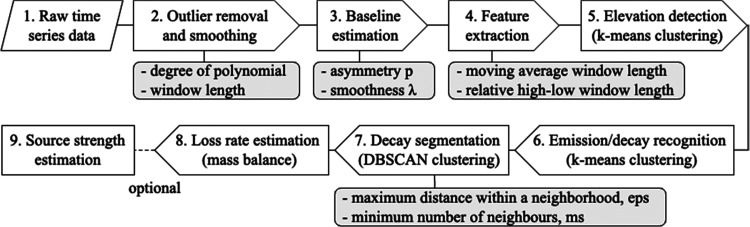
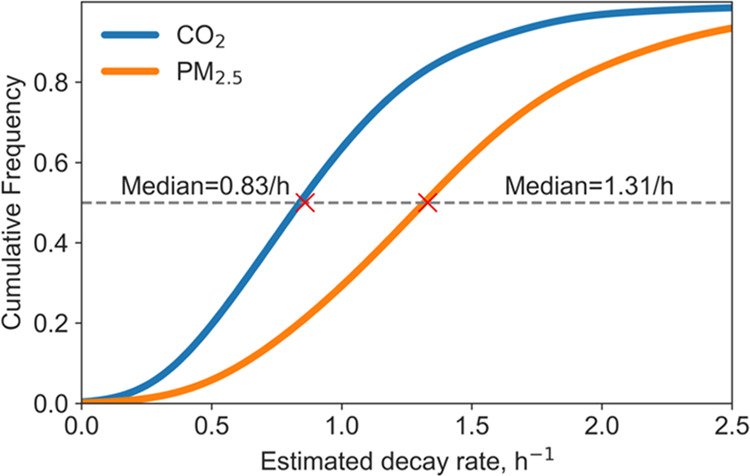
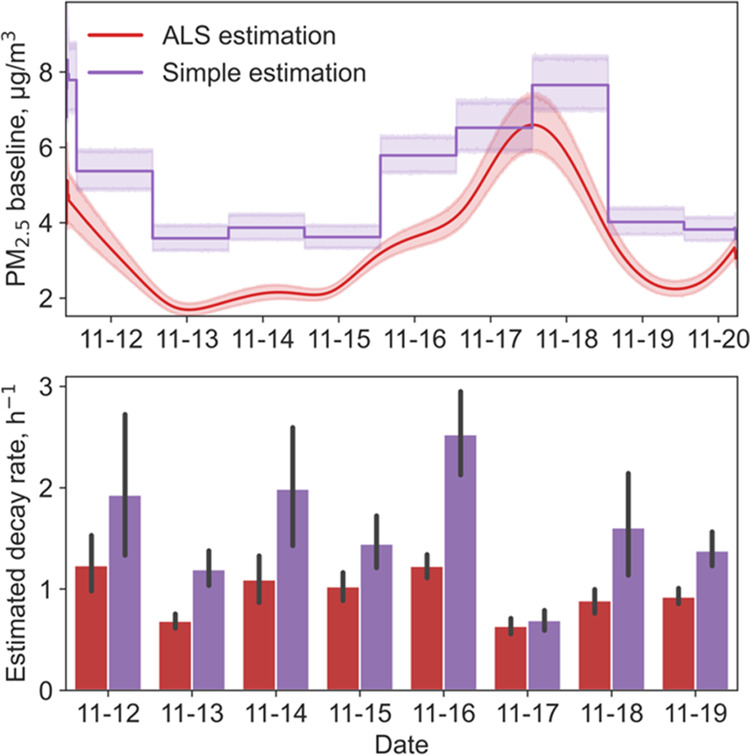
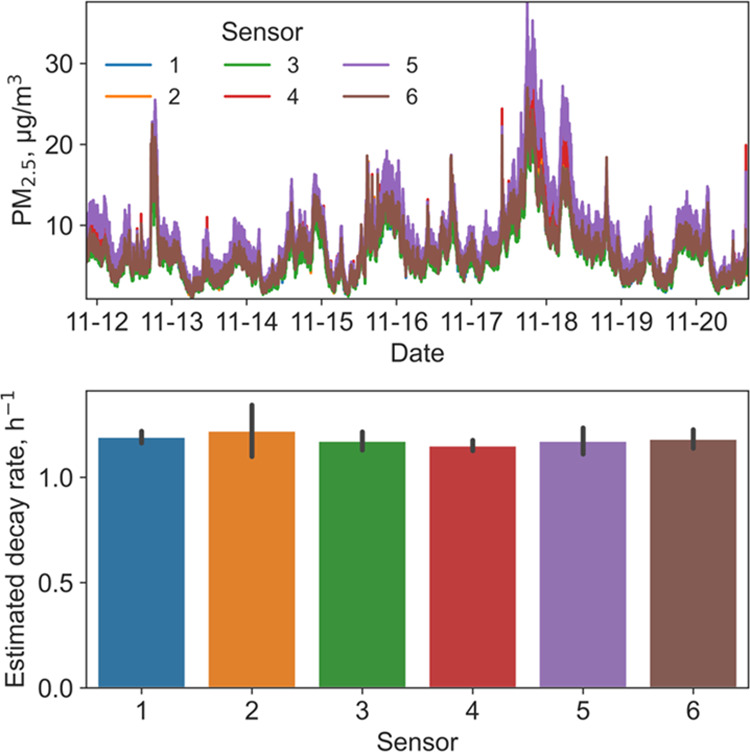
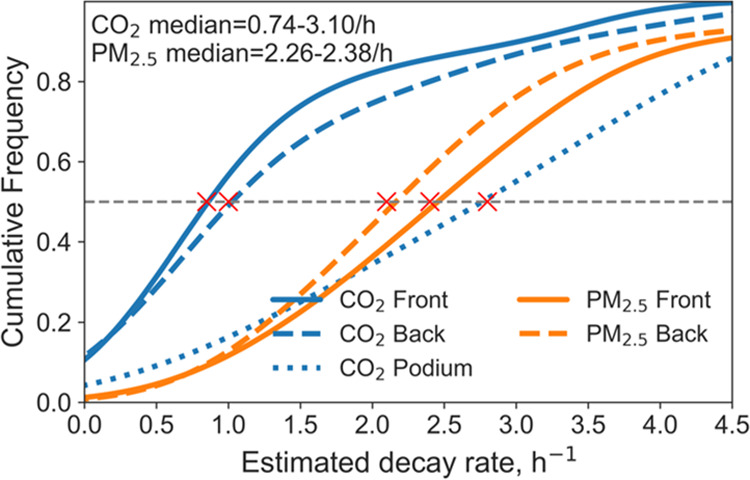
Low-cost air quality monitors are increasingly being deployed in various indoor environments. However, data of high temporal resolution from those sensors are often summarized into a single mean value, with information about pollutant dynamics discarded. Further, low-cost sensors often suffer from limitations such as a lack of absolute accuracy and drift over time. There is a growing interest in utilizing data science and machine learning techniques to overcome those limitations and take full advantage of low-cost sensors. In this study, we developed an unsupervised machine learning model for automatically recognizing decay periods from concentration time series data and estimating pollutant loss rates. The model uses k-means and DBSCAN clustering to extract decays and then mass balance equations to estimate loss rates. Applications on data collected from various environments suggest that the CO loss rate was consistently lower than the PM loss rate in the same environment, while both varied spatially and temporally. Further, detailed protocols were established to select optimal model hyperparameters and filter out results with high uncertainty. Overall, this model provides a novel solution to monitoring pollutant removal rates with potentially wide applications such as evaluating filtration and ventilation and characterizing indoor emission sources.
低成本空气质量监测仪越来越多地被部署在各种室内环境中。然而,这些传感器的高时间分辨率数据通常被汇总为单个平均值,其中有关污染物动态的信息被丢弃。此外,低成本传感器通常存在一些局限性,例如缺乏绝对准确性和随时间漂移。人们越来越感兴趣地利用数据科学和机器学习技术来克服这些限制,充分利用低成本传感器。在这项研究中,我们开发了一种无监督机器学习模型,用于自动从浓度时间序列数据中识别衰减期并估计污染物损失率。该模型使用 k-means 和 DBSCAN 聚类来提取衰减,然后使用质量平衡方程来估计损失率。在从各种环境中收集的数据上的应用表明,在相同环境中,CO 的损失率始终低于 PM 的损失率,而两者在空间和时间上都有所变化。此外,还建立了详细的协议来选择最佳模型超参数并过滤掉不确定性高的结果。总体而言,该模型为监测污染物去除率提供了一种新的解决方案,具有广泛的潜在应用,例如评估过滤和通风以及表征室内排放源。