Bhosale Pritam-Bhagwan, Vetrivel Preethi, Ha Sang-Eun, Kim Hun-Hwan, Heo Jeong-Doo, Won Chung-Kil, Kim Seong-Min, Kim Gon-Sup
Research Institute of Life Science and College of Veterinary Medicine, Gyeongsang National University, Gazwa, Jinju 52828, Korea.
Biological Resources Research Group, Bioenvironmental Science & Toxicology Division, Korea Institute of Toxicology (KIT), 17 Jeigok-gil, Jinju 52834, Korea.
Molecules. 2021 May 10;26(9):2802. doi: 10.3390/molecules26092802.
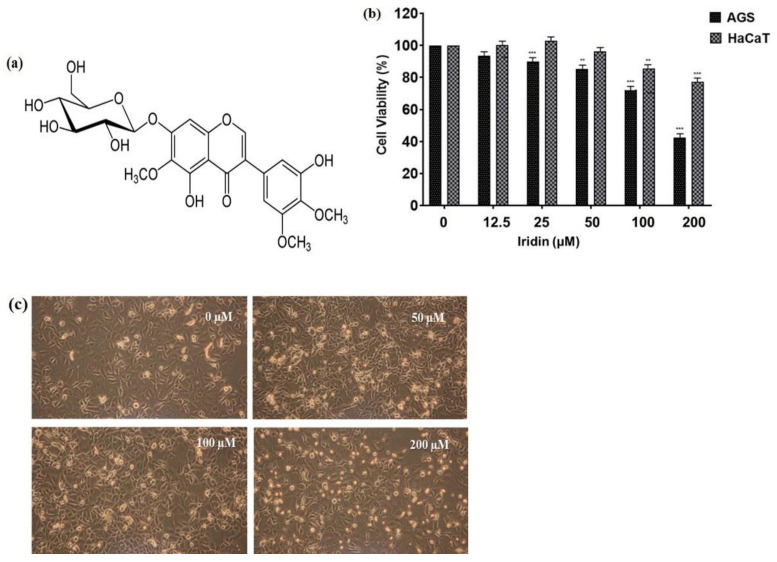
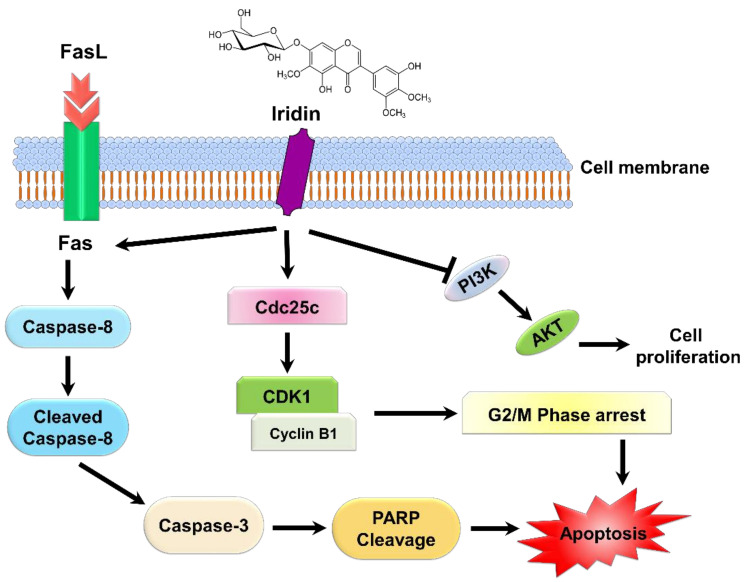
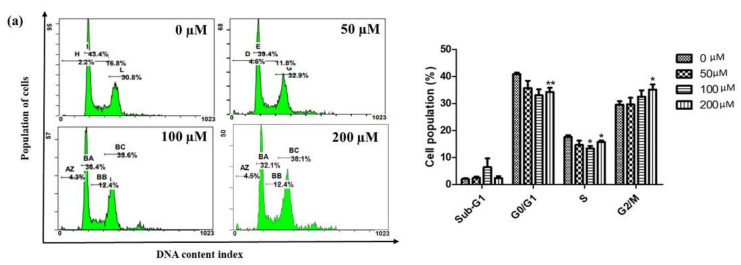
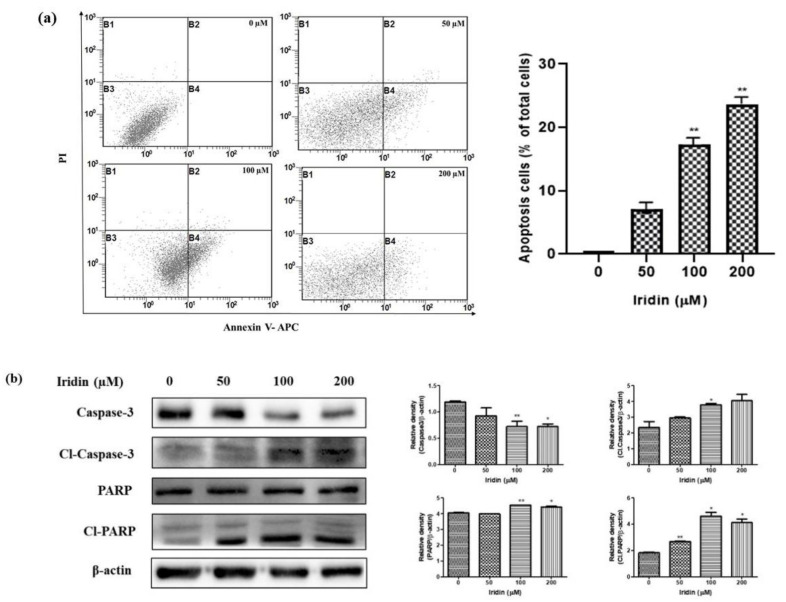
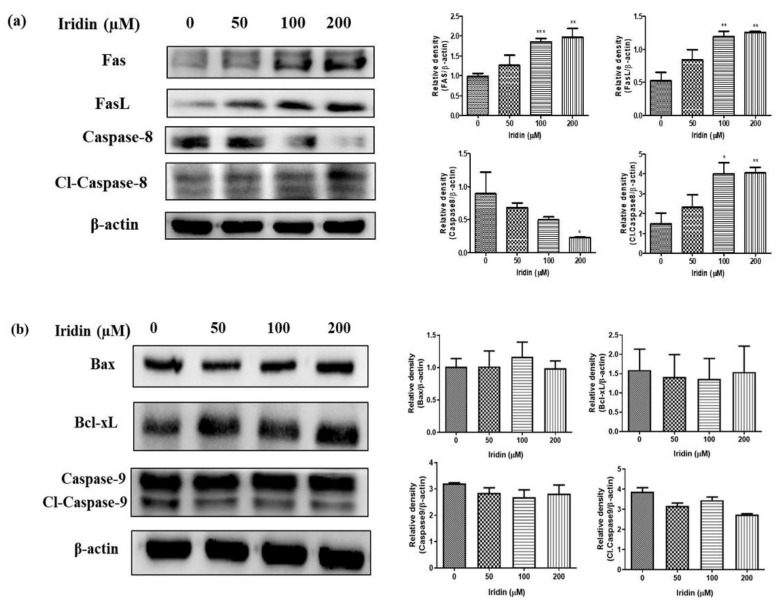
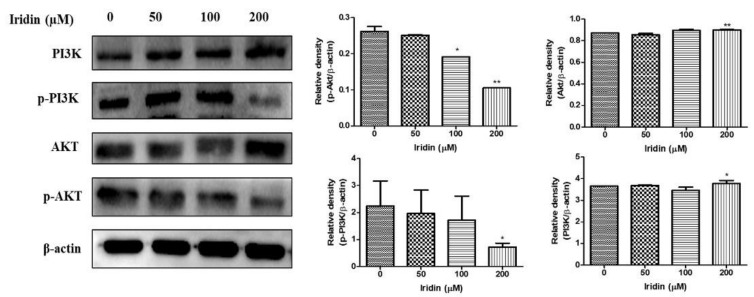
Iridin is a natural flavonoid found in documented for its broad spectrum of biological activities like antioxidant, antitumor, and antiproliferative effects. In the present study, we have investigated the antitumor potential of iridin in AGS gastric cancer cells. Iridin treatment decreases AGS cell growth and promotes G2/M phase cell cycle arrest by attenuating the expression of Cdc25C, CDK1, and Cyclin B1 proteins. Iridin-treatment also triggered apoptotic cell death in AGS cells, which was verified by cleaved Caspase-3 (Cl- Caspase-3) and poly ADP-ribose polymerase (PARP) protein expression. Further apoptotic cell death was confirmed by increased apoptotic cell death fraction shown in allophycocyanin (APC)/Annexin V and propidium iodide staining. Iridin also increased the expression of extrinsic apoptotic pathway proteins like Fas, FasL, and cleaved Caspase-8 in AGS cells. On the contrary, iridin-treated AGS cells did not show variations in proteins related to an intrinsic apoptotic pathway such as Bax and Bcl-xL. Besides, Iridin showed inhibition of PI3K/AKT signaling pathways by downregulation of (p-PI3K, p-AKT) proteins in AGS cells. In conclusion, these data suggest that iridin has anticancer potential by inhibiting PI3K/AKT pathway. It could be a basis for further drug design in gastric cancer treatment.
鸢尾苷是一种天然黄酮类化合物,因其具有抗氧化、抗肿瘤和抗增殖等广泛的生物活性而被记载。在本研究中,我们研究了鸢尾苷对AGS胃癌细胞的抗肿瘤潜力。鸢尾苷处理可降低AGS细胞的生长,并通过减弱Cdc25C、CDK1和细胞周期蛋白B1蛋白的表达来促进G2/M期细胞周期阻滞。鸢尾苷处理还引发了AGS细胞的凋亡性细胞死亡,这通过裂解的半胱天冬酶-3(Cl-半胱天冬酶-3)和聚ADP-核糖聚合酶(PARP)蛋白表达得到证实。通过别藻蓝蛋白(APC)/膜联蛋白V和碘化丙啶染色显示的凋亡细胞死亡分数增加,进一步证实了凋亡性细胞死亡。鸢尾苷还增加了AGS细胞中外源性凋亡途径蛋白如Fas、FasL和裂解的半胱天冬酶-8的表达。相反,经鸢尾苷处理的AGS细胞在与内源性凋亡途径相关的蛋白如Bax和Bcl-xL方面未显示出变化。此外,鸢尾苷通过下调AGS细胞中的(p-PI3K、p-AKT)蛋白来抑制PI3K/AKT信号通路。总之,这些数据表明鸢尾苷通过抑制PI3K/AKT途径具有抗癌潜力。它可能是胃癌治疗中进一步药物设计的基础。