Department of Biomedical Engineering, Virginia Commonwealth University, Richmond, Virginia, USA.
BioMediTech, Faculty of Medicine and Health Technology, Tampere University, Tampere, Finland.
Nat Commun. 2023 Jun 30;14(1):3867. doi: 10.1038/s41467-023-39563-6.
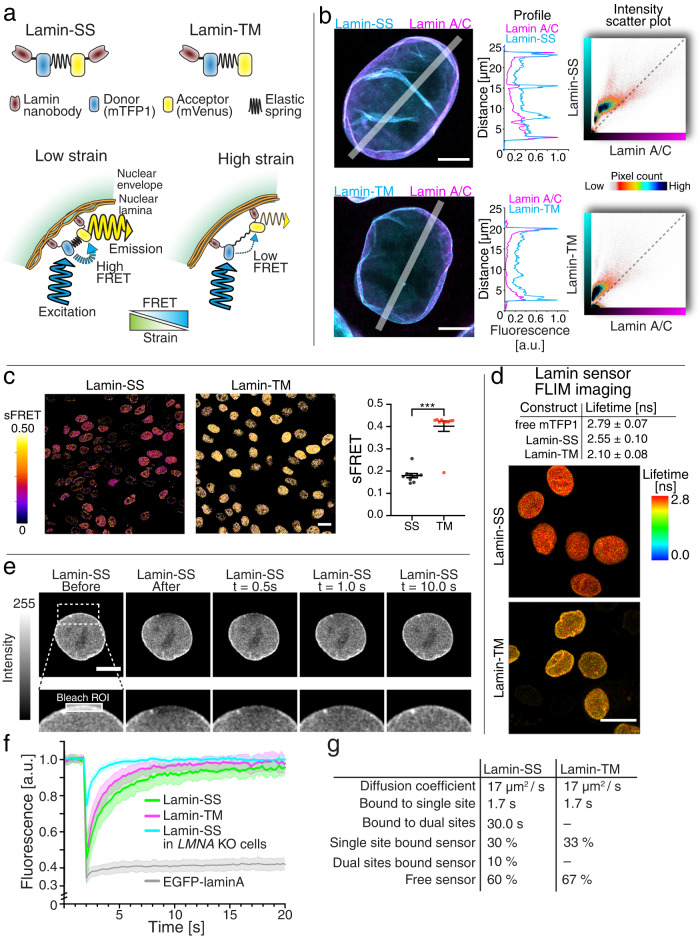
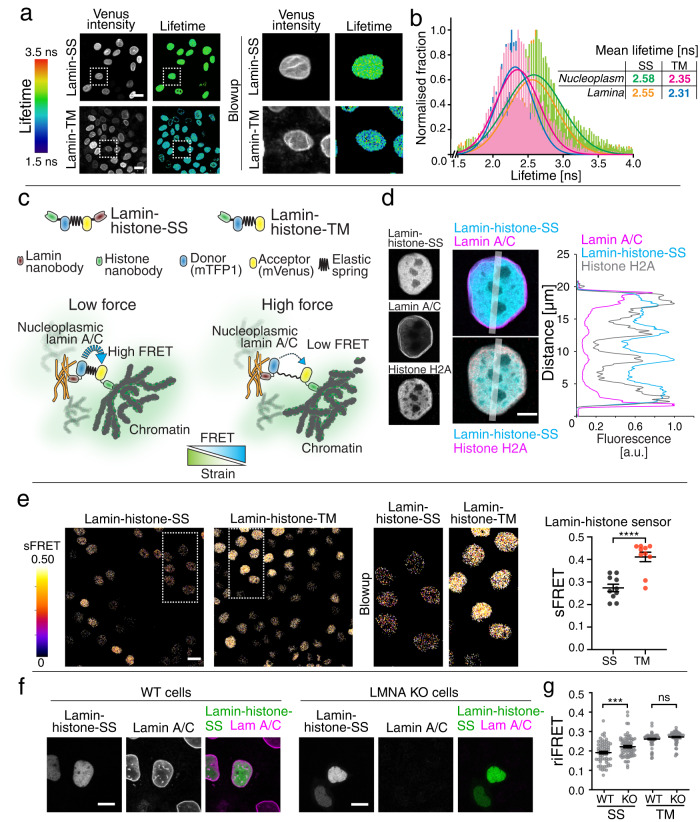
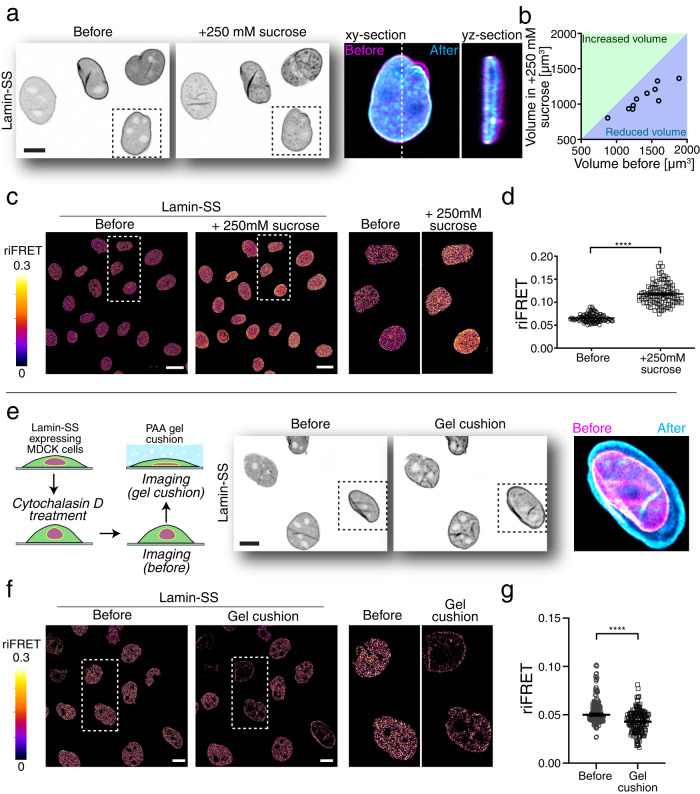
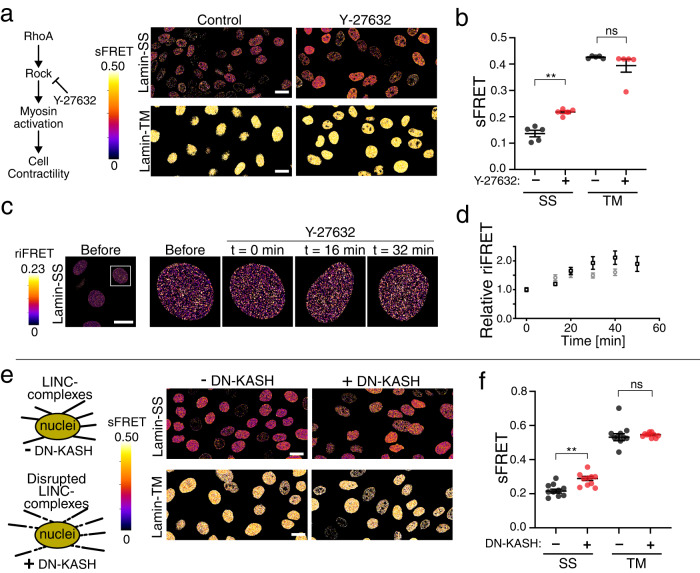
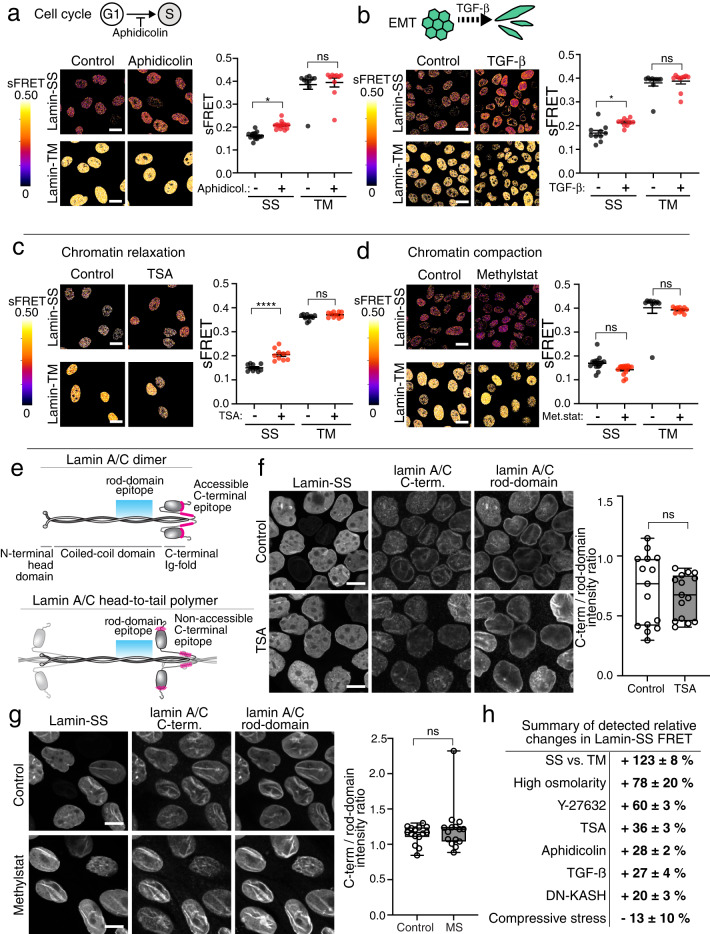
Nuclear lamins have been considered an important structural element of the nucleus. The nuclear lamina is thought both to shield DNA from excessive mechanical forces and to transmit mechanical forces onto the DNA. However, to date there is not yet a technical approach to directly measure mechanical forces on nuclear lamins at the protein level. To overcome this limitation, we developed a nanobody-based intermolecular tension FRET biosensor capable of measuring the mechanical strain of lamin filaments. Using this sensor, we were able to show that the nuclear lamina is subjected to significant force. These forces are dependent on nuclear volume, actomyosin contractility, functional LINC complex, chromatin condensation state, cell cycle, and EMT. Interestingly, large forces were also present on nucleoplasmic lamins, indicating that these lamins may also have an important mechanical role in the nucleus. Overall, we demonstrate that the nanobody-based approach allows construction of biosensors for complex protein structures for mechanobiology studies.
核纤层蛋白被认为是细胞核的重要结构元件。核纤层既被认为可以保护 DNA 免受过度机械力的影响,又可以将机械力传递到 DNA 上。然而,迄今为止,还没有一种技术方法可以在蛋白质水平上直接测量核纤层上的机械力。为了克服这一限制,我们开发了一种基于纳米体的分子间张力 FRET 生物传感器,能够测量核纤层丝的机械应变。使用这种传感器,我们能够证明核纤层受到很大的力。这些力取决于核体积、肌动球蛋白收缩性、功能性 LINC 复合物、染色质凝聚状态、细胞周期和 EMT。有趣的是,核质中的核纤层也存在很大的力,这表明这些核纤层在细胞核中也可能具有重要的机械作用。总的来说,我们证明了基于纳米体的方法可以用于构建机械生物学研究中复杂蛋白质结构的生物传感器。