Stanford University, Stanford, CA, United States of America.
Emory University, Atlanta, GA, United States of America.
PeerJ. 2023 Jun 27;11:e15631. doi: 10.7717/peerj.15631. eCollection 2023.
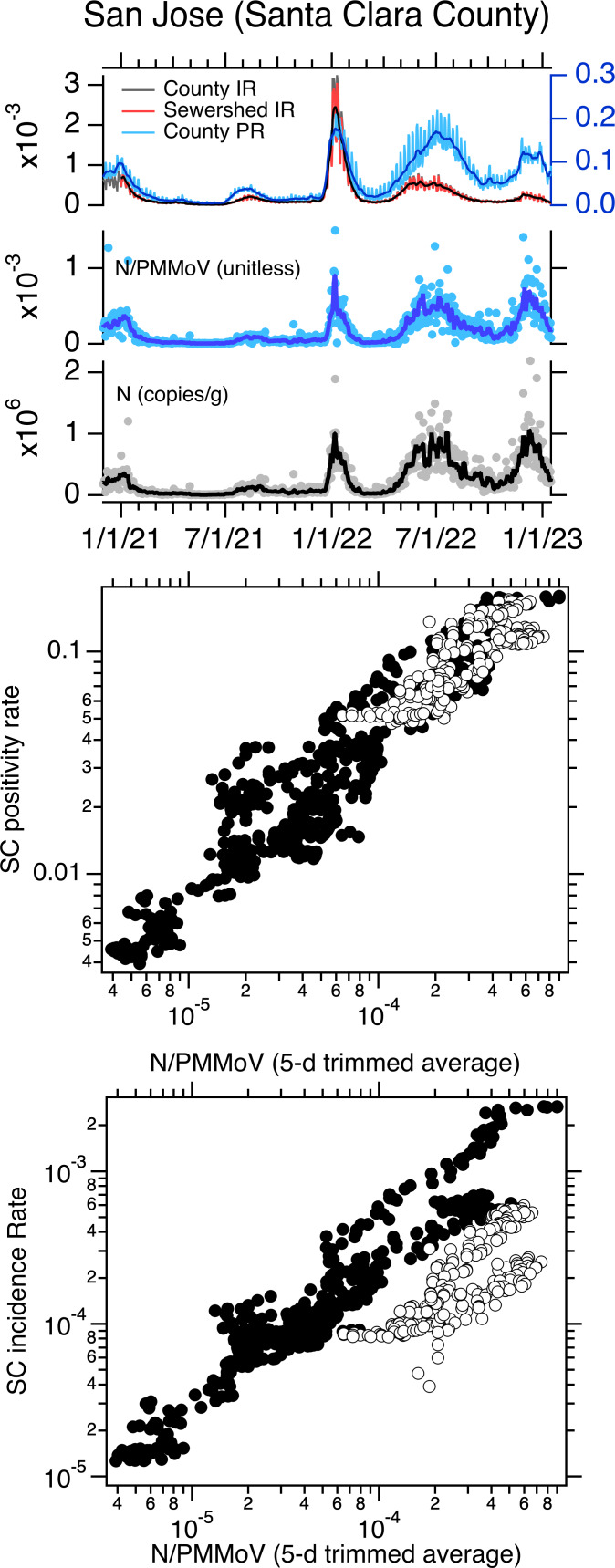
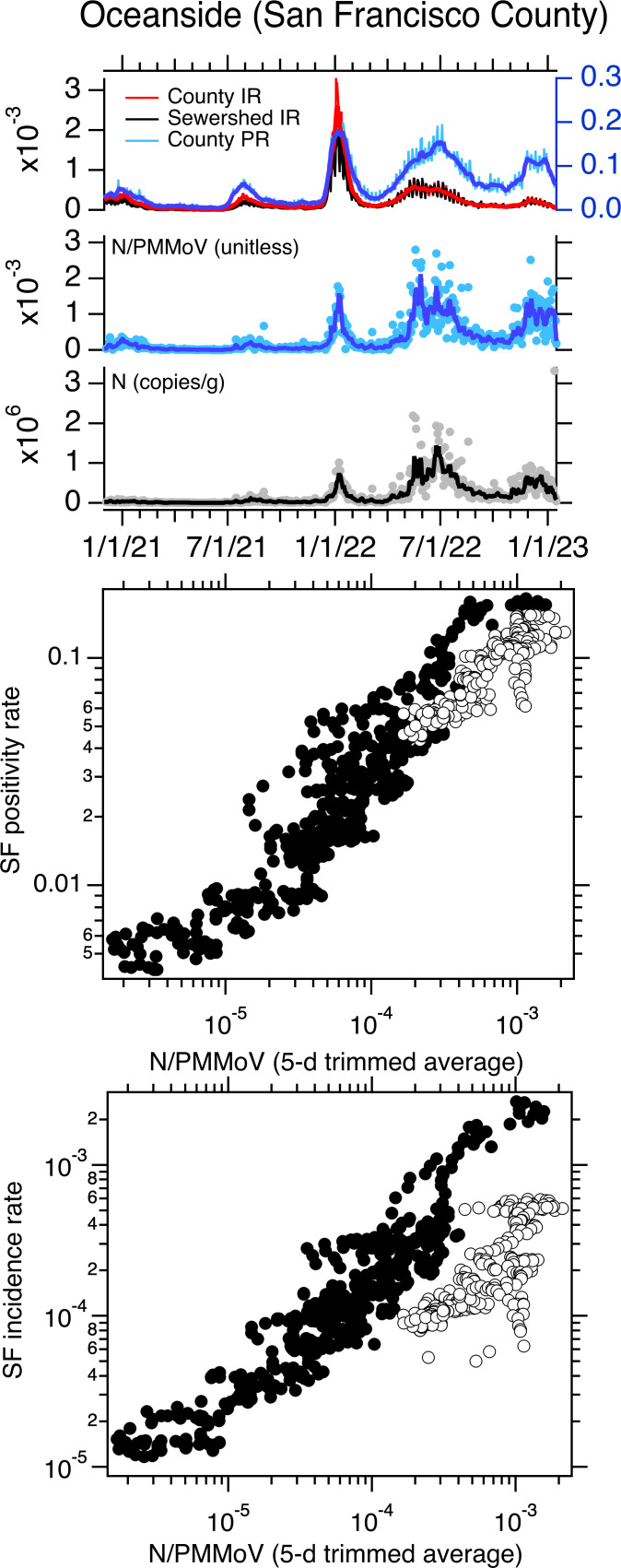
Concentrations of SARS-CoV-2 RNA in wastewater settled solids from publicly owned treatment works (POTWs) historically correlated strongly with laboratory confirmed incident COVID-19 case data. With the increased availability of at-home antigen tests since late 2021 and early 2022, laboratory test availability and test seeking behavior has decreased. In the United States, the results from at-home antigen tests are not typically reportable to public health agencies and thus are not counted in case reports. As a result, the number of reported laboratory-confirmed incident COVID-19 cases has decreased dramatically, even during times of increased test positivity rates and wastewater concentrations of SARS-CoV-2 RNA. Herein, we tested whether the correlative relationship between wastewater concentrations of SARS-CoV-2 RNA and reported laboratory-confirmed COVID-19 incidence rate has changed since 1 May 2022, a point in time immediately before the onset of the BA.2/BA.5 surge, the first surge to begin after at-home antigen test availability was high in the region. We used daily data from three POTWs in the Greater San Francisco Bay Area of California, USA for the analysis. We found that although there is a significant positive association between wastewater measurements and incident rate data collected after 1 May 2022, the parameters describing the relationship are different than those describing the relationship between the data collected prior to 1 May 2022. If laboratory test seeking or availability continues to change, the relationship between wastewater and reported case data will continue to change. Our results suggest, assuming SARS-CoV-2 RNA shedding remains relatively stable among those infected with the virus as different variants emerge, that wastewater concentrations of SARS-CoV-2 RNA can be used to estimate COVID-19 cases as they would have been during the time when laboratory testing availability and test seeking behavior were at a high (here, before 1 May 2022) using the historical relationship between SARS-CoV-2 RNA and COVID-19 case data.
污水厂沉降固体中的 SARS-CoV-2 RNA 浓度与实验室确诊的 COVID-19 病例数据历史上相关性很强。自 2021 年底和 2022 年初以来,家庭抗原检测的可用性增加,实验室检测的可用性和检测寻求行为减少。在美国,家庭抗原检测的结果通常不会向公共卫生机构报告,因此不在病例报告中计数。因此,报告的实验室确诊的 COVID-19 病例数量急剧下降,即使在检测阳性率和 SARS-CoV-2 RNA 污水浓度增加的时期也是如此。在此,我们测试了自 2022 年 5 月 1 日以来,SARS-CoV-2 RNA 污水浓度与报告的实验室确诊 COVID-19 发病率之间的相关性是否发生了变化,当时正值 BA.2/BA.5 激增之前的时间点,也是该地区家庭抗原检测可用性高以来的第一次激增。我们使用了美国加利福尼亚州旧金山湾区三个污水厂的每日数据进行分析。我们发现,尽管在 2022 年 5 月 1 日之后收集的污水测量值和发病数据之间存在显著的正相关关系,但描述该关系的参数与描述 2022 年 5 月 1 日之前收集的数据之间关系的参数不同。如果实验室检测寻求或可用性继续变化,污水与报告病例数据之间的关系将继续变化。我们的研究结果表明,假设不同变体出现时,病毒感染者的 SARS-CoV-2 RNA 脱落仍然相对稳定,那么可以使用污水中 SARS-CoV-2 RNA 的浓度来估计 COVID-19 病例,就像在实验室检测可用性和检测寻求行为较高时(此处指 2022 年 5 月 1 日之前)利用 SARS-CoV-2 RNA 和 COVID-19 病例数据之间的历史关系那样。