The Key Laboratory of Plant Immunity, Department of Plant Pathology, Nanjing Agricultural University, Nanjing 210095, P. R. China.
Salinity Agriculture Research Laboratory, Jiangsu Coastal Area Institute of Agricultural Sciences, Yancheng 224002, P. R. China.
Proc Natl Acad Sci U S A. 2023 Jul 11;120(28):e2302226120. doi: 10.1073/pnas.2302226120. Epub 2023 Jul 3.
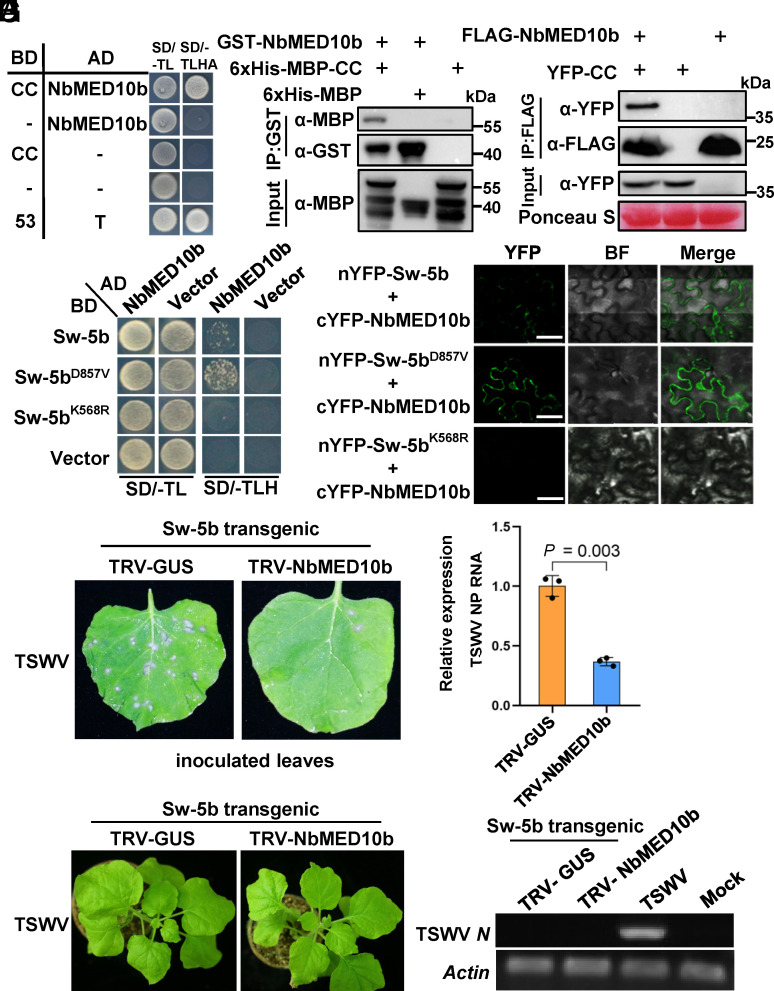
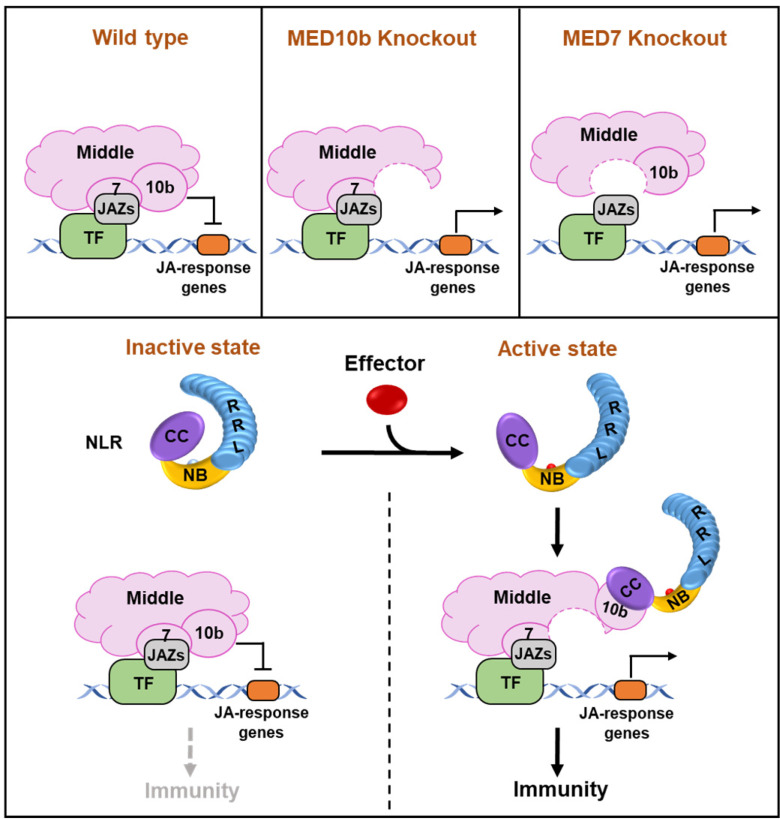
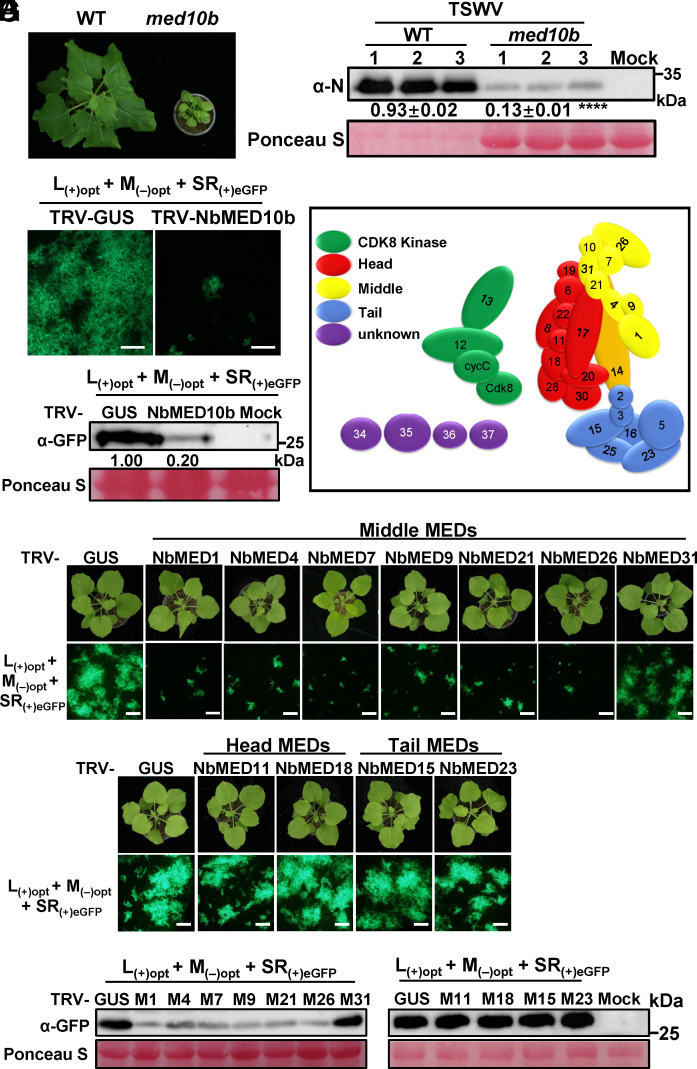
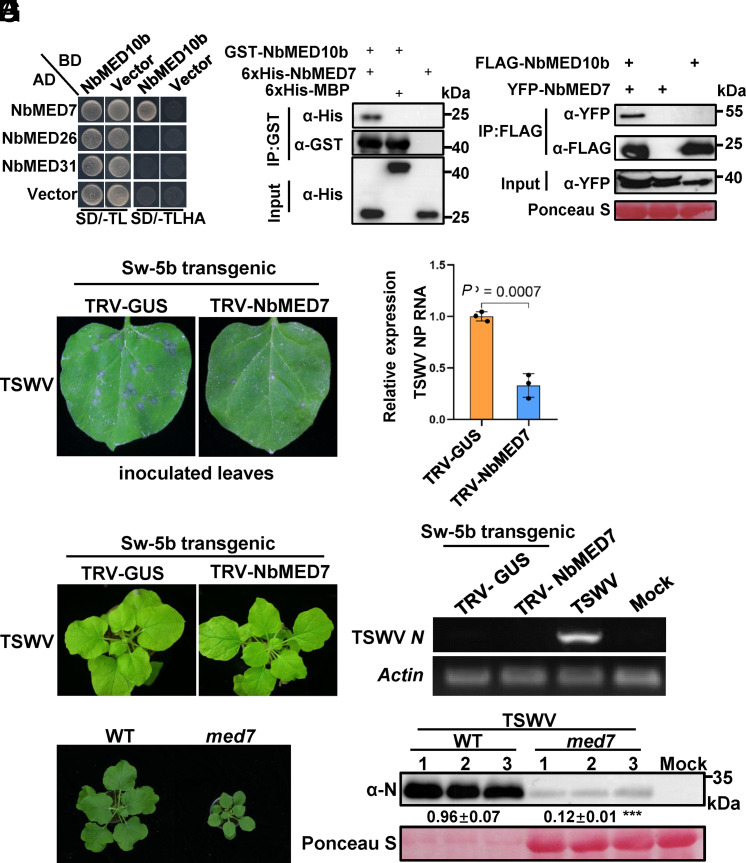
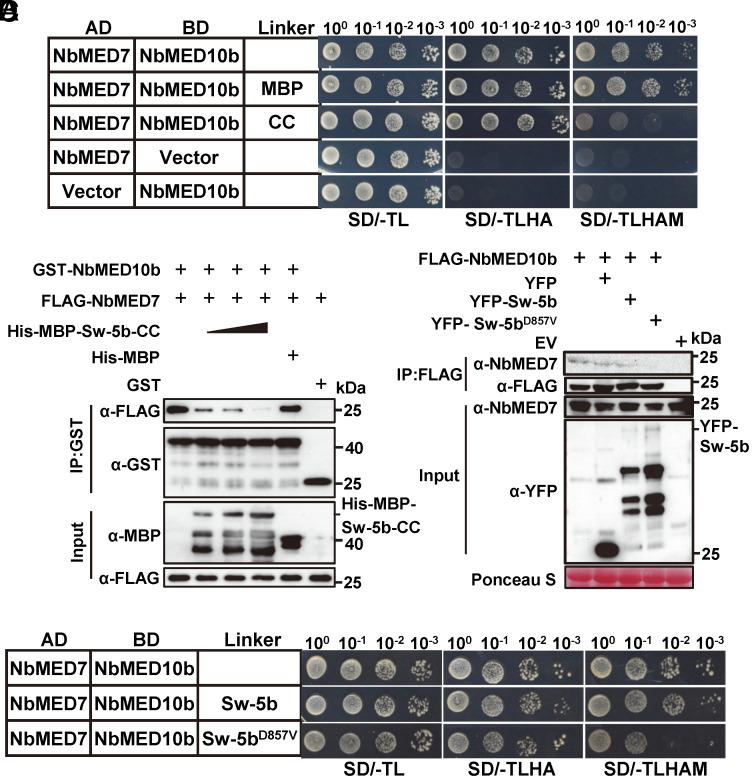
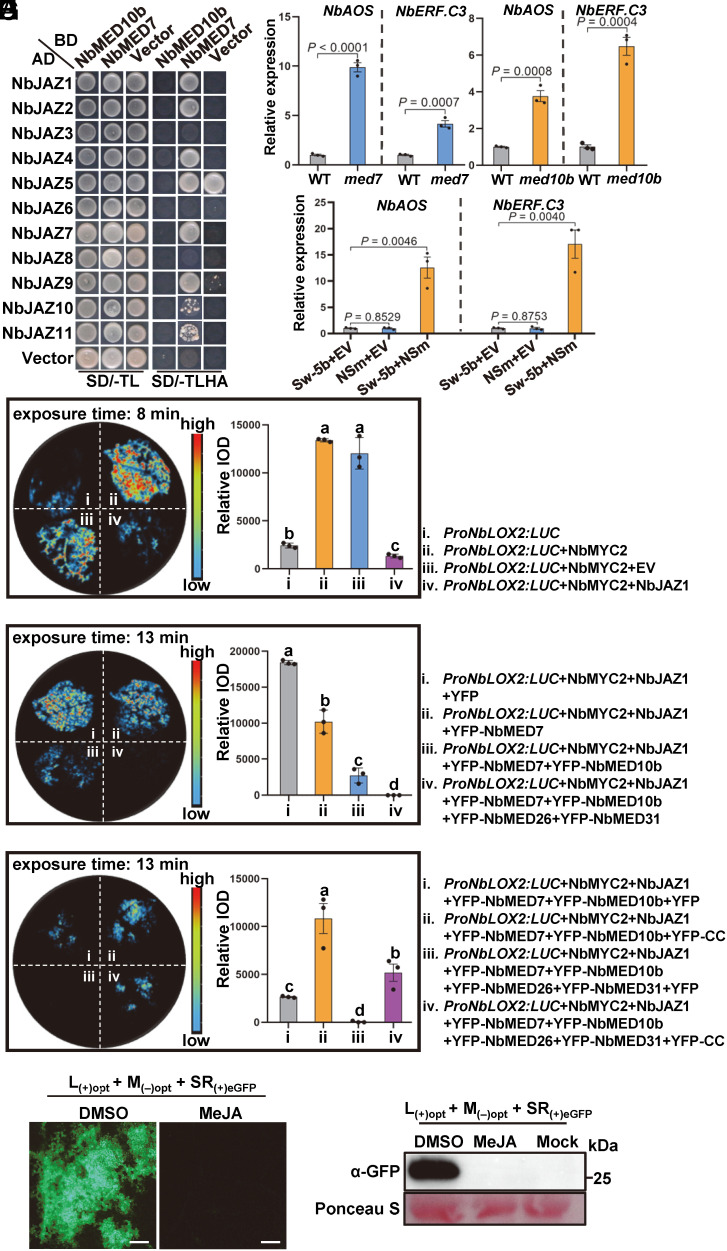
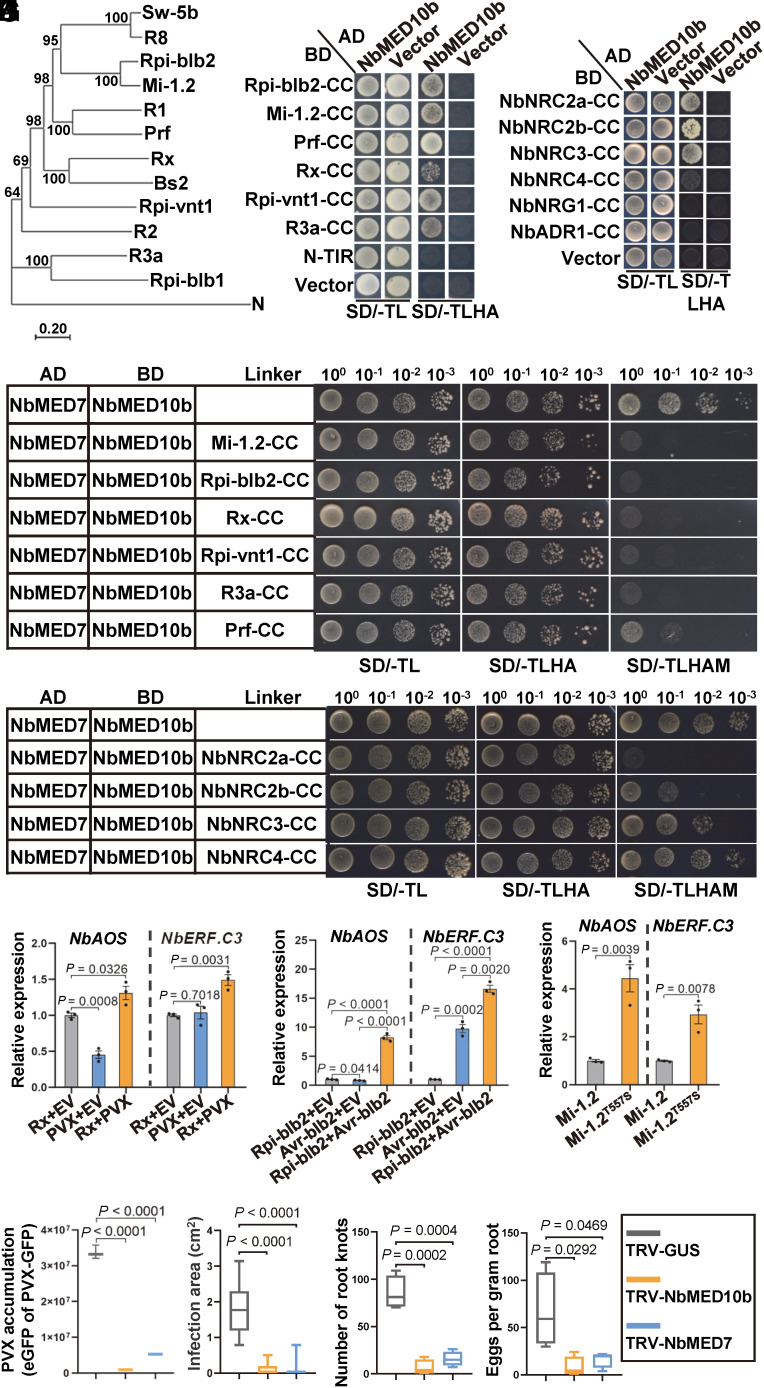
Plant intracellular nucleotide-binding domain, leucine-rich repeat-containing receptors (NLRs) activate a robust immune response upon detection of pathogen effectors. How NLRs induce downstream immune defense genes remains poorly understood. The Mediator complex plays a central role in transducing signals from gene-specific transcription factors to the transcription machinery for gene transcription/activation. In this study, we demonstrate that MED10b and MED7 of the Mediator complex mediate jasmonate-dependent transcription repression, and coiled-coil NLRs (CNLs) in modulate MED10b/MED7 to activate immunity. Using the tomato CNL , which confers resistance to , as a model, we found that the CC domain of Sw-5b directly interacts with MED10b. Knockout/down of and other subunits including of the middle module of Mediator activates plant defense against . MED10b was found to directly interact with MED7, and MED7 directly interacts with JAZ proteins, which function as transcriptional repressors of jasmonic acid (JA) signaling. MED10b-MED7-JAZ together can strongly repress the expression of JA-responsive genes. The activated Sw-5b CC interferes with the interaction between MED10b and MED7, leading to the activation of JA-dependent defense signaling against . Furthermore, we found that CC domains of various other CNLs including helper NLR NRCs from modulate MED10b/MED7 to activate defense against different pathogens. Together, our findings reveal that MED10b/MED7 serve as a previously unknown repressor of jasmonate-dependent transcription repression and are modulated by diverse CNLs in to activate the JA-specific defense pathways.
植物细胞内核苷酸结合域、富含亮氨酸重复受体(NLRs)在检测到病原体效应子时会引发强烈的免疫反应。然而,NLRs 如何诱导下游免疫防御基因的表达仍知之甚少。Mediator 复合物在将信号从特定基因的转录因子传递到转录机器以进行基因转录/激活方面发挥着核心作用。在本研究中,我们证明了 Mediator 复合物中的 MED10b 和 MED7 介导茉莉酸依赖性转录抑制,而卷曲螺旋 NLRs(CNLs)在 中调节 MED10b/MED7 以激活免疫。我们以番茄 CNL (赋予对 的抗性)为模型,发现 Sw-5b 的 CC 结构域直接与 MED10b 相互作用。 和包括中间模块的其他亚基(如 )的敲除/下调激活了植物对 的防御。发现 MED10b 直接与 MED7 相互作用,而 MED7 直接与 JAZ 蛋白相互作用,JAZ 蛋白作为茉莉酸(JA)信号的转录抑制剂发挥作用。MED10b-MED7-JAZ 复合物可以强烈抑制 JA 应答基因的表达。激活的 Sw-5b CC 干扰了 MED10b 和 MED7 之间的相互作用,导致 JA 依赖的防御信号被激活,从而抵抗 。此外,我们发现包括来自 的辅助 NLR NRCs 在内的各种其他 CNLs 的 CC 结构域调节 MED10b/MED7 以激活对不同病原体的防御。总之,我们的研究结果表明,MED10b/MED7 作为茉莉酸依赖性转录抑制的未知抑制剂,被不同的 CNLs 在 中调节以激活 JA 特异性防御途径。