Department of Thoracic Surgery, The Fifth People's Hospital of Shanghai, Fudan University, Shanghai, 200240, China.
Department of Trauma-Emergency & Critical Care Medicine, The Fifth People's Hospital of Shanghai, Fudan University, Shanghai, 200240, China.
BMC Pulm Med. 2023 Jul 3;23(1):239. doi: 10.1186/s12890-023-02468-7.
Hypoxia contributes to the development of invasive and metastatic cancer cells, and is detrimental to cancer treatment. This study aimed to explore the molecular mechanisms by which hypoxic microenvironments affect hypoxic non-small cell lung cancer (NSCLC) development and the effects of M2 macrophage-derived extracellular vesicles (EVs) on NSCLC cells.
A549 cells were cultured in an anoxic incubator for 48 h to construct hypoxic A549 cells, and then normal and hypoxic A549 cells were harvested for RNA sequencing. Next, THP-1 cells were used to induce M2 macrophages, and EVs were isolated from THP-1 cells and M2 macrophages. Cell counting kit-8 and transwell assays were used to determine the viability and migration of hypoxic A549 cells, respectively.
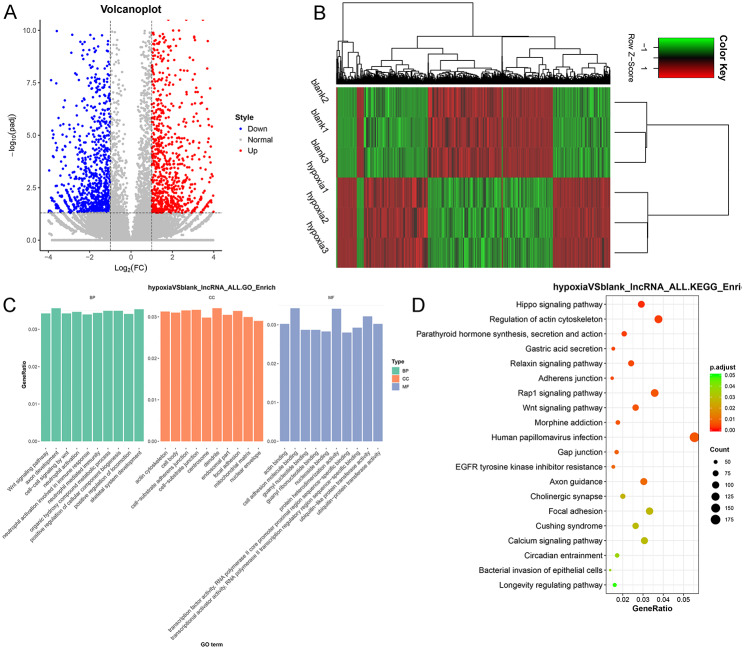
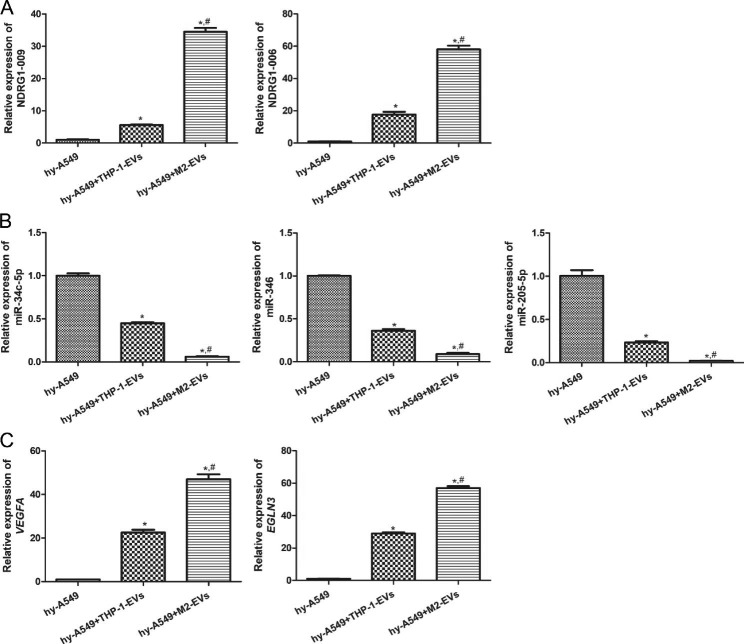
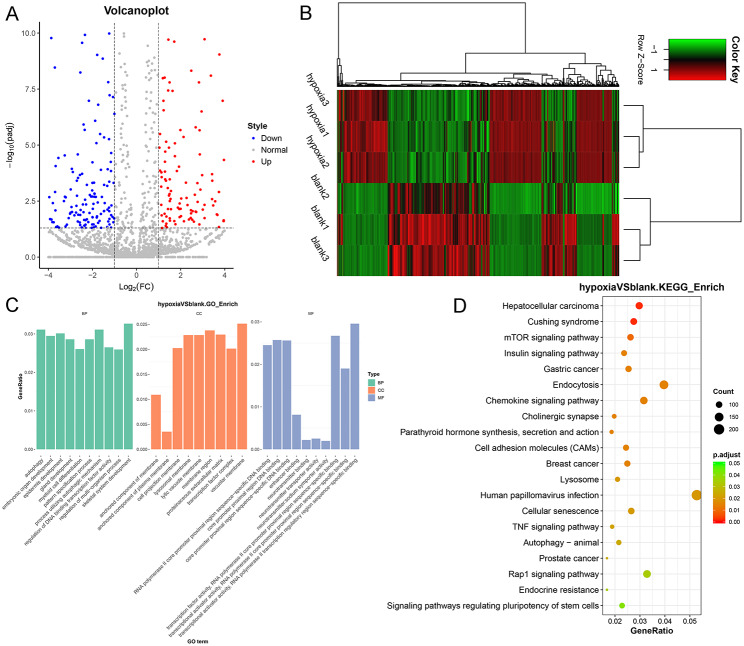
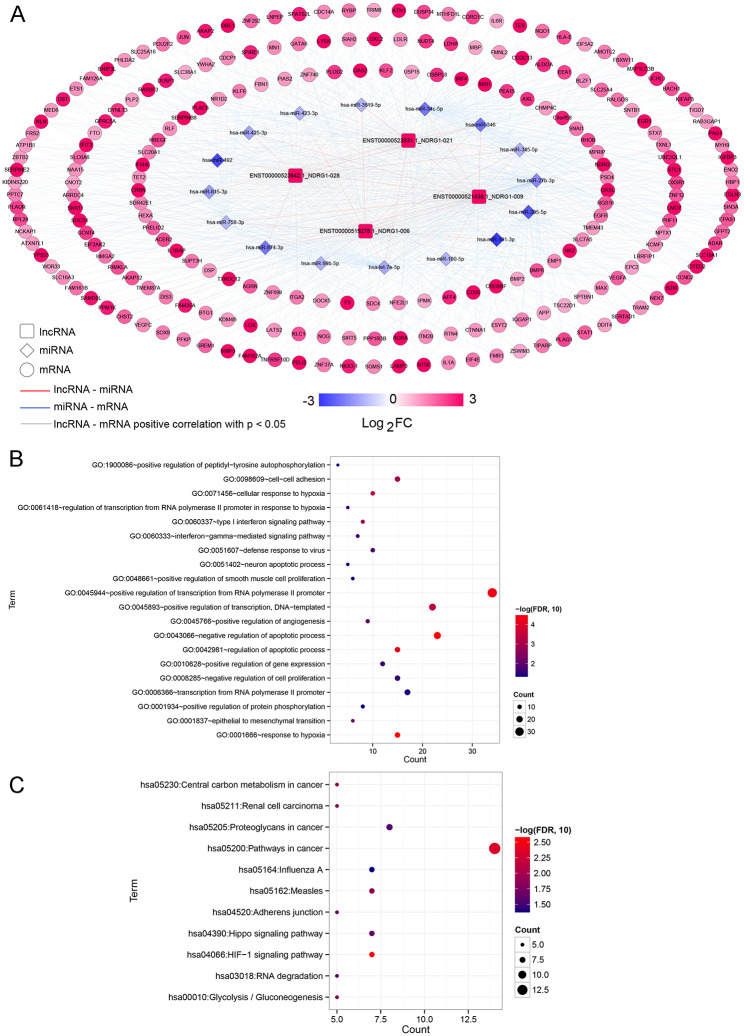
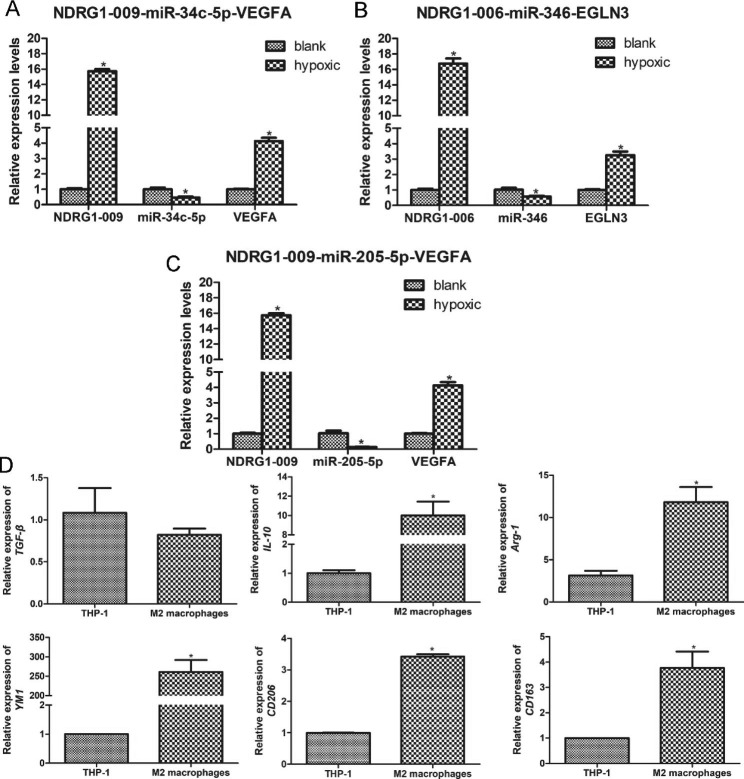
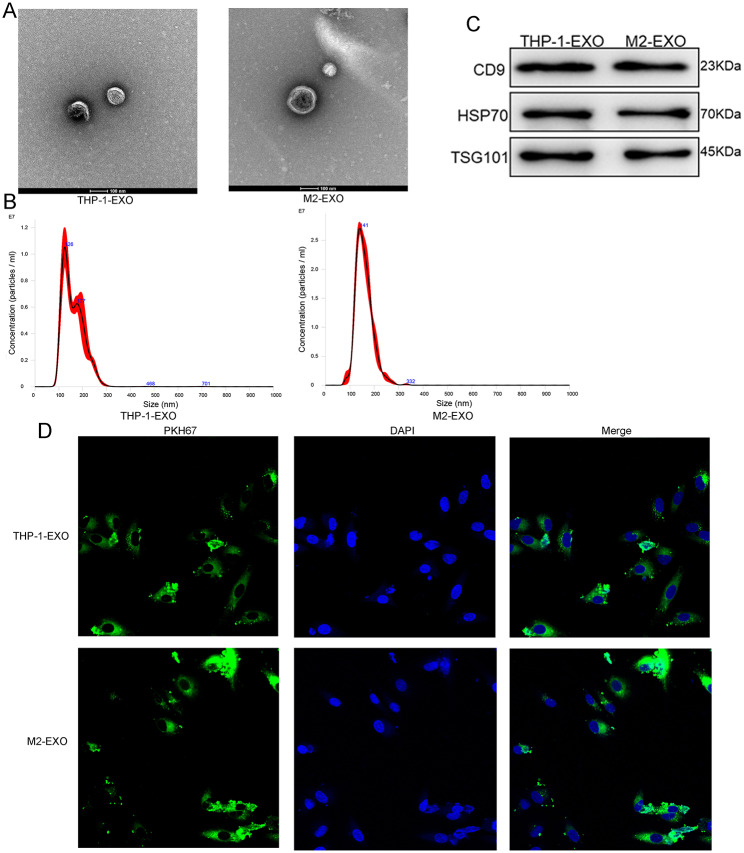
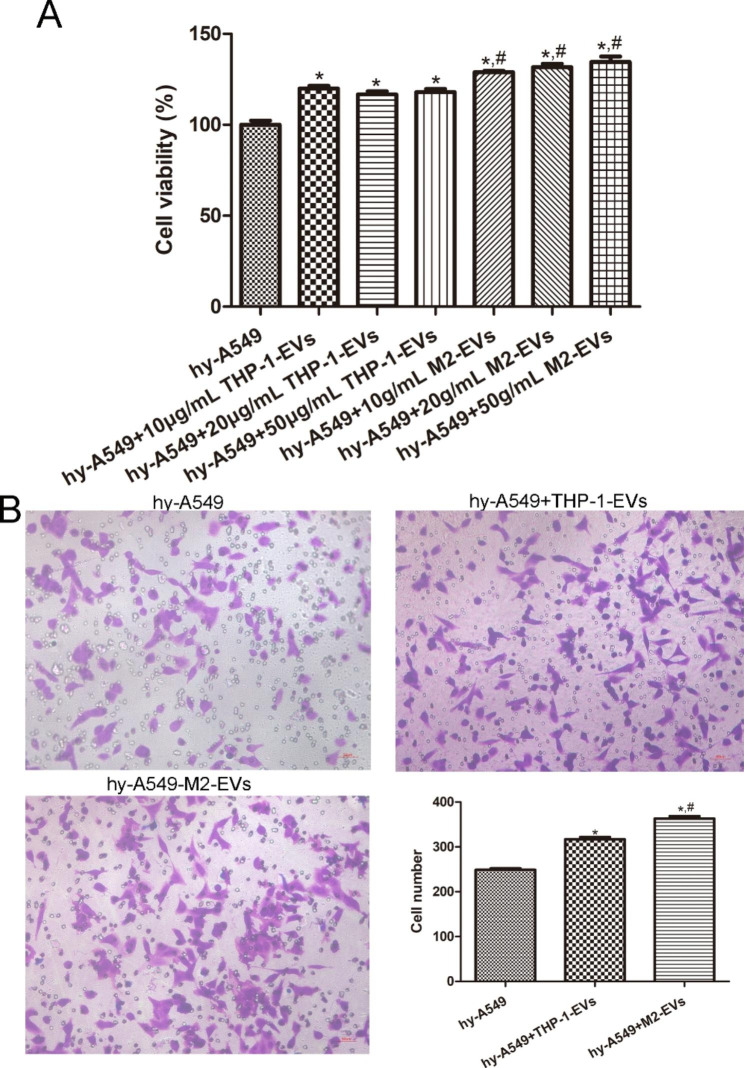
After sequencing, 2426 DElncRNAs and 501 DEmiRNAs were identified in normal A549 cells and hypoxic A549 cells. These DElncRNAs and DEmiRNAs were significantly enriched in "Wnt signaling pathway," "Hippo signaling pathway," "Rap1 signaling pathway," "calcium signaling pathway," "mTOR signaling pathway," and "TNF signaling pathway." Subsequently, ceRNA networks consisting of 4 lncRNA NDRG1 transcripts, 16 miRNAs and 221 target mRNAs were built, and the genes in the ceRNA networks were significantly associated with "Hippo signaling pathway" and "HIF-1 signaling pathway." EVs were successfully extracted from THP-1 cells and M2 macrophages, and M2 macrophage-derived EVs significantly enhanced the viability and migration of hypoxic A549 cells. Finally, M2 macrophage-derived EVs further upregulated the expression of NDRG1-009, NDRG1-006, VEGFA, and EGLN3, while downregulating miR-34c-5p, miR-346, and miR-205-5p in hypoxic A549 cells.
M2 macrophage-derived EVs may worsen the progression of NSCLC in a hypoxic microenvironment by regulating the NDRG1-009-miR-34c-5p-VEGFA, NDRG1-006-miR-346-EGLN3, NDRG1-009-miR-205-5p-VEGFA, and Hippo/HIF-1 signaling pathways.
缺氧会促进侵袭性和转移性癌细胞的发展,并且不利于癌症治疗。本研究旨在探索缺氧微环境影响缺氧非小细胞肺癌(NSCLC)发展的分子机制,以及 M2 巨噬细胞衍生的细胞外囊泡(EVs)对 NSCLC 细胞的影响。
将 A549 细胞置于缺氧孵育箱中培养 48 h 以构建缺氧 A549 细胞,然后收获正常和缺氧 A549 细胞进行 RNA 测序。接下来,用 THP-1 细胞诱导 M2 巨噬细胞,并从 THP-1 细胞和 M2 巨噬细胞中分离 EVs。用细胞计数试剂盒-8 和 Transwell 测定法分别测定缺氧 A549 细胞的活力和迁移。
测序后,在正常 A549 细胞和缺氧 A549 细胞中鉴定出 2426 个 DELncRNAs 和 501 个 DEmiRNAs。这些 DELncRNAs 和 DEmiRNAs 显著富集在“Wnt 信号通路”、“Hippo 信号通路”、“Rap1 信号通路”、“钙信号通路”、“mTOR 信号通路”和“TNF 信号通路”。随后,构建了包含 4 个 NDRG1 转录本、16 个 miRNAs 和 221 个靶 mRNAs 的 ceRNA 网络,ceRNA 网络中的基因与“Hippo 信号通路”和“HIF-1 信号通路”显著相关。成功从 THP-1 细胞和 M2 巨噬细胞中提取 EVs,M2 巨噬细胞衍生的 EVs 显著增强了缺氧 A549 细胞的活力和迁移。最后,M2 巨噬细胞衍生的 EVs 进一步上调了缺氧 A549 细胞中 NDRG1-009、NDRG1-006、VEGFA 和 EGLN3 的表达,同时下调了 miR-34c-5p、miR-346 和 miR-205-5p 的表达。
M2 巨噬细胞衍生的 EVs 可能通过调节 NDRG1-009-miR-34c-5p-VEGFA、NDRG1-006-miR-346-EGLN3、NDRG1-009-miR-205-5p-VEGFA 和 Hippo/HIF-1 信号通路,加重缺氧微环境下 NSCLC 的进展。