Laboratory of Nutrition Science, Division of Applied Life Sciences, Graduate School of Life and Environmental Sciences, Kyoto Prefectural University, 1-5 Hangi-Cho Shimogamo, Sakyo-Ku, Kyoto, 606-8522, Japan.
Laboratory of Animal Science, Department of Applied Biological Sciences, Faculty of Agriculture, Setsunan University, Osaka, Japan.
Nutr J. 2023 Jul 5;22(1):32. doi: 10.1186/s12937-023-00859-4.
Resistance training adaptively increases muscle strength and mass, contributing to athletic performance and health promotion. Dietary intervention with natural foods provides nutrients that help accelerate muscle adaptation to training. Matcha green tea contains several bioactive factors such as antioxidants, amino acids, and dietary fibers; however, its effect on muscle adaptation is unclear. In this study, we aimed to investigate the effects of matcha beverage intake on muscle adaptation to resistance training.
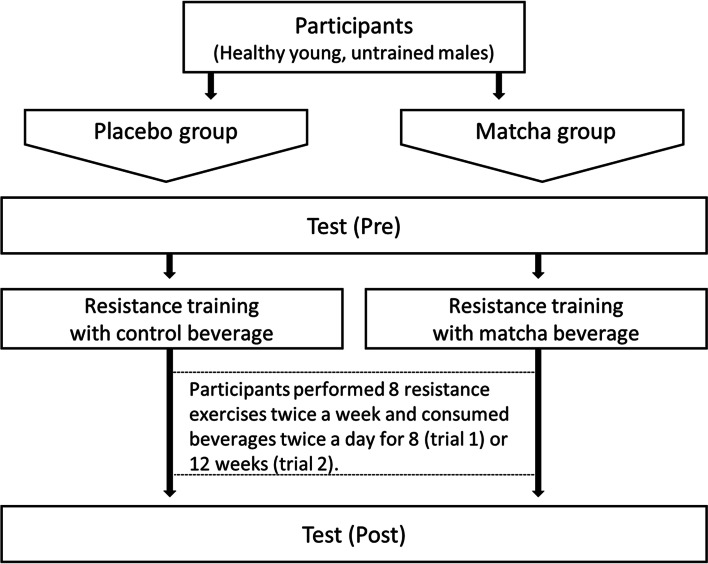
Healthy, untrained men were randomized into placebo and matcha groups. Participants consumed either a matcha beverage containing 1.5 g of matcha green tea powder or a placebo beverage twice a day and engaged in resistance training programs for 8 (trial 1) or 12 weeks (trial 2).
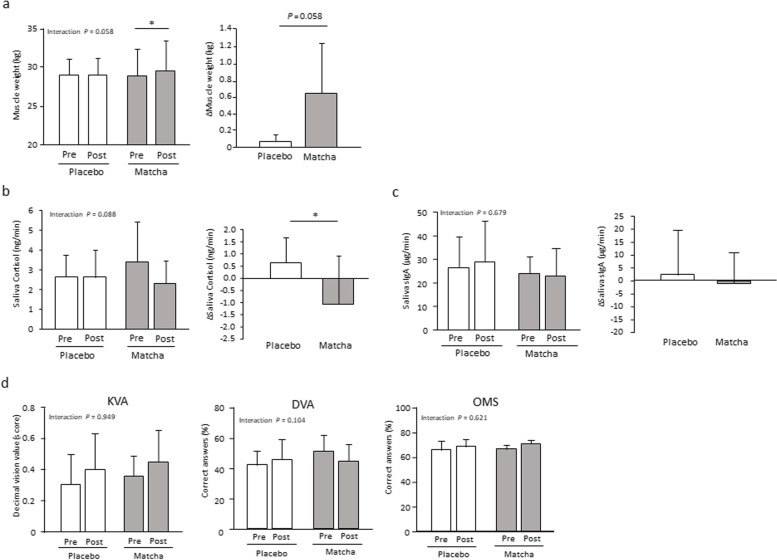
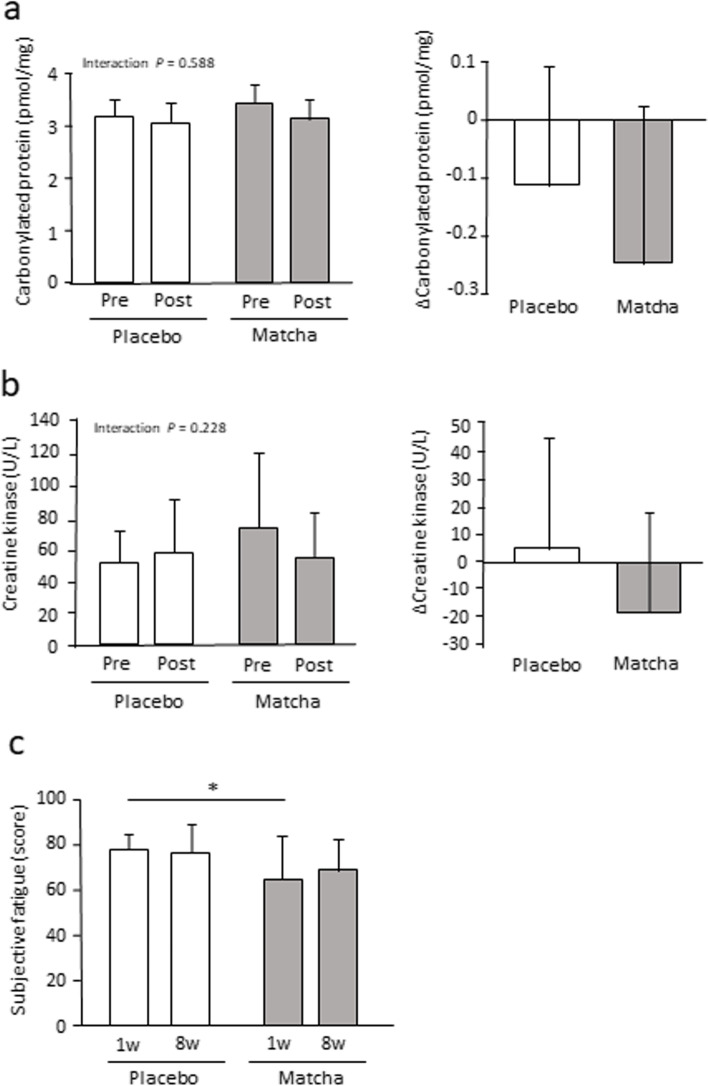
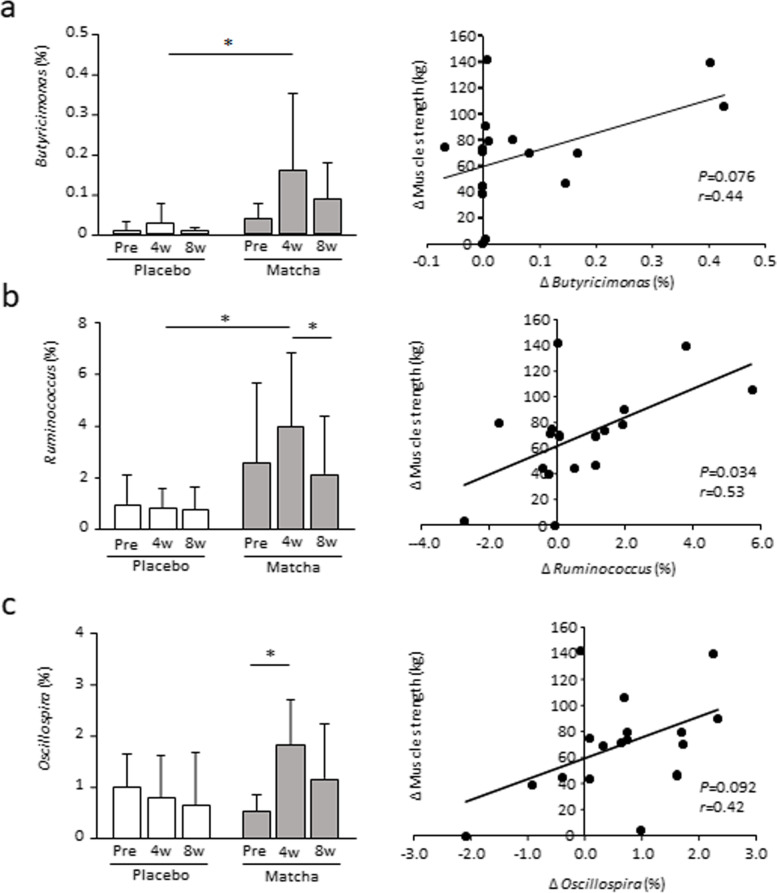
In trial 1, maximum leg strength after training tended to increase more in the matcha group than that in the placebo group. In the matcha group, subjective fatigue after exercise at 1 week of training was lower than that in the placebo group. Gut microbe analysis showed that the abundance of five genera changed after matcha intake. The change in Ruminococcus, Butyricimonas, and Oscillospira compositions positively correlated with the change in maximum strength. In trial 2, the change in skeletal muscle mass in response to training was larger in the matcha group. In addition, the salivary cortisol level was lower in the matcha group than that in the placebo group.
Daily intake of matcha green tea beverages may help in muscle adaptation to training, with modulations in stress and fatigue responses and microbiota composition.
阻力训练适应性地增加肌肉力量和质量,有助于提高运动表现和促进健康。用天然食物进行饮食干预可以提供有助于加速肌肉适应训练的营养物质。抹茶绿茶含有几种生物活性因子,如抗氧化剂、氨基酸和膳食纤维;然而,其对肌肉适应的影响尚不清楚。在这项研究中,我们旨在研究抹茶饮料摄入对抵抗训练中肌肉适应的影响。
健康、未经训练的男性被随机分为安慰剂组和抹茶组。参与者每天饮用含有 1.5 克抹茶绿茶粉的抹茶饮料或安慰剂饮料两次,并进行阻力训练计划 8(试验 1)或 12 周(试验 2)。
在试验 1 中,训练后腿部最大力量的增加趋势在抹茶组比安慰剂组更明显。在抹茶组中,训练 1 周时运动后的主观疲劳低于安慰剂组。肠道微生物分析显示,抹茶摄入后有五个属的丰度发生了变化。拟杆菌属、丁酸单胞菌属和真杆菌属组成的变化与最大强度的变化呈正相关。在试验 2 中,对训练的骨骼肌质量变化在抹茶组中更大。此外,抹茶组的唾液皮质醇水平低于安慰剂组。
每天摄入抹茶绿茶饮料可能有助于肌肉适应训练,调节应激和疲劳反应以及微生物群落组成。