Department of Biophysics and Biophysical Chemistry, Johns Hopkins University School of Medicine, Baltimore, MD 21205.
Pharmaceutical Sciences Department, University of Illinois College of Pharmacy, Rockford, IL 61107.
Proc Natl Acad Sci U S A. 2023 Jul 11;120(28):e2302064120. doi: 10.1073/pnas.2302064120. Epub 2023 Jul 5.
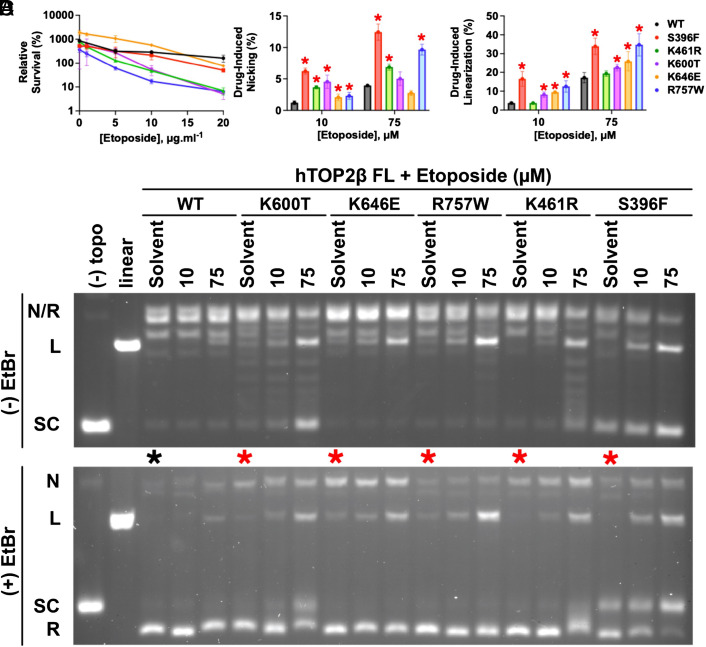
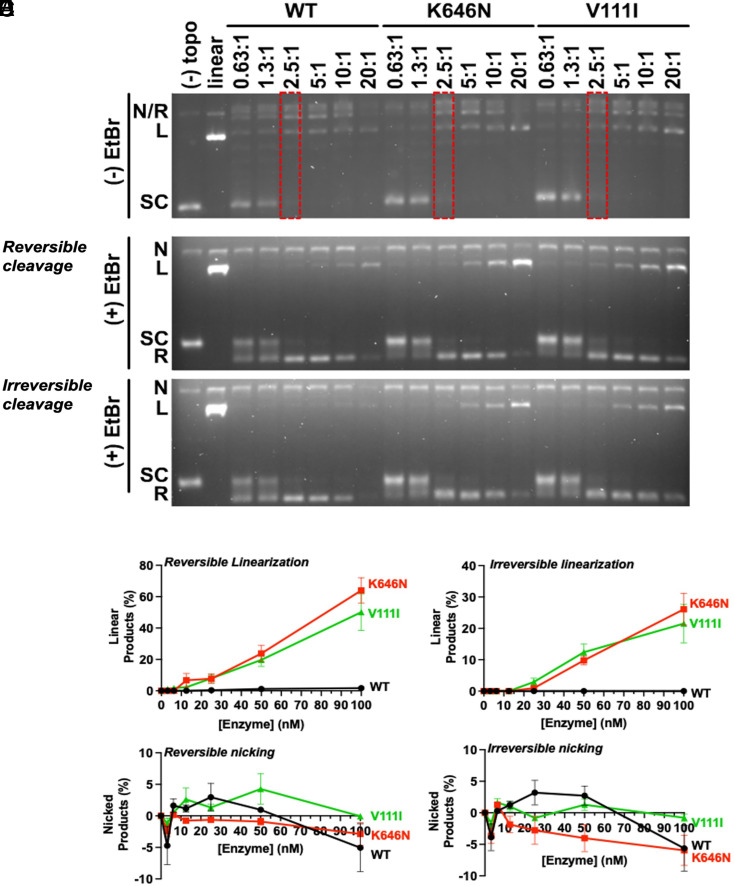
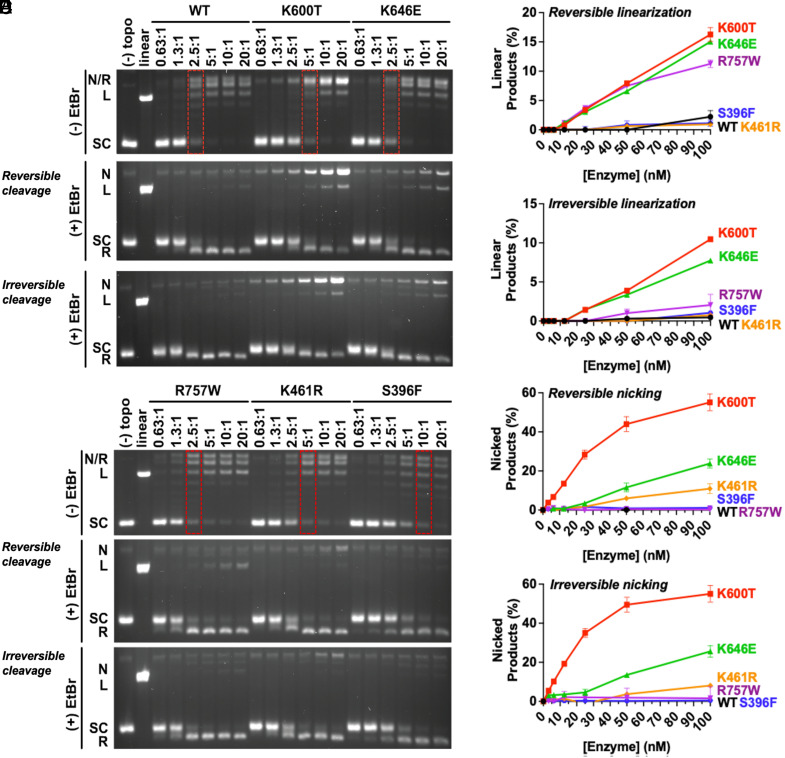
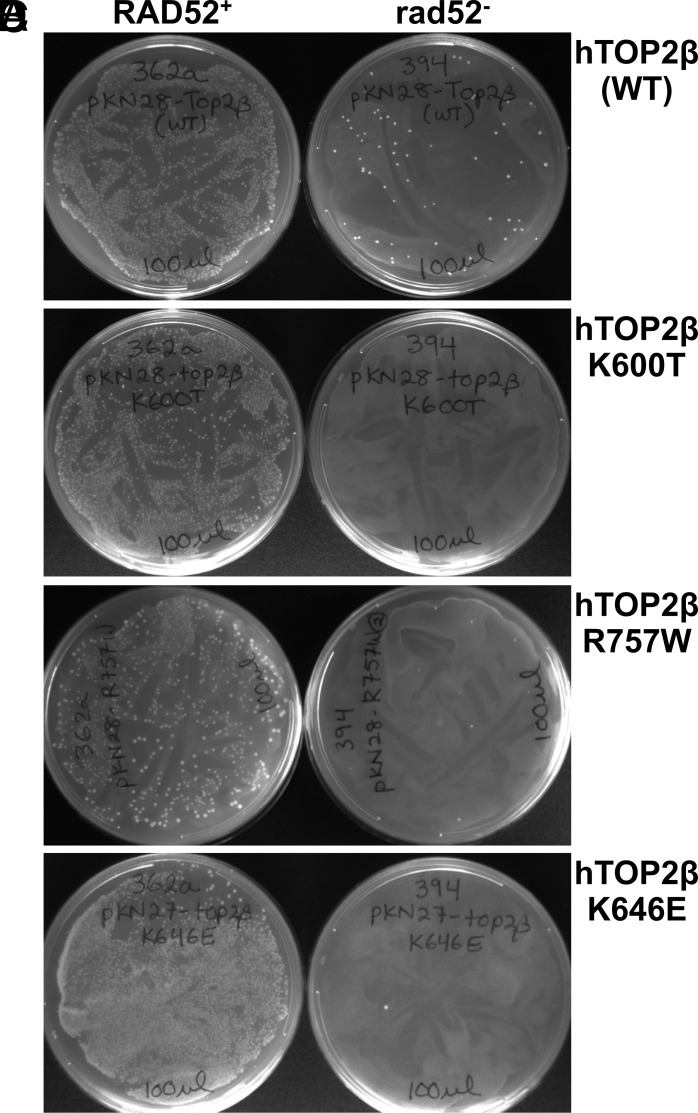
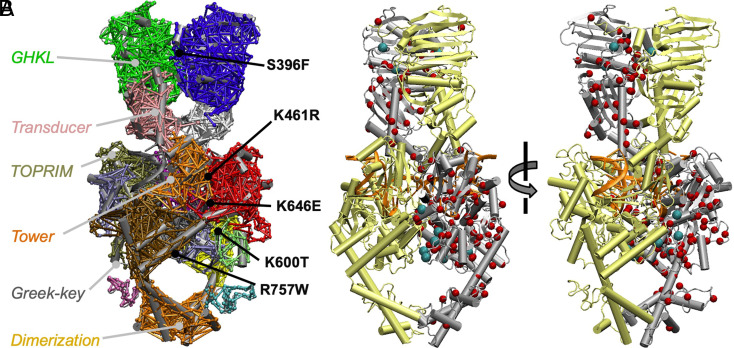
Type II topoisomerases transiently cleave duplex DNA as part of a strand passage mechanism that helps control chromosomal organization and superstructure. Aberrant DNA cleavage can result in genomic instability, and how topoisomerase activity is controlled to prevent unwanted breaks is poorly understood. Using a genetic screen, we identified mutations in the beta isoform of human topoisomerase II (hTOP2β) that render the enzyme hypersensitive to the chemotherapeutic agent etoposide. Several of these variants were unexpectedly found to display hypercleavage behavior in vitro and to be capable of inducing cell lethality in a DNA repair-deficient background; surprisingly, a subset of these mutations were also observed in sequences from cancer genome databases. Using molecular dynamics simulations and computational network analyses, we found that many of the mutations obtained from the screen map to interfacial points between structurally coupled elements, and that dynamical modeling could be used to identify other damage-inducing alleles present in cancer genome databases. This work establishes that there is an innate link between DNA cleavage predisposition and sensitivity to topoisomerase II poisons, and that certain sequence variants of human type II topoisomerases found in cancer cells can act as DNA-damaging agents. Our findings underscore the potential for hTOP2β to function as a clastogen capable of generating DNA damage that may promote or support cellular transformation.
II 型拓扑异构酶作为链转移机制的一部分短暂地切割双链 DNA,该机制有助于控制染色体的组织和超结构。异常的 DNA 切割会导致基因组不稳定,而如何控制拓扑异构酶活性以防止不必要的断裂仍知之甚少。我们使用遗传筛选鉴定了人拓扑异构酶 II(hTOP2β)的β同工型中的突变,这些突变使该酶对化疗药物依托泊苷高度敏感。这些变体中的几个出乎意料地在体外显示出过度切割行为,并能够在 DNA 修复缺陷背景下诱导细胞致死;令人惊讶的是,这些突变中的一部分也在癌症基因组数据库中的序列中观察到。使用分子动力学模拟和计算网络分析,我们发现从筛选中获得的许多突变映射到结构偶联元件之间的界面点,并且动力学建模可用于识别癌症基因组数据库中存在的其他诱导损伤等位基因。这项工作确立了 DNA 切割倾向与拓扑异构酶 II 毒物敏感性之间存在内在联系,并且在癌细胞中发现的某些人类 II 型拓扑异构酶的序列变体可以作为 DNA 损伤剂。我们的发现强调了 hTOP2β 作为潜在的断裂剂的作用,它能够产生可能促进或支持细胞转化的 DNA 损伤。