Drug Design & Development Section, Translational Gerontology Branch, Intramural Research Program National Institute on Aging, NIH, Baltimore, MD 21224, USA.
Department of Neuroscience, Karolinska Institutet, 171 77 Stockholm, Sweden.
Cells. 2023 May 11;12(10):1367. doi: 10.3390/cells12101367.
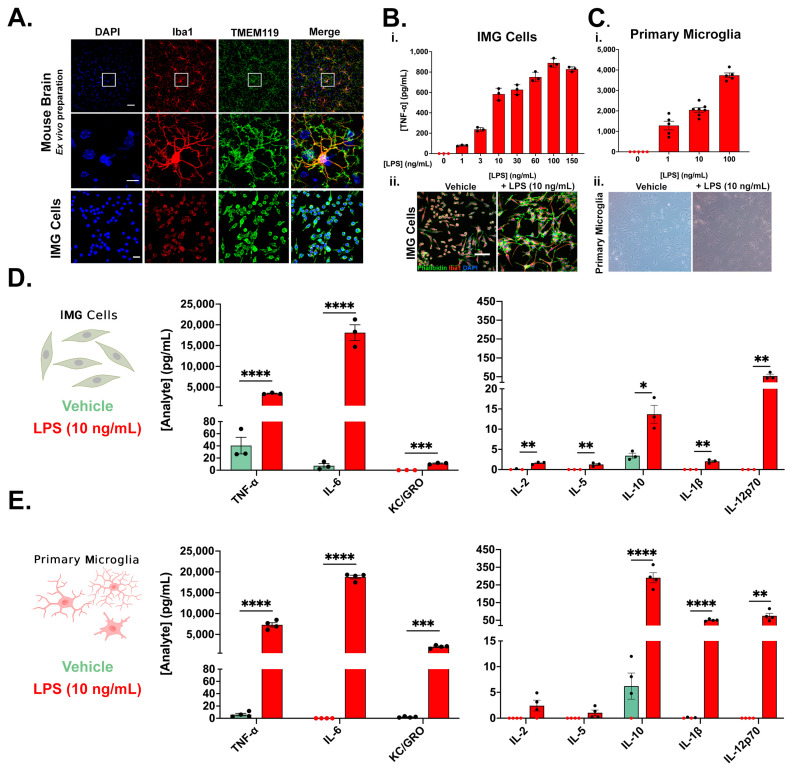
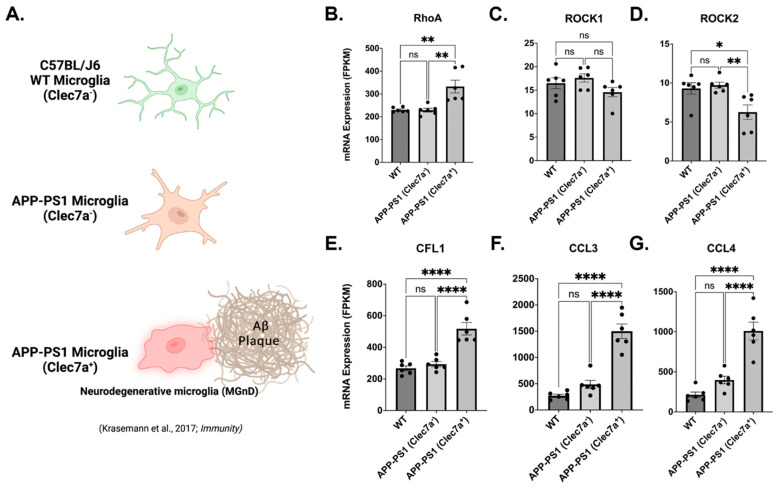
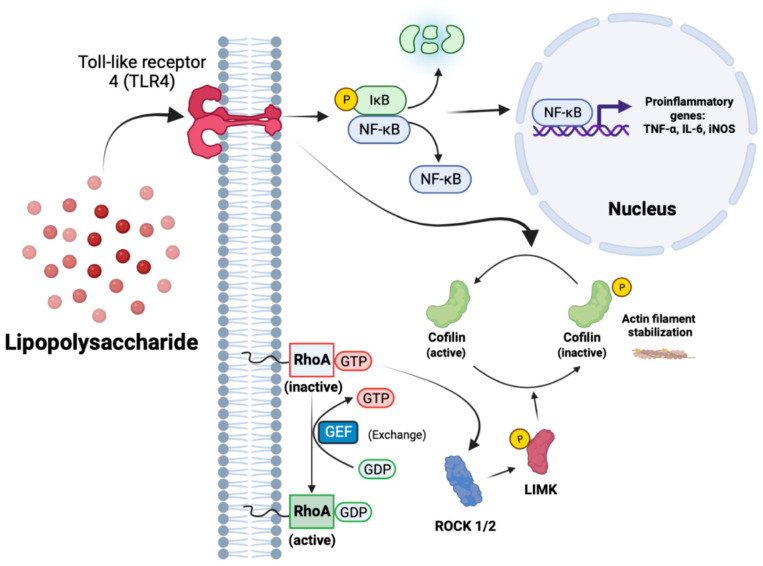
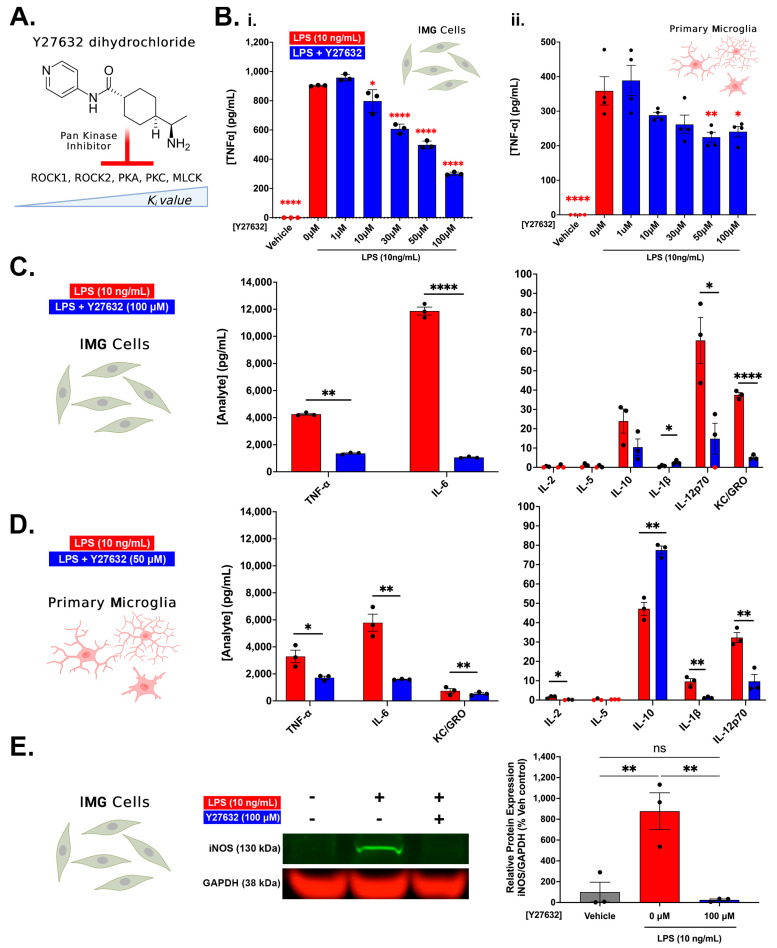
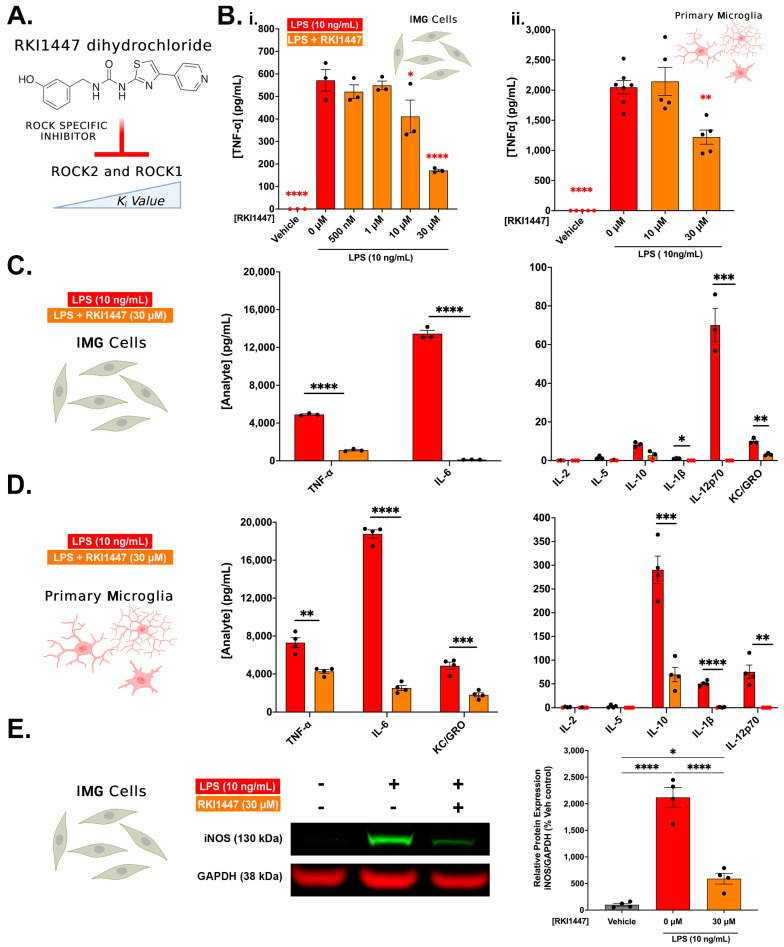
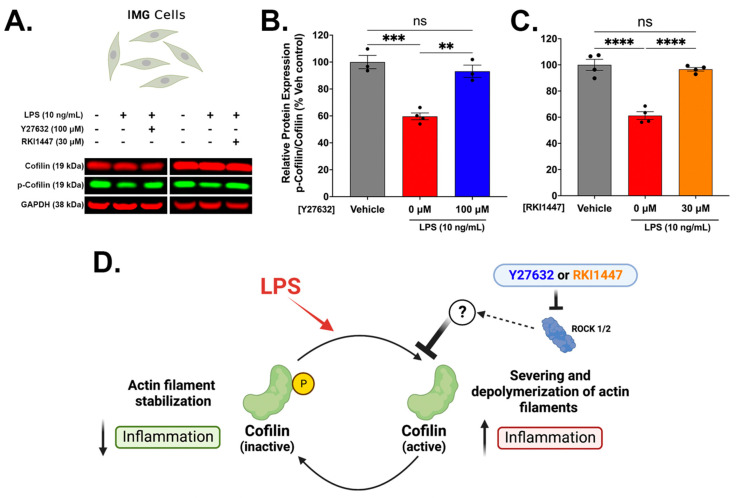
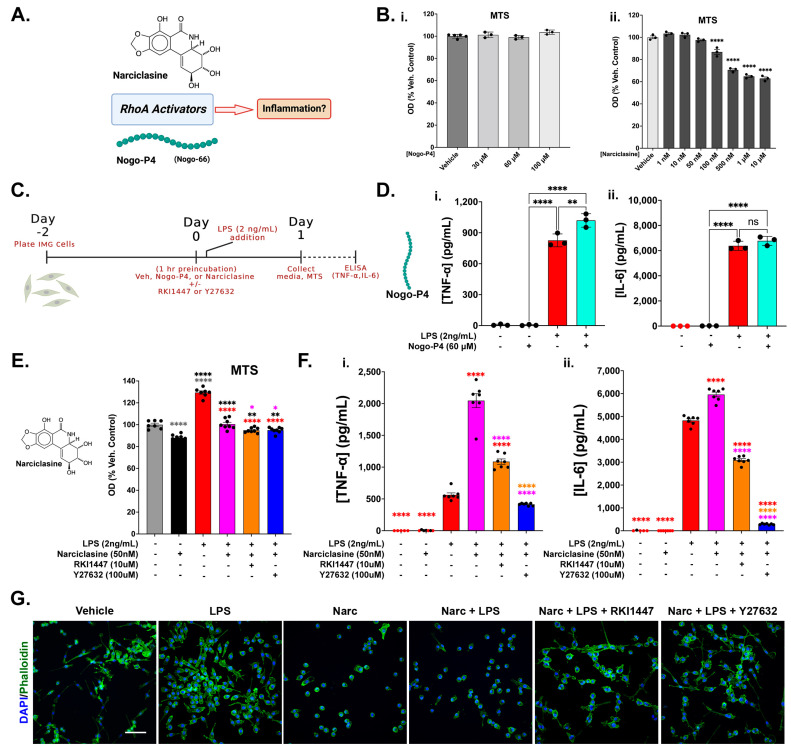
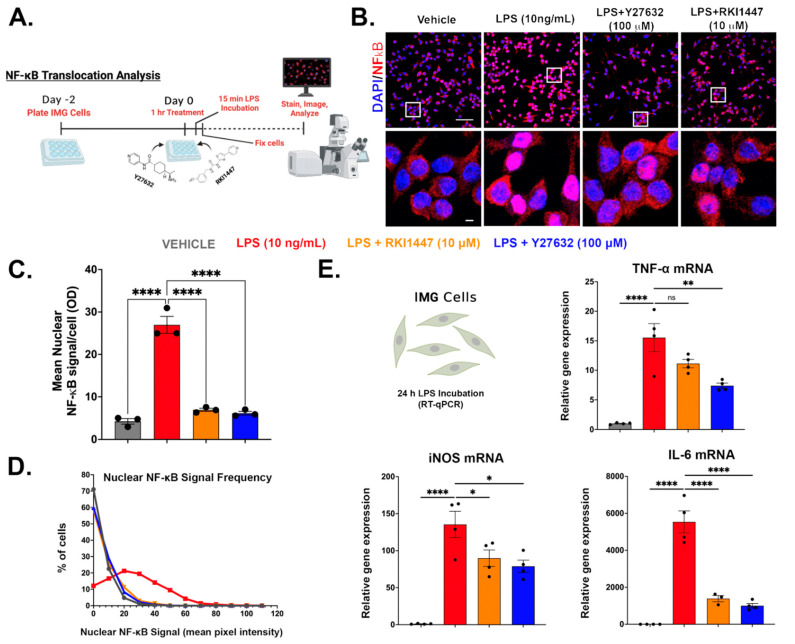
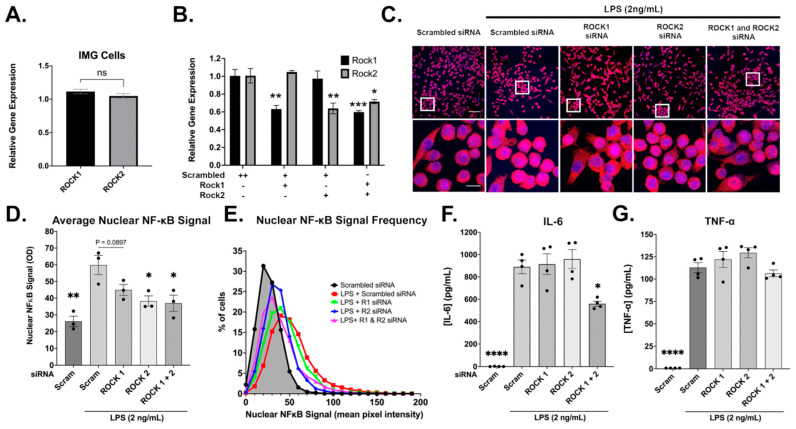
Neuroinflammation is a unifying factor among all acute central nervous system (CNS) injuries and chronic neurodegenerative disorders. Here, we used immortalized microglial (IMG) cells and primary microglia (PMg) to understand the roles of the GTPase Ras homolog gene family member A (RhoA) and its downstream targets Rho-associated coiled-coil-containing protein kinases 1 and 2 (ROCK1 and ROCK2) in neuroinflammation. We used a pan-kinase inhibitor (Y27632) and a ROCK1- and ROCK2-specific inhibitor (RKI1447) to mitigate a lipopolysaccharide (LPS) challenge. In both the IMG cells and PMg, each drug significantly inhibited pro-inflammatory protein production detected in media (TNF-α, IL-6, KC/GRO, and IL-12p70). In the IMG cells, this resulted from the inhibition of NF-κB nuclear translocation and the blocking of neuroinflammatory gene transcription (iNOS, TNF-α, and IL-6). Additionally, we demonstrated the ability of both compounds to block the dephosphorylation and activation of cofilin. In the IMG cells, RhoA activation with Nogo-P4 or narciclasine (Narc) exacerbated the inflammatory response to the LPS challenge. We utilized a siRNA approach to differentiate ROCK1 and ROCK2 activity during the LPS challenges and showed that the blockade of both proteins may mediate the anti-inflammatory effects of Y27632 and RKI1447. Using previously published data, we show that genes in the RhoA/ROCK signaling cascade are highly upregulated in the neurodegenerative microglia (MGnD) from APP/PS-1 transgenic Alzheimer's disease (AD) mice. In addition to illuminating the specific roles of RhoA/ROCK signaling in neuroinflammation, we demonstrate the utility of using IMG cells as a model for primary microglia in cellular studies.
神经炎症是所有急性中枢神经系统 (CNS) 损伤和慢性神经退行性疾病的统一因素。在这里,我们使用永生化小胶质细胞 (IMG) 和原代小胶质细胞 (PMg) 来了解 GTP 酶 Ras 同源基因家族成员 A (RhoA) 及其下游靶标 Rho 相关卷曲螺旋蛋白激酶 1 和 2 (ROCK1 和 ROCK2) 在神经炎症中的作用。我们使用泛激酶抑制剂 (Y27632) 和 ROCK1 和 ROCK2 特异性抑制剂 (RKI1447) 来减轻脂多糖 (LPS) 挑战。在 IMG 细胞和 PMg 中,每种药物都显著抑制了培养基中检测到的促炎蛋白的产生 (TNF-α、IL-6、KC/GRO 和 IL-12p70)。在 IMG 细胞中,这是由于 NF-κB 核易位的抑制和神经炎症基因转录 (iNOS、TNF-α 和 IL-6) 的阻断。此外,我们还证明了这两种化合物都能够阻止原肌球蛋白的去磷酸化和激活。在 IMG 细胞中,Nogo-P4 或 narciclasine (Narc) 激活 RhoA 加剧了 LPS 挑战的炎症反应。我们利用 siRNA 方法在 LPS 挑战期间区分 ROCK1 和 ROCK2 的活性,并表明两种蛋白的阻断可能介导 Y27632 和 RKI1447 的抗炎作用。利用先前发表的数据,我们表明 RhoA/ROCK 信号级联中的基因在 APP/PS-1 转基因阿尔茨海默病 (AD) 小鼠的神经退行性小胶质细胞 (MGnD) 中高度上调。除了阐明 RhoA/ROCK 信号在神经炎症中的特定作用外,我们还证明了使用 IMG 细胞作为原代小胶质细胞在细胞研究中的模型的实用性。