School of Infection & Immunity, University of Glasgow, Glasgow, UK.
School of Infection & Immunity, University of Glasgow, Glasgow and Institute of Biomedical & Environmental Health, University of the West of Scotland, Paisley, UK.
Arthritis Rheumatol. 2023 Dec;75(12):2148-2160. doi: 10.1002/art.42639. Epub 2023 Oct 1.
IĸB protein B cell lymphoma 3-encoded protein (BCL3) is a regulator of the NF-κB family of transcription factors. NF-κB signaling fundamentally influences the fate of bone-forming osteoblasts and bone-resorbing osteoclasts, but the role of BCL3 in bone biology has not been investigated. The objective of this study was to evaluate BCL3 in skeletal development, maintenance, and osteoarthritic pathology.
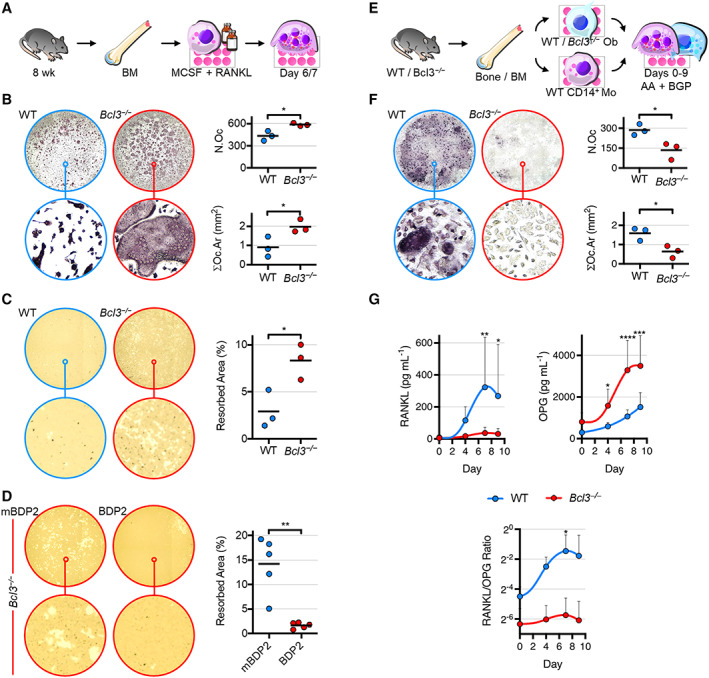
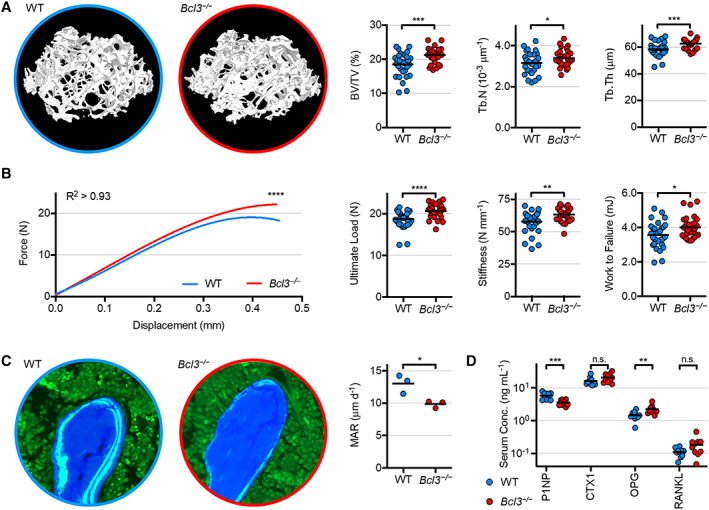
To assess the contribution of BCL3 to skeletal homeostasis, neonatal mice (n = 6-14) lacking BCL3 (Bcl3 ) and wild-type (WT) controls were characterized for bone phenotype and density. To reveal the contribution to bone phenotype by the osteoblast compartment in Bcl3 mice, transcriptomic analysis of early osteogenic differentiation and cellular function (n = 3-7) were assessed. Osteoclast differentiation and function in Bcl3 mice (n = 3-5) was assessed. Adult 20-week Bcl3 and WT mice bone phenotype, strength, and turnover were assessed. A destabilization of the medial meniscus model of osteoarthritic osteophytogenesis was used to understand adult bone formation in Bcl3 mice (n = 11-13).
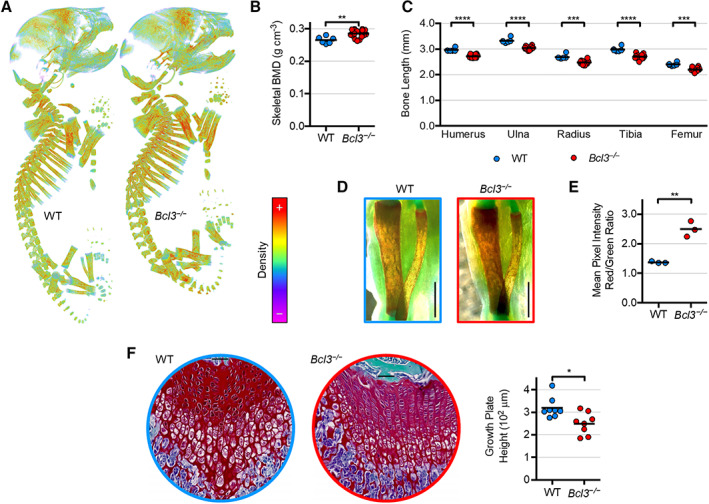
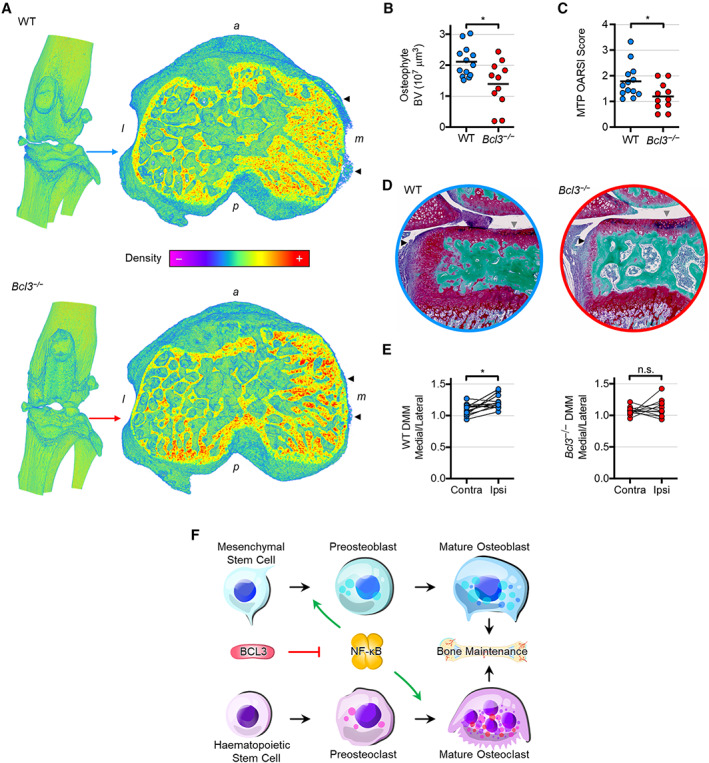
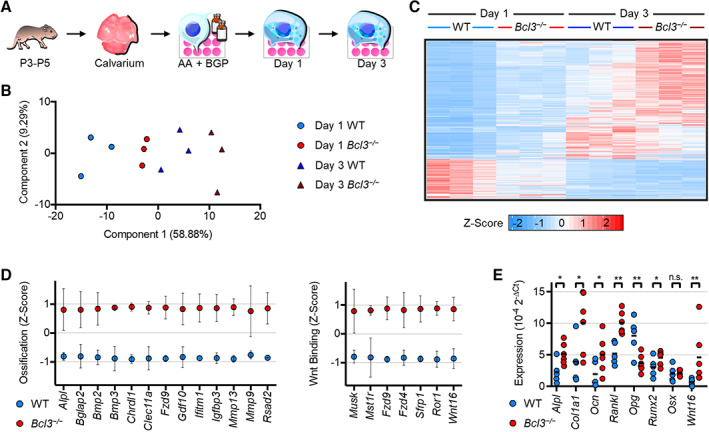
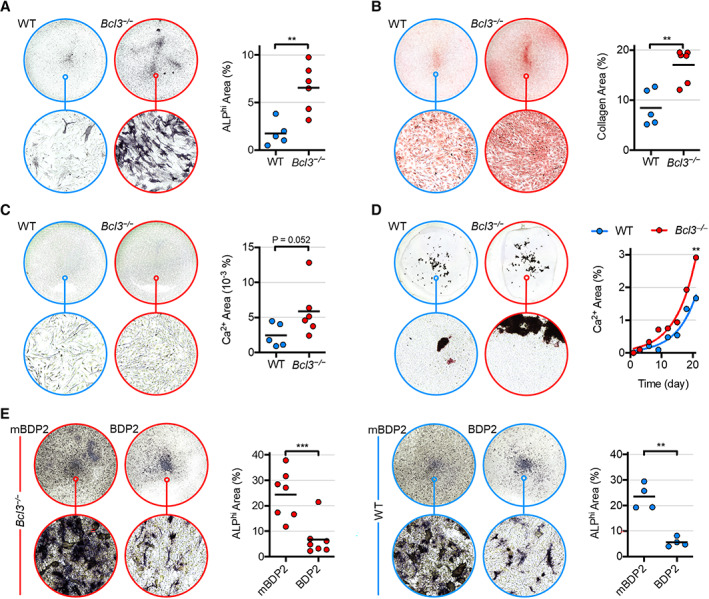
Evaluation of Bcl3 mice revealed congenitally increased bone density, long bone dwarfism, increased bone biomechanical strength, and altered bone turnover. Molecular and cellular characterization of mesenchymal precursors showed that Bcl3 cells displayed an accelerated osteogenic transcriptional profile that led to enhanced differentiation into osteoblasts with increased functional activity, which could be reversed with a mimetic peptide. In a model of osteoarthritis-induced osteophytogenesis, Bcl3 mice exhibited decreased pathological osteophyte formation (P < 0.05).
Cumulatively, these findings demonstrate that BCL3 controls developmental mineralization to enable appropriate bone formation, whereas in a pathological setting, it contributes to skeletal pathology.
IKK 蛋白 B 细胞淋巴瘤 3 编码蛋白(BCL3)是 NF-κB 转录因子家族的调节因子。NF-κB 信号通路从根本上影响成骨细胞和破骨细胞的命运,但 BCL3 在骨生物学中的作用尚未得到研究。本研究旨在评估 BCL3 在骨骼发育、维持和骨关节炎病理中的作用。
为了评估 BCL3 对骨骼内稳态的贡献,对缺乏 BCL3(Bcl3)和野生型(WT)对照的新生小鼠(n=6-14)进行了骨骼表型和密度特征分析。为了揭示 Bcl3 小鼠成骨细胞在骨骼表型中的作用,对早期成骨分化和细胞功能的转录组分析(n=3-7)进行了评估。评估了 Bcl3 小鼠的破骨细胞分化和功能(n=3-5)。对 20 周龄的 Bcl3 和 WT 成年小鼠的骨骼表型、强度和转换进行了评估。使用内侧半月板不稳定模型来了解 Bcl3 小鼠的成骨关节炎骨赘形成中的成年骨形成(n=11-13)。
对 Bcl3 小鼠的评估显示,其先天性骨密度增加、长骨侏儒症、骨生物力学强度增加和骨转换改变。对间充质前体细胞的分子和细胞特征分析表明,Bcl3 细胞显示出加速的成骨转录谱,导致向成骨细胞分化增强,功能性活性增加,这一特性可以通过模拟肽逆转。在骨关节炎诱导的骨赘形成模型中,Bcl3 小鼠表现出病理性骨赘形成减少(P<0.05)。
总之,这些发现表明 BCL3 控制着发育性矿化以实现适当的骨形成,而在病理状态下,它有助于骨骼病理学的发生。