
BCL-3 通过增强结直肠肿瘤细胞中的β-catenin 信号传导促进癌症干细胞表型。
BCL-3 promotes a cancer stem cell phenotype by enhancing β-catenin signalling in colorectal tumour cells.
机构信息
Colorectal Tumour Biology Group, School of Cellular and Molecular Medicine, Faculty of Life Sciences, Biomedical Sciences Building, University Walk, University of Bristol, Bristol BS8 1TD, UK.
Centre for Research in Biosciences, Faculty of Health and Applied Sciences, University of the West of England, Coldharbour Lane, Bristol BS16 1QY, UK.
出版信息
Dis Model Mech. 2019 Mar 4;12(3):dmm037697. doi: 10.1242/dmm.037697.
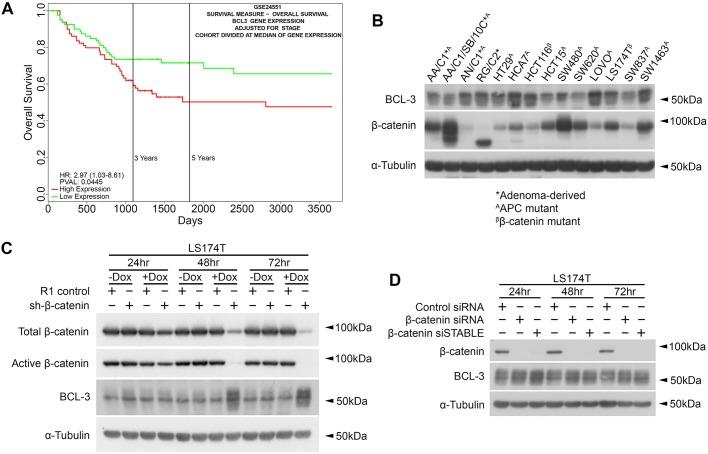
To decrease bowel cancer incidence and improve survival, we need to understand the mechanisms that drive tumorigenesis. Recently, B-cell lymphoma 3 (BCL-3; a key regulator of NF-κB signalling) has been recognised as an important oncogenic player in solid tumours. Although reported to be overexpressed in a subset of colorectal cancers (CRCs), the role of BCL-3 expression in colorectal tumorigenesis remains poorly understood. Despite evidence in the literature that BCL-3 may interact with β-catenin, it is perhaps surprising, given the importance of deregulated Wnt/β-catenin/T-cell factor (TCF) signalling in colorectal carcinogenesis, that the functional significance of this interaction is not known. Here, we show for the first time that BCL-3 acts as a co-activator of β-catenin/TCF-mediated transcriptional activity in CRC cell lines and that this interaction is important for Wnt-regulated intestinal stem cell gene expression. We demonstrate that targeting BCL-3 expression (using RNA interference) reduced β-catenin/TCF-dependent transcription and the expression of intestinal stem cell genes and In contrast, the expression of canonical Wnt targets Myc and cyclin D1 remained unchanged. Furthermore, we show that BCL-3 increases the functional stem cell phenotype, as shown by colorectal spheroid and tumoursphere formation in 3D culture conditions. We propose that BCL-3 acts as a driver of the stem cell phenotype in CRC cells, potentially promoting tumour cell plasticity and therapeutic resistance. As recent reports highlight the limitations of directly targeting cancer stem cells (CSCs), we believe that identifying and targeting drivers of stem cell plasticity have significant potential as new therapeutic targets.This article has an associated First Person interview with the first author of the paper.
为了降低结直肠癌的发病率并提高生存率,我们需要了解推动肿瘤发生的机制。最近,B 细胞淋巴瘤 3(BCL-3;NF-κB 信号的关键调节因子)已被认为是实体瘤中重要的致癌因子。尽管据报道在一部分结直肠癌(CRC)中过表达,但 BCL-3 表达在结直肠肿瘤发生中的作用仍知之甚少。尽管文献中有证据表明 BCL-3 可能与β-连环蛋白相互作用,但考虑到 Wnt/β-连环蛋白/T 细胞因子(TCF)信号通路失调在结直肠癌发生中的重要性,这种相互作用的功能意义尚不清楚,这也许令人惊讶。在这里,我们首次表明,BCL-3 作为 CRC 细胞系中β-连环蛋白/TCF 介导的转录活性的共激活因子起作用,并且这种相互作用对于 Wnt 调节的肠干细胞基因表达很重要。我们证明,靶向 BCL-3 表达(使用 RNA 干扰)降低了β-连环蛋白/TCF 依赖性转录和肠干细胞基因的表达。相反,经典 Wnt 靶基因 Myc 和 cyclin D1 的表达保持不变。此外,我们表明 BCL-3 增加了功能性干细胞表型,如在 3D 培养条件下形成结直肠球体和肿瘤球体所证明的那样。我们提出 BCL-3 作为 CRC 细胞中干细胞表型的驱动因素,可能促进肿瘤细胞可塑性和治疗抵抗。由于最近的报道强调了直接靶向癌症干细胞(CSC)的局限性,我们相信鉴定和靶向干细胞可塑性的驱动因素具有作为新治疗靶点的巨大潜力。本文有该论文第一作者的相关第一人称采访。



 Zotero 插件