Lee Eunice Y, Choi Wonson, Burkholder Adam B, Perera Lalith, Mack Jasmine A, Miller Frederick W, Fessler Michael B, Cook Donald N, Karmaus Peer W F, Nakano Hideki, Garantziotis Stavros, Madenspacher Jennifer H, House John S, Akhtari Farida S, Schmitt Charles S, Fargo David C, Hall Janet E, Motsinger-Reif Alison A
Biostatistics and Computational Biology Branch, National Institute of Environmental Health Sciences, Durham, NC, United States.
Genomics and Bioinformatics Laboratory, Seoul National University, Seoul, Republic of Korea.
Front Genet. 2023 Jun 21;14:1173676. doi: 10.3389/fgene.2023.1173676. eCollection 2023.
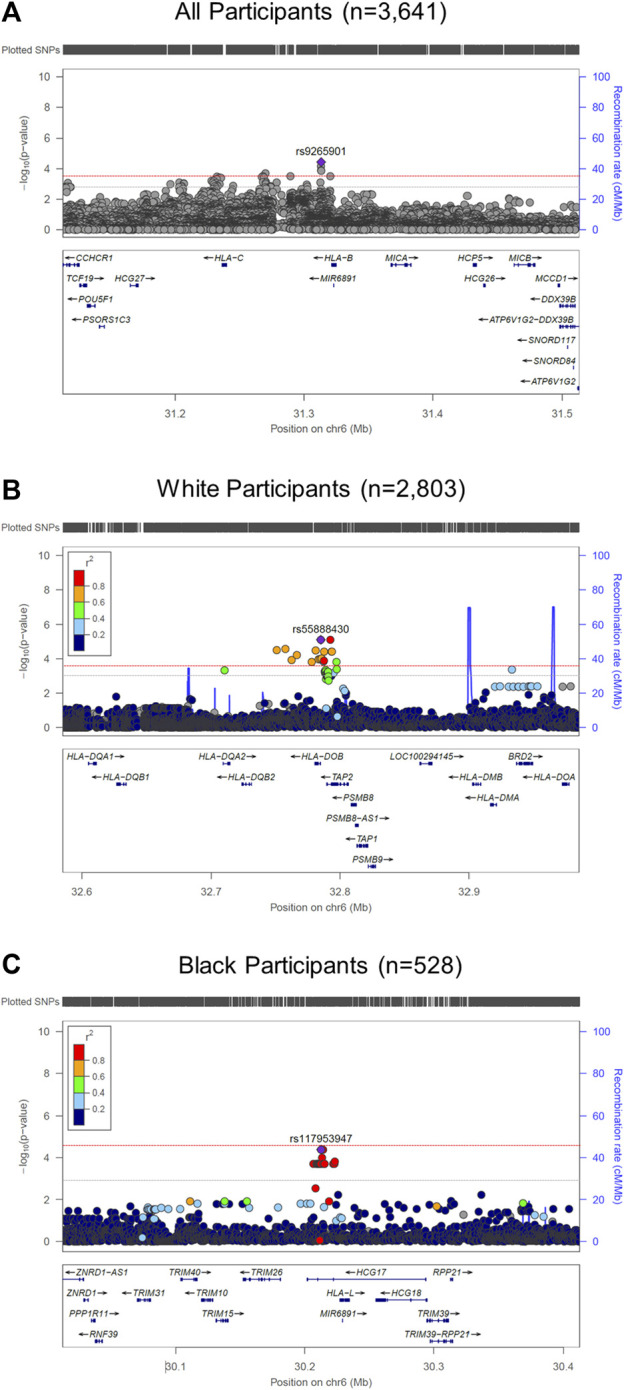
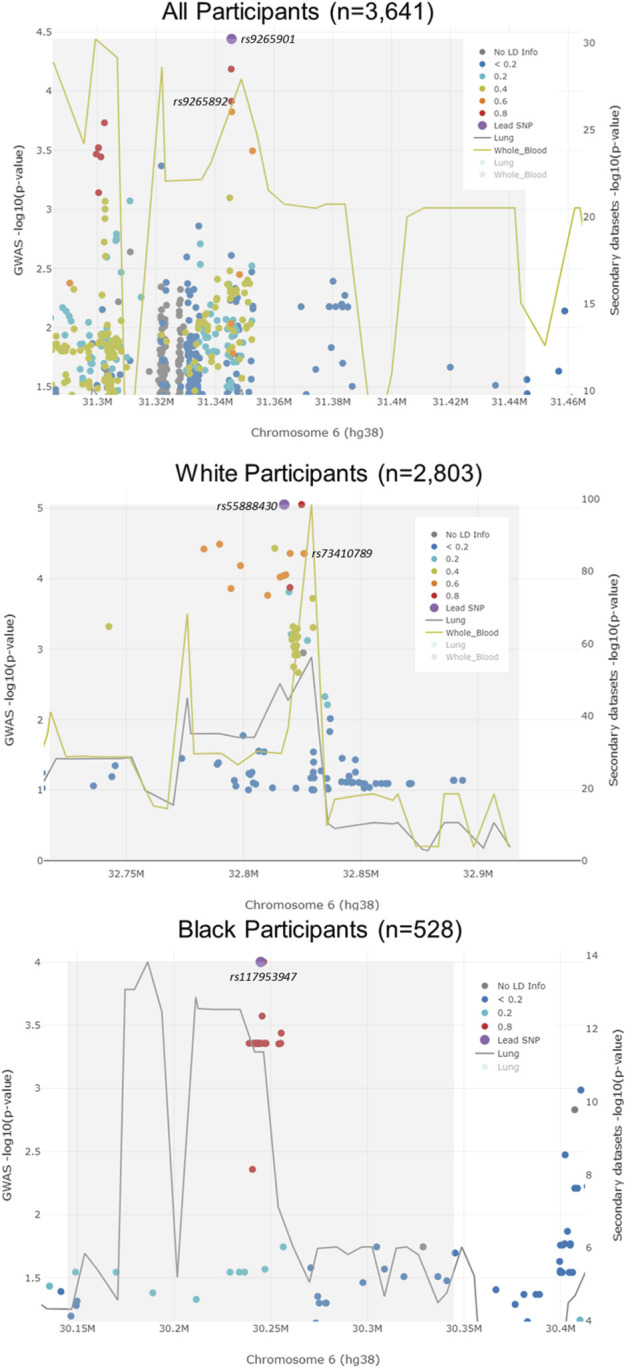
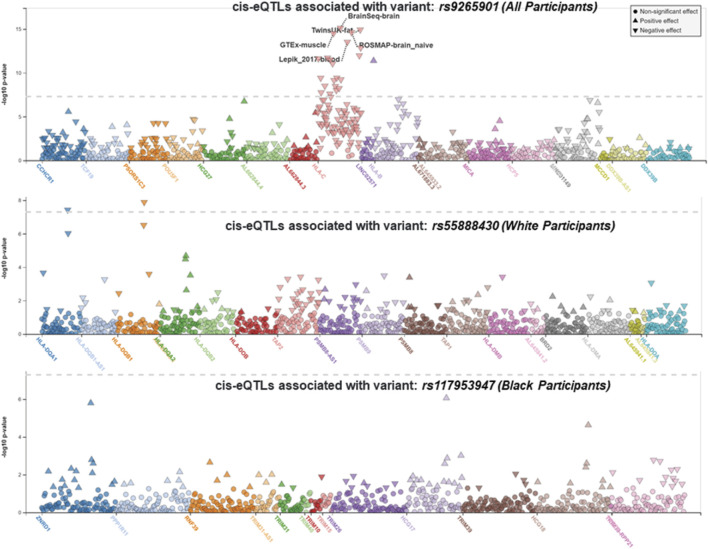
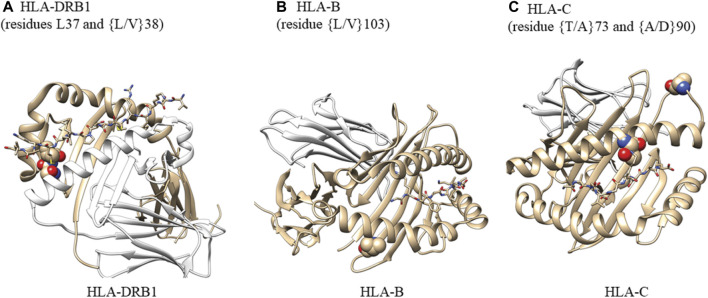
Asthma is a chronic disease of the airways that impairs normal breathing. The etiology of asthma is complex and involves multiple factors, including the environment and genetics, especially the distinct genetic architecture associated with ancestry. Compared to early-onset asthma, little is known about genetic predisposition to late-onset asthma. We investigated the race/ethnicity-specific relationship among genetic variants within the major histocompatibility complex (MHC) region and late-onset asthma in a North Carolina-based multiracial cohort of adults. We stratified all analyses by self-reported race (i.e., White and Black) and adjusted all regression models for age, sex, and ancestry. We conducted association tests within the MHC region and performed fine-mapping analyses conditioned on the race/ethnicity-specific lead variant using whole-genome sequencing (WGS) data. We applied computational methods to infer human leukocyte antigen (HLA) alleles and residues at amino acid positions. We replicated findings in the UK Biobank. The lead signals, rs9265901 on the 5' end of HLA-B, rs55888430 on HLA-DOB, and rs117953947 on HCG17, were significantly associated with late-onset asthma in all, White, and Black participants, respectively (OR = 1.73, 95%CI: 1.31 to 2.14, = 3.62 × 10; OR = 3.05, 95%CI: 1.86 to 4.98, = 8.85 × 10; OR = 19.5, 95%CI: 4.37 to 87.2, = 9.97 × 10, respectively). For the HLA analysis, HLA-B40:02 and HLA-DRB104:05, HLA-B40:02, HLA-C04:01, and HLA-DRB104:05, and HLA-DRB103:01 and HLA-DQB1 were significantly associated with late-onset asthma in all, White, and Black participants. Multiple genetic variants within the MHC region were significantly associated with late-onset asthma, and the associations were significantly different by race/ethnicity group.
哮喘是一种影响正常呼吸的气道慢性疾病。哮喘的病因复杂,涉及多种因素,包括环境和遗传因素,尤其是与祖先相关的独特遗传结构。与早发型哮喘相比,晚发型哮喘的遗传易感性知之甚少。我们在北卡罗来纳州的一个多种族成年人群体中,研究了主要组织相容性复合体(MHC)区域内基因变异与晚发型哮喘之间的种族/族裔特异性关系。我们根据自我报告的种族(即白人和黑人)对所有分析进行分层,并对年龄、性别和祖先调整所有回归模型。我们在MHC区域内进行了关联测试,并使用全基因组测序(WGS)数据,以种族/族裔特异性的先导变异为条件进行了精细定位分析。我们应用计算方法推断人类白细胞抗原(HLA)等位基因和氨基酸位置的残基。我们在英国生物银行中重复了研究结果。先导信号,即HLA - B 5'端的rs9265901、HLA - DOB上的rs55888430和HCG17上的rs117953947,分别在所有、白人及黑人参与者中与晚发型哮喘显著相关(比值比分别为1.73,95%置信区间:1.31至2.14,P = 3.62×10;比值比为3.05,95%置信区间:1.86至4.98,P = 8.85×10;比值比为19.5,95%置信区间:4.37至87.2,P = 9.97×10)。对于HLA分析,HLA - B40:02和HLA - DRB104:05、HLA - B40:02、HLA - C04:01和HLA - DRB104:05,以及HLA - DRB103:01和HLA - DQB1分别在所有、白人及黑人参与者中与晚发型哮喘显著相关。MHC区域内的多个基因变异与晚发型哮喘显著相关,且这些关联在种族/族裔群体间存在显著差异。