Department of Ophthalmology, Chungnam National University Sejong Hospital, Sejong, Korea.
Department of Ophthalmology, Gangneung Asan Hospital, Gangneung, Republic of Korea.
Medicine (Baltimore). 2023 Jul 7;102(27):e34161. doi: 10.1097/MD.0000000000034161.
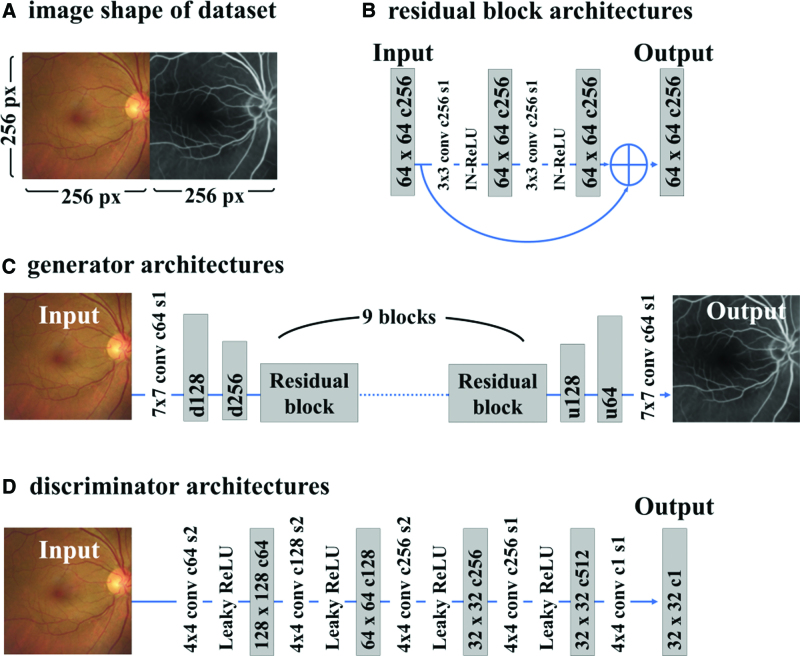
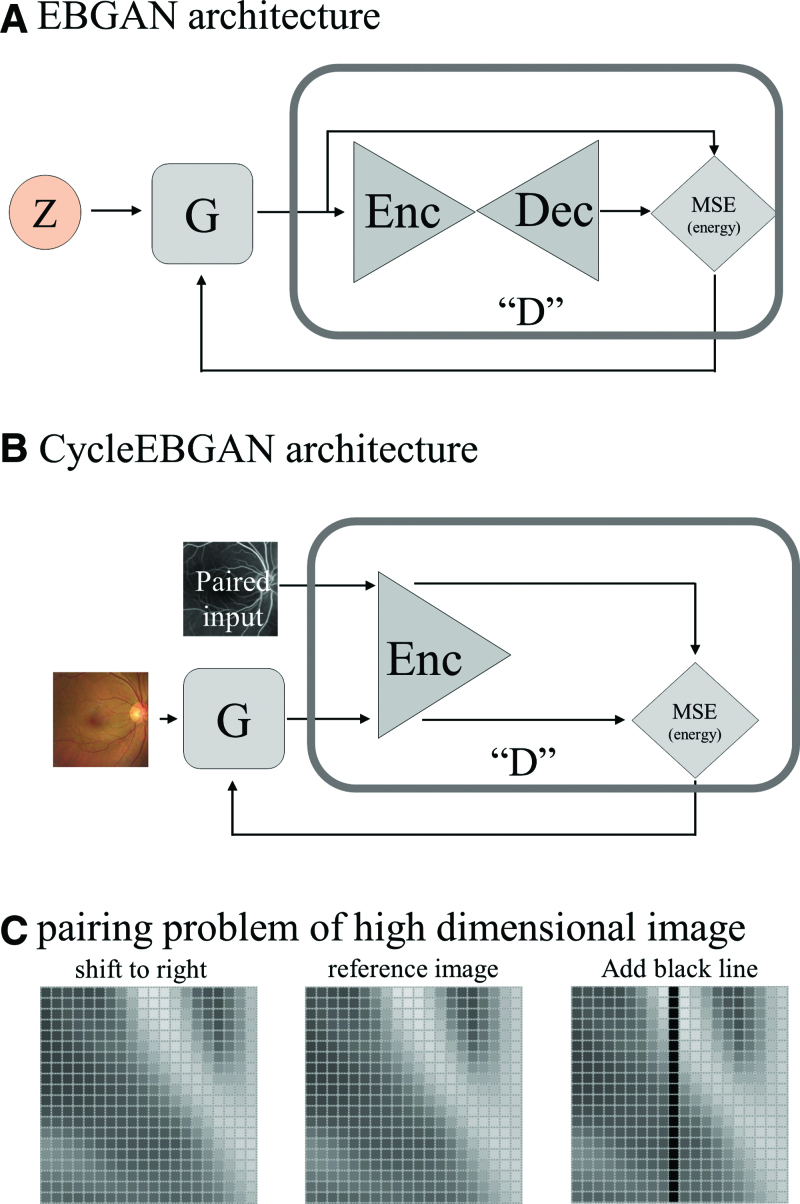
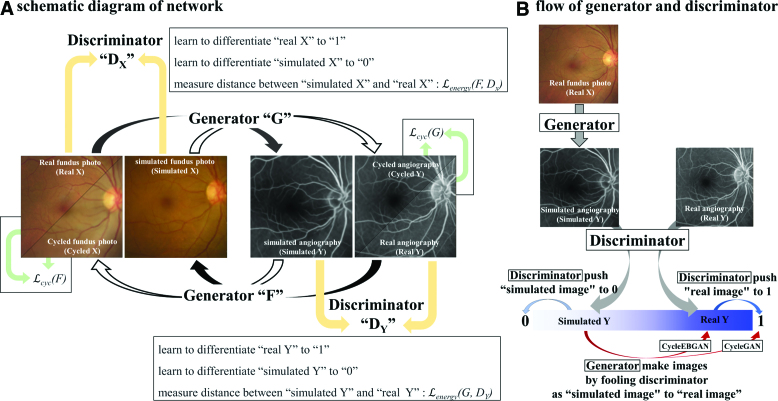
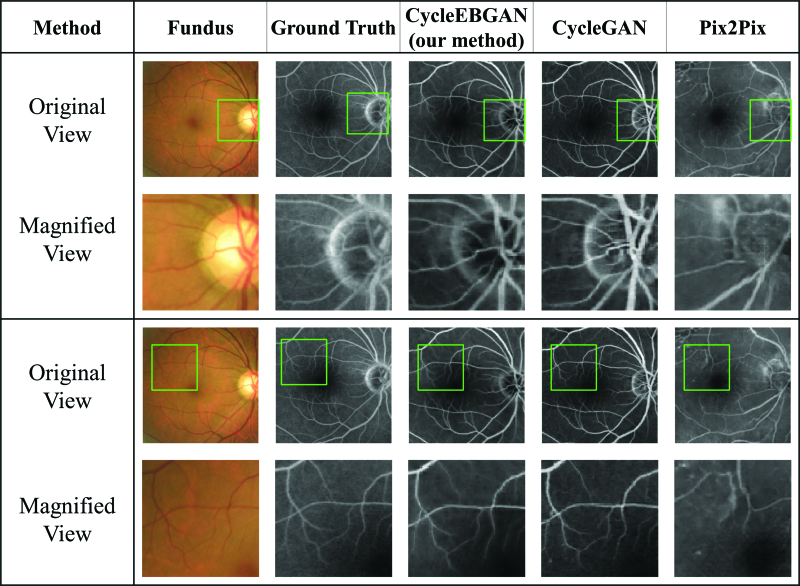
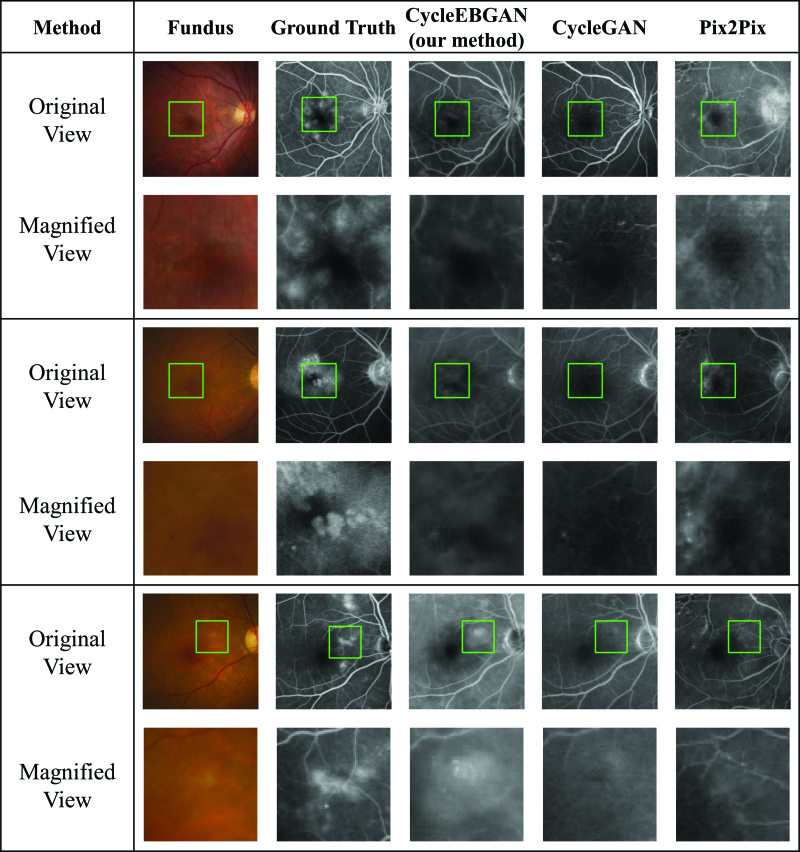
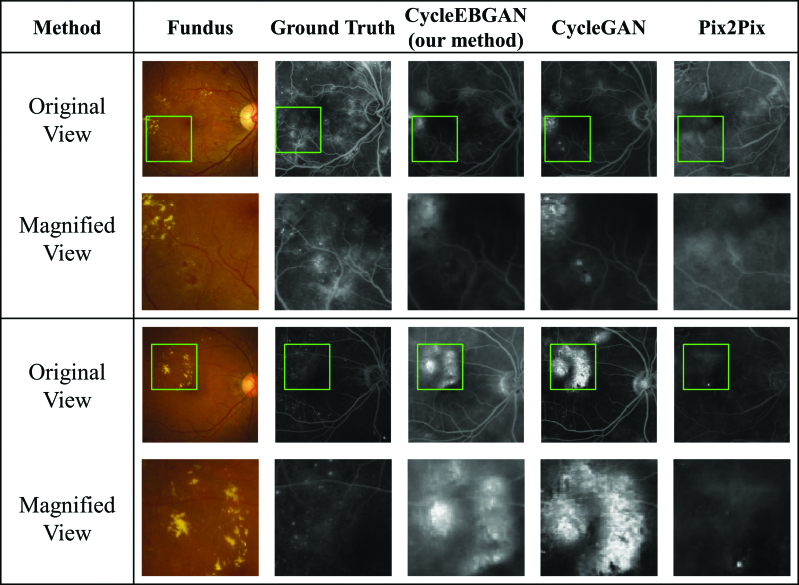
Fluorescein angiography is a crucial examination in ophthalmology to identify retinal and choroidal pathologies. However, this examination modality is invasive and inconvenient, requiring intravenous injection of a fluorescent dye. In order to provide a more convenient option for high-risk patients, we propose a deep-learning-based method to translate fundus photography into fluorescein angiography using Energy-based Cycle-consistent Adversarial Networks (CycleEBGAN) We propose a deep-learning-based method to translate fundus photography into fluorescein angiography using CycleEBGAN. We collected fundus photographs and fluorescein angiographs taken at Changwon Gyeongsang National University Hospital between January 2016 and June 2021 and paired late-phase fluorescein angiographs and fundus photographs taken on the same day. We developed CycleEBGAN, a combination of cycle-consistent adversarial networks (CycleGAN) and Energy-based Generative Adversarial Networks (EBGAN), to translate the paired images. The simulated images were then interpreted by 2 retinal specialists to determine their clinical consistency with fluorescein angiography. A retrospective study. A total of 2605 image pairs were obtained, with 2555 used as the training set and the remaining 50 used as the test set. Both CycleGAN and CycleEBGAN effectively translated fundus photographs into fluorescein angiographs. However, CycleEBGAN showed superior results to CycleGAN in translating subtle abnormal features. We propose CycleEBGAN as a method for generating fluorescein angiography using cheap and convenient fundus photography. Synthetic fluorescein angiography with CycleEBGAN was more accurate than fundus photography, making it a helpful option for high-risk patients requiring fluorescein angiography, such as diabetic retinopathy patients with nephropathy.
荧光素血管造影术是眼科中识别视网膜和脉络膜病变的重要检查方法。然而,这种检查方式具有侵入性和不便性,需要静脉注射荧光染料。为了为高风险患者提供更方便的选择,我们提出了一种基于深度学习的方法,使用基于能量的循环一致对抗网络(CycleEBGAN)将眼底摄影转换为荧光素血管造影。
我们提出了一种基于深度学习的方法,使用 CycleEBGAN 将眼底摄影转换为荧光素血管造影。我们收集了 2016 年 1 月至 2021 年 6 月在昌原国立大学医院拍摄的眼底照片和荧光素血管造影图,并对同一天拍摄的晚期荧光素血管造影图和眼底照片进行了配对。我们开发了 CycleEBGAN,它是循环一致对抗网络(CycleGAN)和基于能量的生成对抗网络(EBGAN)的组合,用于转换配对图像。然后,由 2 名视网膜专家对模拟图像进行解释,以确定它们与荧光素血管造影的临床一致性。
这是一项回顾性研究。共获得 2605 对图像,其中 2555 对用于训练集,其余 50 对用于测试集。CycleGAN 和 CycleEBGAN 都有效地将眼底照片转换为荧光素血管造影图。然而,CycleEBGAN 在转换细微异常特征方面优于 CycleGAN。我们提出 CycleEBGAN 作为一种使用廉价便捷的眼底摄影生成荧光素血管造影的方法。使用 CycleEBGAN 的合成荧光素血管造影术比眼底摄影术更准确,对于需要荧光素血管造影术的高风险患者(如伴有肾病的糖尿病视网膜病变患者)来说,这是一种有用的选择。