Department of Pathology, Rady Faculty of Health Sciences, University of Manitoba, Winnipeg, MB, Canada.
Department of Human Anatomy and Cell Science, Rady Faculty of Health Sciences, University of Manitoba, Winnipeg, MB, Canada.
Acta Neuropathol Commun. 2023 Jul 7;11(1):110. doi: 10.1186/s40478-023-01604-y.
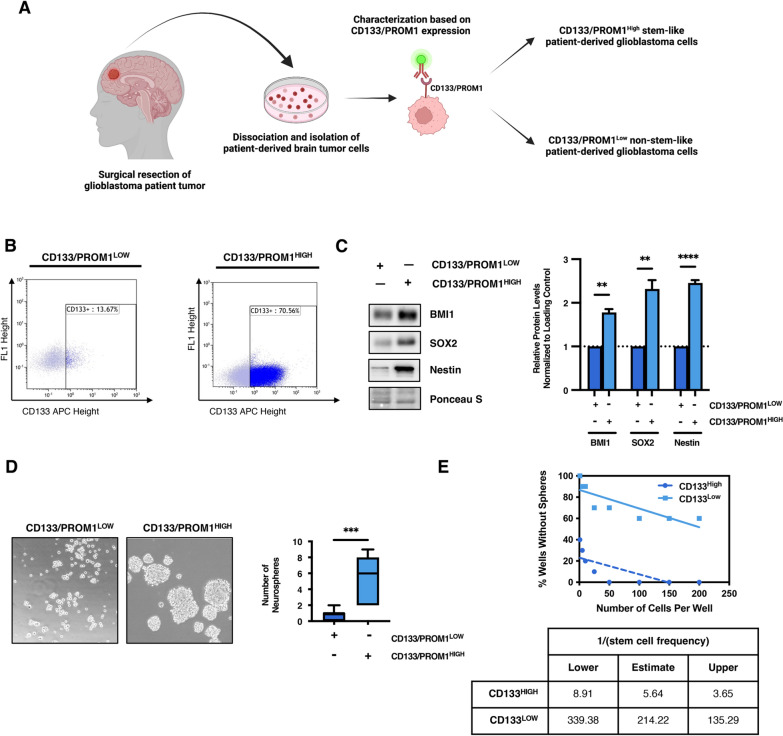
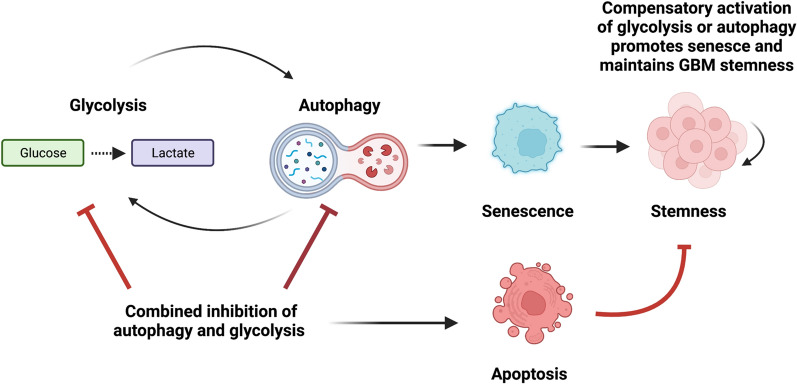
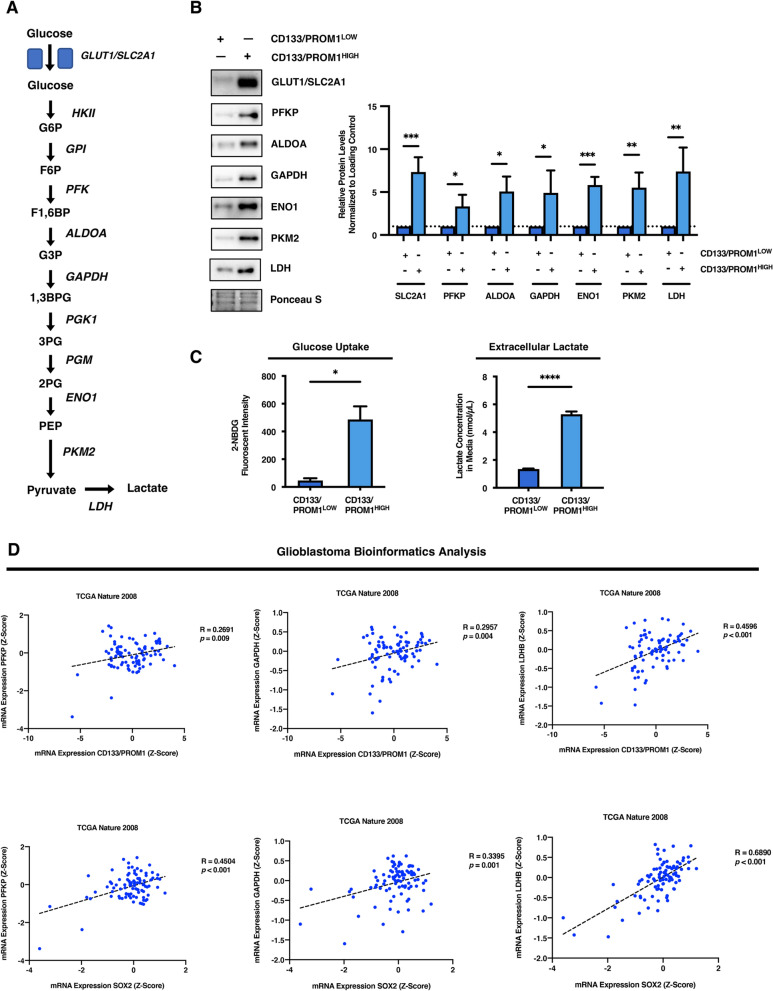
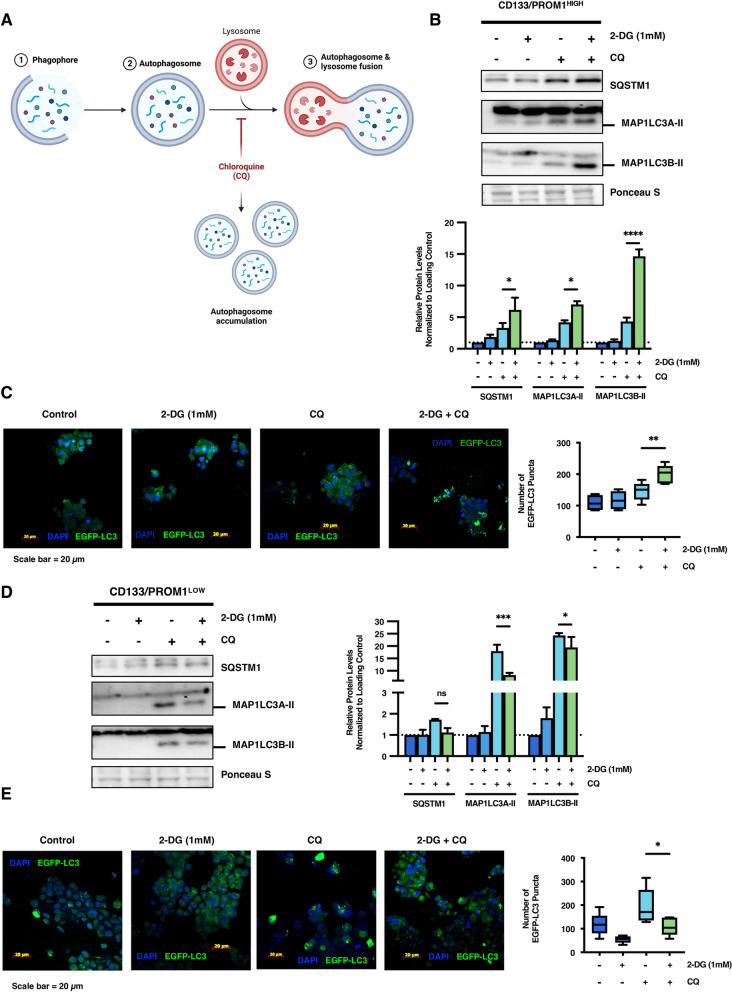
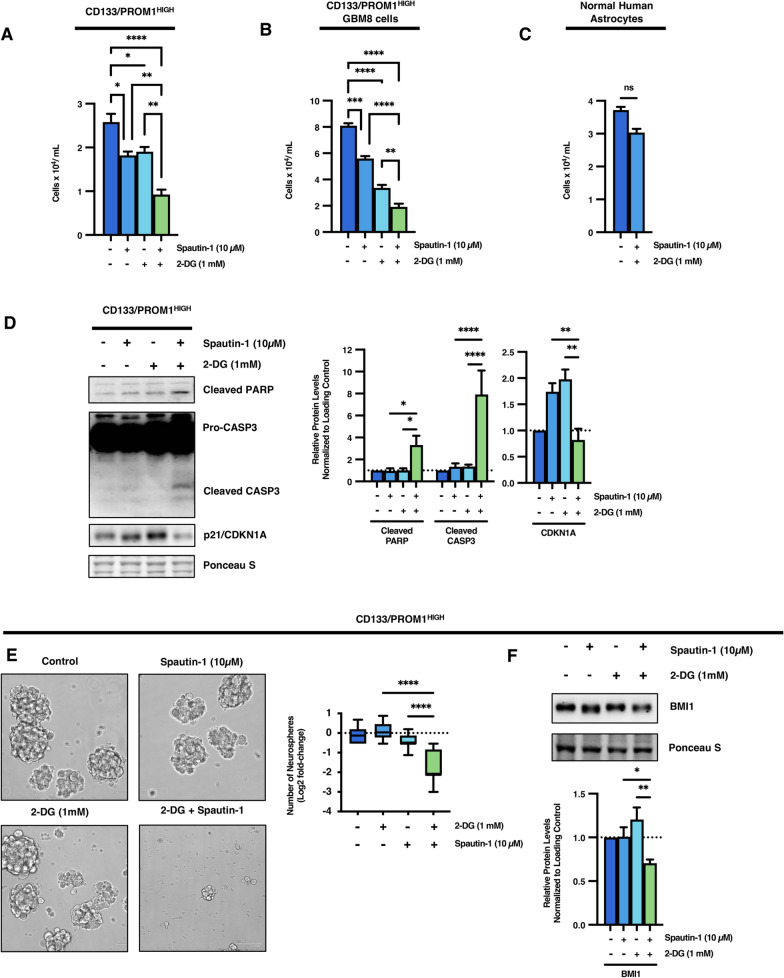
Despite tremendous research efforts, successful targeting of aberrant tumor metabolism in clinical practice has remained elusive. Tumor heterogeneity and plasticity may play a role in the clinical failure of metabolism-targeting interventions for treating cancer patients. Moreover, compensatory growth-related processes and adaptive responses exhibited by heterogeneous tumor subpopulations to metabolic inhibitors are poorly understood. Here, by using clinically-relevant patient-derived glioblastoma (GBM) cell models, we explore the cross-talk between glycolysis, autophagy, and senescence in maintaining tumor stemness. We found that stem cell-like GBM tumor subpopulations possessed higher basal levels of glycolytic activity and increased expression of several glycolysis-related enzymes including, GLUT1/SLC2A1, PFKP, ALDOA, GAPDH, ENO1, PKM2, and LDH, compared to their non-stem-like counterparts. Importantly, bioinformatics analysis also revealed that the mRNA expression of glycolytic enzymes positively correlates with stemness markers (CD133/PROM1 and SOX2) in patient GBM tumors. While treatment with glycolysis inhibitors induced senescence in stem cell-like GBM tumor subpopulations, as evidenced by increased β-galactosidase staining and upregulation of the cell cycle regulators p21/CDKN1A and p16/CDKN2A, these cells maintained their aggressive stemness features and failed to undergo apoptotic cell death. Using various techniques including autophagy flux and EGFP-MAP1LC3B puncta formation analysis, we determined that inhibition of glycolysis led to the induction of autophagy in stem cell-like GBM tumor subpopulations, but not in their non-stem-like counterparts. Similarly, blocking autophagy in stem cell-like GBM tumor subpopulations induced senescence-associated growth arrest without hampering stemness capacity or inducing apoptosis while reciprocally upregulating glycolytic activity. Combinatorial treatment of stem cell-like GBM tumor subpopulations with autophagy and glycolysis inhibitors blocked the induction of senescence while drastically impairing their stemness capacity which drove cells towards apoptotic cell death. These findings identify a novel and complex compensatory interplay between glycolysis, autophagy, and senescence that helps maintain stemness in heterogeneous GBM tumor subpopulations and provides a survival advantage during metabolic stress.
尽管进行了大量的研究,但在临床实践中成功靶向异常肿瘤代谢仍然难以实现。肿瘤异质性和可塑性可能在代谢靶向干预治疗癌症患者的临床失败中发挥作用。此外,不同肿瘤亚群对代谢抑制剂表现出的代偿性生长相关过程和适应性反应还了解甚少。在这里,我们使用与临床相关的患者来源的胶质母细胞瘤(GBM)细胞模型,探讨了糖酵解、自噬和衰老在维持肿瘤干细胞特性方面的相互作用。我们发现,与非干细胞样肿瘤亚群相比,具有干细胞样特性的 GBM 肿瘤亚群具有更高的基础糖酵解活性和增加的几种糖酵解相关酶的表达,包括 GLUT1/SLC2A1、PFKP、ALDOA、GAPDH、ENO1、PKM2 和 LDH。重要的是,生物信息学分析还表明,糖酵解酶的 mRNA 表达与患者 GBM 肿瘤中的干细胞标志物(CD133/PROM1 和 SOX2)呈正相关。虽然糖酵解抑制剂的治疗诱导了干细胞样 GBM 肿瘤亚群的衰老,这表现在β-半乳糖苷酶染色增加和细胞周期调节剂 p21/CDKN1A 和 p16/CDKN2A 的上调,但这些细胞保持了其侵袭性的干细胞特性,并且未能经历凋亡性细胞死亡。通过使用各种技术,包括自噬通量和 EGFP-MAP1LC3B 斑点形成分析,我们确定抑制糖酵解导致了干细胞样 GBM 肿瘤亚群中自噬的诱导,但在非干细胞样肿瘤亚群中没有诱导。同样,在干细胞样 GBM 肿瘤亚群中阻断自噬诱导了衰老相关的生长停滞,而不会损害其干细胞能力或诱导凋亡,同时反向上调糖酵解活性。对干细胞样 GBM 肿瘤亚群进行自噬和糖酵解抑制剂的联合治疗阻断了衰老的诱导,同时极大地削弱了它们的干细胞能力,导致细胞向凋亡性细胞死亡。这些发现确定了糖酵解、自噬和衰老之间一种新的和复杂的代偿性相互作用,有助于维持异质性 GBM 肿瘤亚群中的干细胞特性,并在代谢应激期间提供生存优势。