Williams Kendra N, Quinn Ashlinn, North Hayley, Wang Jiantong, Pillarisetti Ajay, Thompson Lisa M, Díaz-Artiga Anaité, Balakrishnan Kalpana, Thangavel Gurusamy, Rosa Ghislaine, Ndagijimana Florien, Underhill Lindsay J, Kirby Miles A, Puzzolo Elisa, Hossen Shakir, Waller Lance A, Peel Jennifer L, Rosenthal Joshua P, Clasen Thomas F, Harvey Steven A, Checkley William
Division of Pulmonary and Critical Care, School of Medicine, Johns Hopkins University, Baltimore, MD, USA.
Center for Global Non-Communicable Disease Research and Training, School of Medicine, Johns Hopkins University, Baltimore, MD, USA.
medRxiv. 2023 Jun 27:2023.06.20.23291670. doi: 10.1101/2023.06.20.23291670.
Reducing household air pollution (HAP) to levels associated with health benefits requires nearly exclusive use of clean cooking fuels and abandonment of traditional biomass fuels.
The Household Air Pollution Intervention Network (HAPIN) trial randomized 3,195 pregnant women in Guatemala, India, Peru, and Rwanda to receive a liquefied petroleum gas (LPG) stove intervention (n=1,590), with controls expected to continue cooking with biomass fuels (n=1,605). We assessed fidelity to intervention implementation and participant adherence to the intervention starting in pregnancy through the infant's first birthday using fuel delivery and repair records, surveys, observations, and temperature-logging stove use monitors (SUMs).
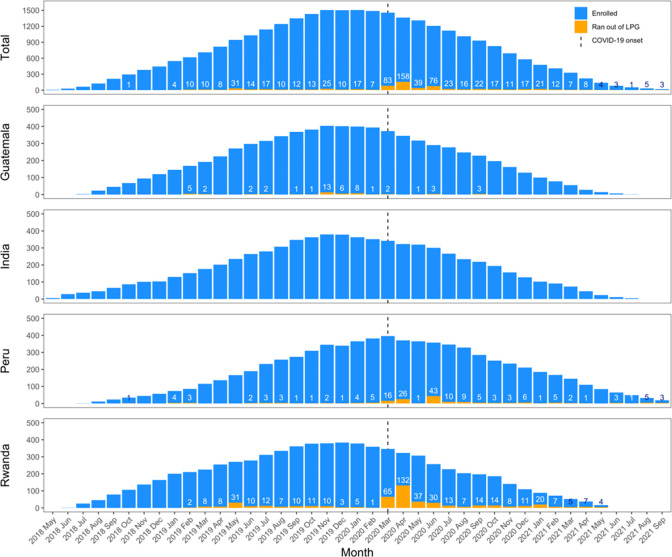
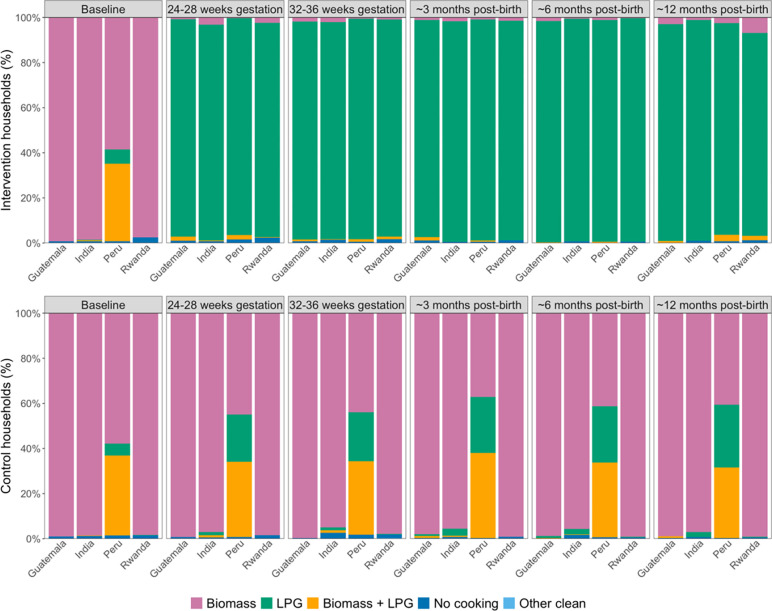
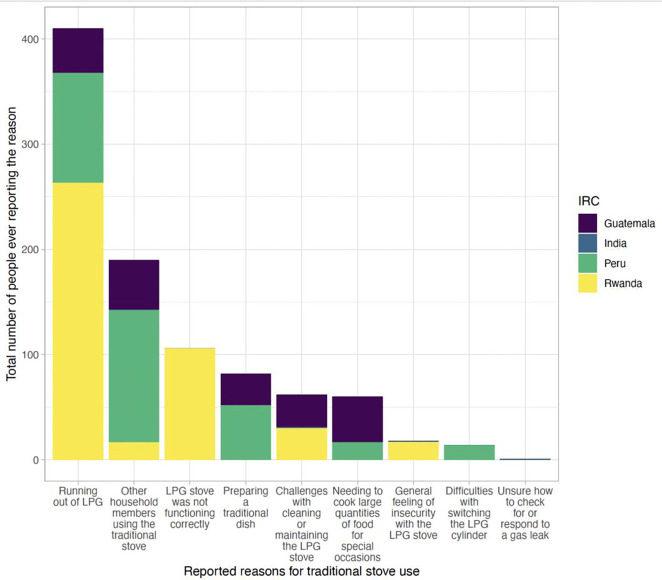
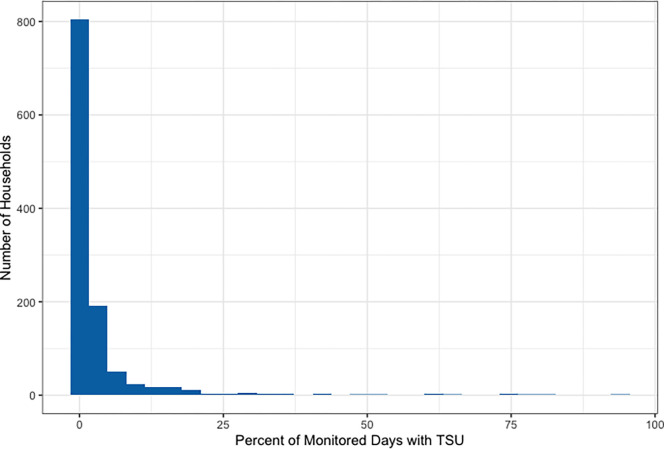
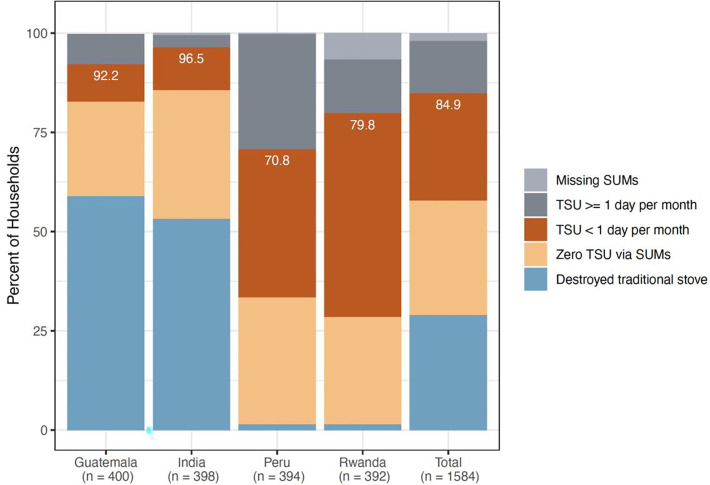
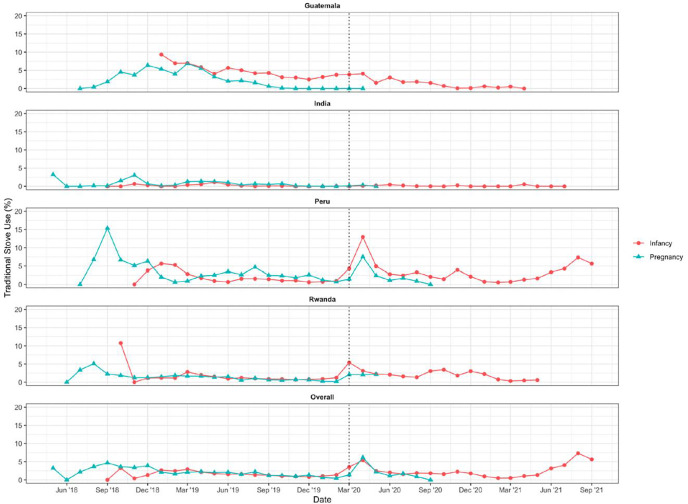
Fidelity and adherence to the HAPIN intervention were high. Median time required to refill LPG cylinders was 1 day (interquartile range 0-2). Although 26% (n=410) of intervention participants reported running out of LPG at some point, the number of times was low (median: 1 day [Q1, Q3: 1, 2]) and mostly limited to the first four months of the COVID-19 pandemic. Most repairs were completed on the same day as problems were reported. Traditional stove use was observed in only 3% of observation visits, and 89% of these observations were followed up with behavioral reinforcement. According to SUMs data, intervention households used their traditional stove a median of 0.4% of all monitored days, and 81% used the traditional stove <1 day per month. Traditional stove use was slightly higher post-COVID-19 (detected on a median [Q1, Q3] of 0.0% [0.0%, 3.4%] of days) than pre-COVID-19 (0.0% [0.0%, 1.6%] of days). There was no significant difference in intervention adherence pre- and post-birth.
Free stoves and an unlimited supply of LPG fuel delivered to participating homes combined with timely repairs, behavioral messaging, and comprehensive stove use monitoring contributed to high intervention fidelity and near-exclusive LPG use within the HAPIN trial.
将家庭空气污染(HAP)降低到对健康有益的水平,几乎需要完全使用清洁烹饪燃料并摒弃传统生物质燃料。
家庭空气污染干预网络(HAPIN)试验将危地马拉、印度、秘鲁和卢旺达的3195名孕妇随机分组,1590名孕妇接受液化石油气(LPG)炉灶干预,对照组预计继续使用生物质燃料烹饪(1605名)。我们从孕期开始直至婴儿满周岁,通过燃料配送和维修记录、调查、观察以及温度记录炉灶使用监测器(SUMs),评估干预措施实施的保真度以及参与者对干预措施的依从性。
对HAPIN干预措施的保真度和依从性很高。液化石油气钢瓶重新充装所需的中位时间为1天(四分位间距0 - 2天)。虽然26%(410名)的干预参与者报告在某些时候液化石油气用完,但次数较少(中位值:1天[第一四分位数,第三四分位数:1,2]),且大多局限于新冠疫情的前四个月。大多数维修在报告问题的当天完成。在仅3%的观察访视中观察到使用传统炉灶,其中89%的此类观察通过行为强化进行了跟进。根据SUMs数据,干预家庭在所有监测天数中使用传统炉灶的中位比例为0.4%,81%的家庭每月使用传统炉灶少于1天。新冠疫情后传统炉灶的使用略高于疫情前(检测到使用传统炉灶的天数中位值[第一四分位数,第三四分位数]为0.0%[0.0%,3.4%])(疫情前为0.0%[0.0%,1.6%])。出生前后干预依从性无显著差异。
向参与家庭提供免费炉灶和无限量的液化石油气燃料供应,再加上及时维修、行为信息传递以及全面的炉灶使用监测,促成了HAPIN试验中较高的干预保真度和几乎完全使用液化石油气的情况。