Srivastava Vasudha, Hu Jennifer L, Garbe James C, Veytsman Boris, Shalabi Sundus F, Yllanes David, Thomson Matt, LaBarge Mark A, Huber Greg, Gartner Zev J
Dept. of Pharmaceutical Chemistry, University of California San Francisco, San Francisco, CA 94158, USA.
UC Berkeley-UC San Francisco Graduate Program in Bioengineering, Berkeley, CA 94720, USA.
bioRxiv. 2023 Jul 2:2023.07.01.546933. doi: 10.1101/2023.07.01.546933.
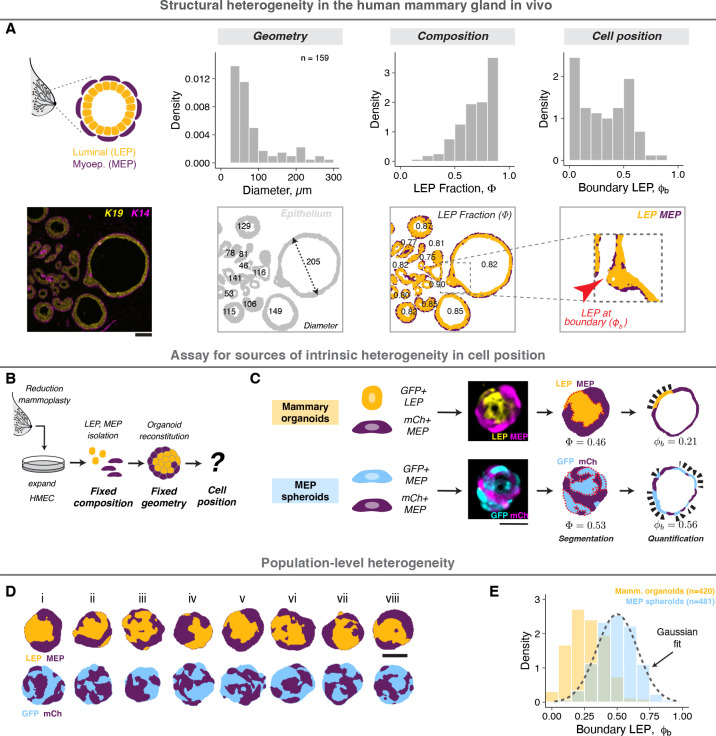
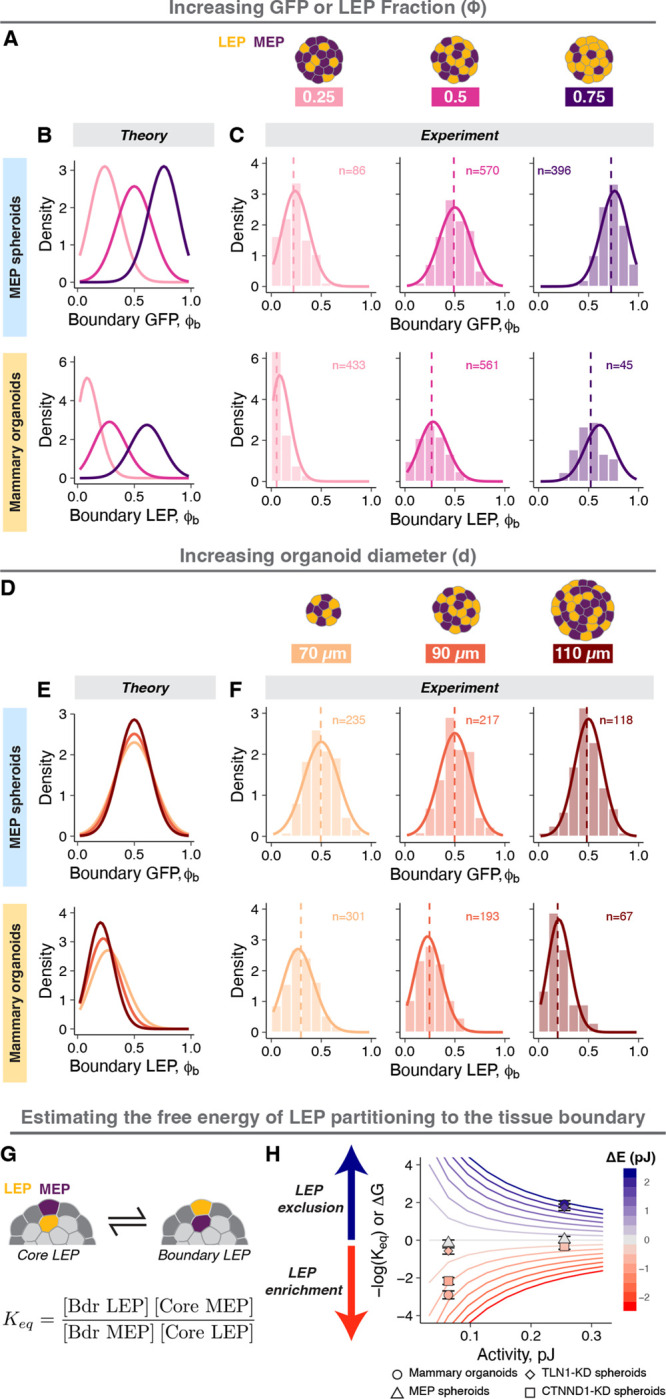
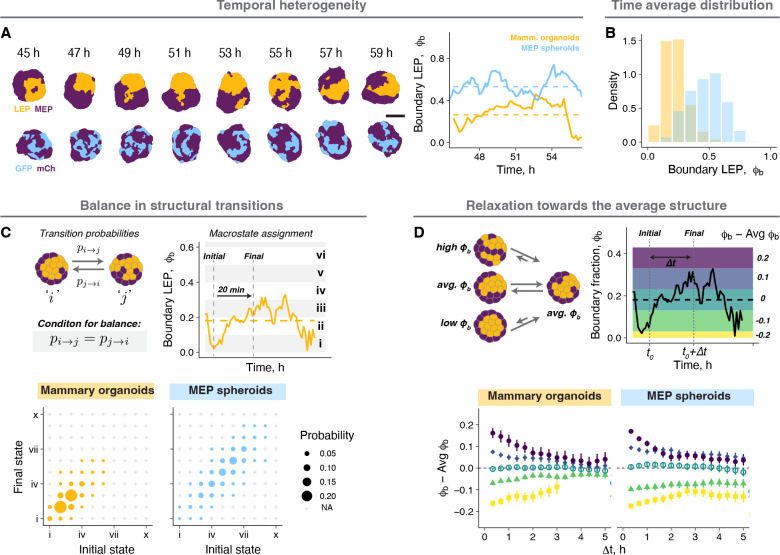
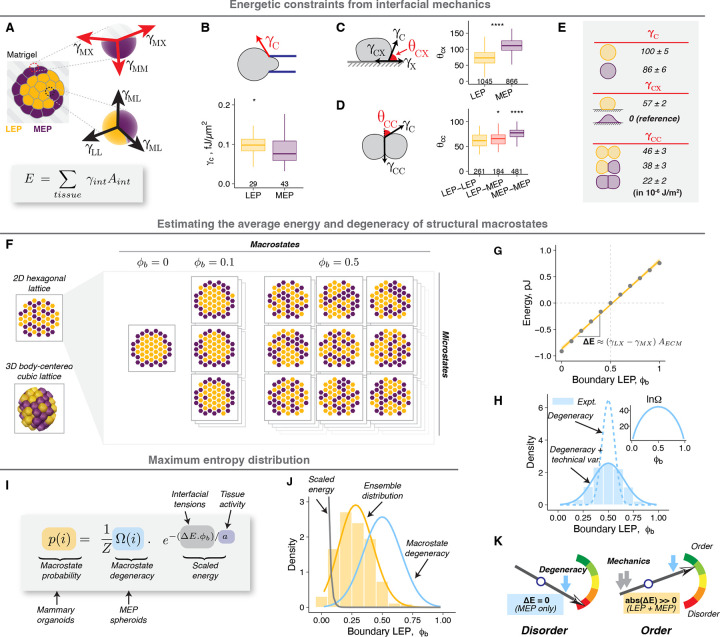
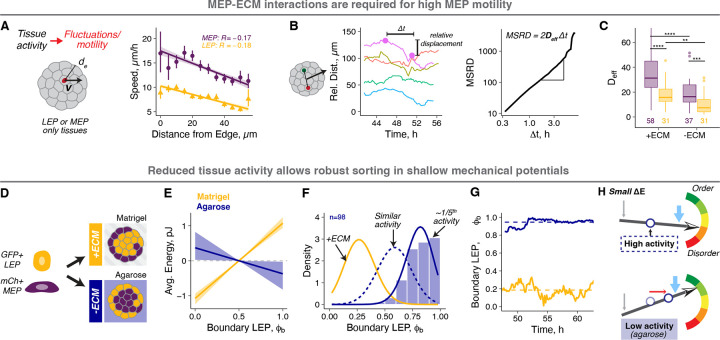
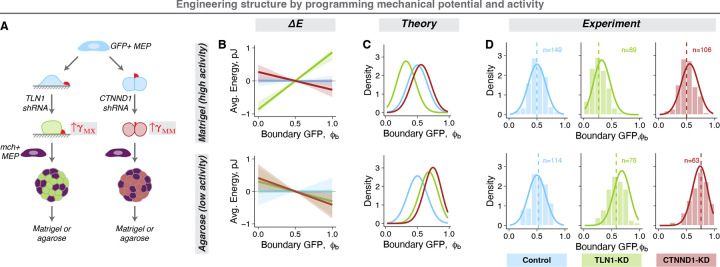
Tissues comprise ordered arrangements of cells that can be surprisingly disordered in their details. How the properties of single cells and their microenvironment contribute to the balance between order and disorder at the tissue-scale remains poorly understood. Here, we address this question using the self-organization of human mammary organoids as a model. We find that organoids behave like a dynamic structural ensemble at the steady state. We apply a maximum entropy formalism to derive the ensemble distribution from three measurable parameters - the degeneracy of structural states, interfacial energy, and tissue activity (the energy associated with positional fluctuations). We link these parameters with the molecular and microenvironmental factors that control them to precisely engineer the ensemble across multiple conditions. Our analysis reveals that the entropy associated with structural degeneracy sets a theoretical limit to tissue order and provides new insight for tissue engineering, development, and our understanding of disease progression.
组织由细胞的有序排列组成,但其细节可能会令人惊讶地无序。单个细胞的特性及其微环境如何在组织尺度上促成有序与无序之间的平衡,目前仍知之甚少。在此,我们以人乳腺类器官的自组织为模型来解决这个问题。我们发现类器官在稳态下表现得像一个动态结构集合体。我们应用最大熵形式主义,从三个可测量参数——结构状态的简并度、界面能和组织活性(与位置波动相关的能量)——推导出集合体分布。我们将这些参数与控制它们的分子和微环境因素联系起来,以在多种条件下精确设计集合体。我们的分析表明,与结构简并相关的熵为组织有序性设定了理论极限,并为组织工程、发育以及我们对疾病进展的理解提供了新的见解。