Department of Hepatopancreatobiliary Surgery, The Second Affiliated Hospital, College of Medicine, Zhejiang University, Hangzhou 310009, Zhejiang Province, China.
Department of General Surgery, Yuhuan Second People's Hospital, Taizhou 317600, Zhejiang Province, China.
World J Gastroenterol. 2023 Jun 28;29(24):3748-3757. doi: 10.3748/wjg.v29.i24.3748.
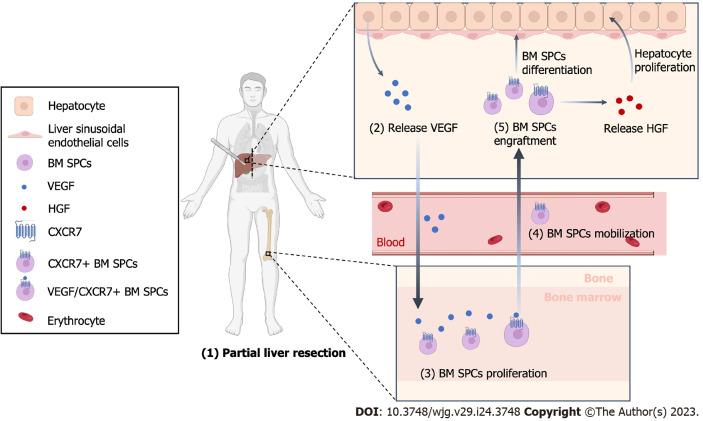
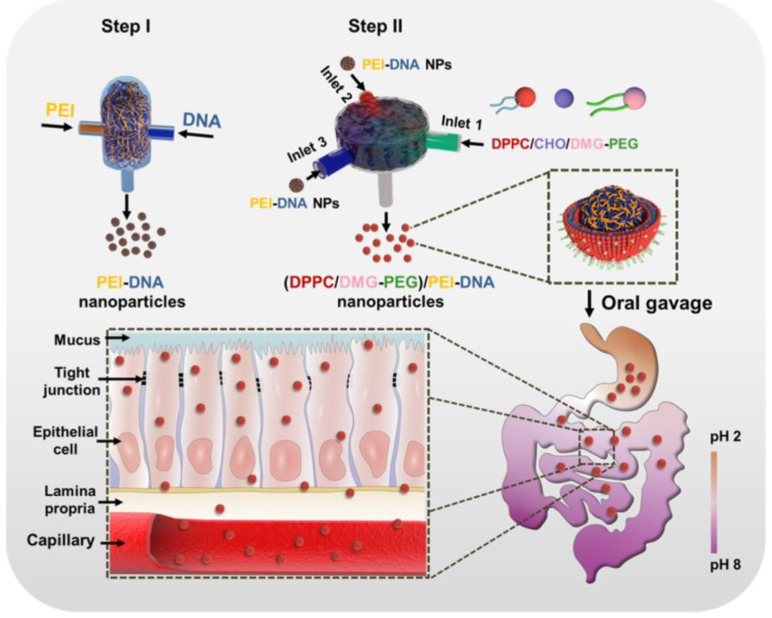
Partial hepatectomy (PH) can lead to severe complications, including liver failure, due to the low regenerative capacity of the remaining liver, especially after extensive hepatectomy. Liver sinusoidal endothelial cells (LSECs), whose proliferation occurs more slowly and later than hepatocytes after PH, compose the lining of the hepatic sinusoids, which are the smallest blood vessels in the liver. Vascular endothelial growth factor (VEGF), secreted by hepatocytes, promotes LSEC proliferation. Supplementation of exogenous VEGF after hepatectomy also increases the number of LSECs in the remaining liver, thus promoting the reestablishment of the hepatic sinusoids and accelerating liver regeneration. At present, some shortcomings exist in the methods of supplementing exogenous VEGF, such as a low drug concentration in the liver and the reaching of other organs. More-over, VEGF should be administered multiple times and in large doses because of its short half-life. This review summarized the most recent findings on liver regeneration and new strategies for the localized delivery VEGF in the liver.
部分肝切除术 (PH) 可导致严重并发症,包括肝功能衰竭,这是由于剩余肝脏的再生能力较低,尤其是在广泛肝切除术后。肝窦内皮细胞 (LSEC) 构成了肝窦的内皮,肝窦是肝脏中最小的血管,其增殖比 PH 后的肝细胞更慢、更晚。肝细胞分泌的血管内皮生长因子 (VEGF) 促进 LSEC 增殖。肝切除术后补充外源性 VEGF 也会增加剩余肝脏中 LSEC 的数量,从而促进肝窦的重建和加速肝脏再生。目前,补充外源性 VEGF 的方法存在一些缺点,如肝脏药物浓度低,到达其他器官等。此外,由于 VEGF 的半衰期短,需要多次大剂量给药。本综述总结了关于肝脏再生的最新发现以及 VEGF 在肝脏局部递药的新策略。