Dong Gengfu, Moparthy Chatick, Thome Trace, Kim Kyoungrae, Yue Feng, Ryan Terence E
Department of Applied Physiology and Kinesiology, University of Florida, Gainesville, Florida, USA.
Department of Animal Sciences, University of Florida, Gainesville, Florida, USA.
JACC Basic Transl Sci. 2023 Mar 8;8(6):702-719. doi: 10.1016/j.jacbts.2022.12.006. eCollection 2023 Jun.
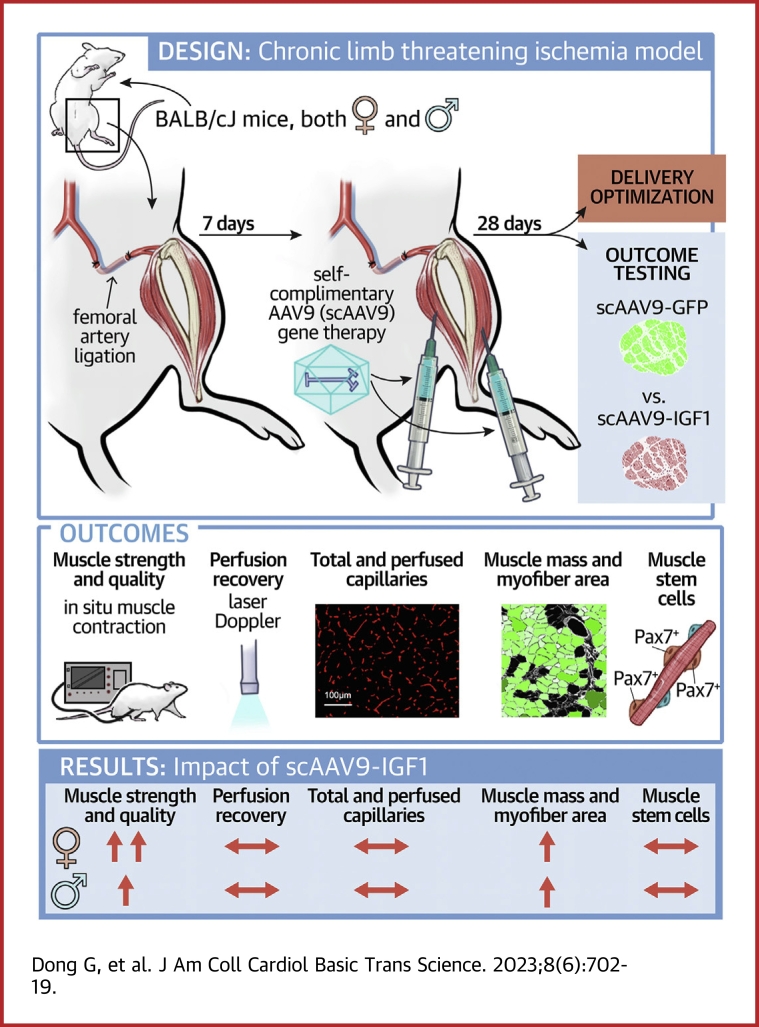
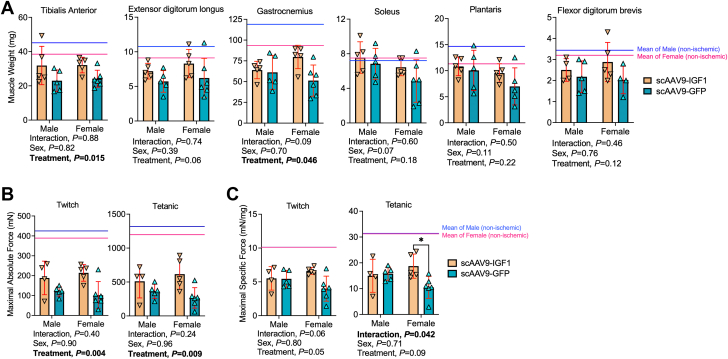
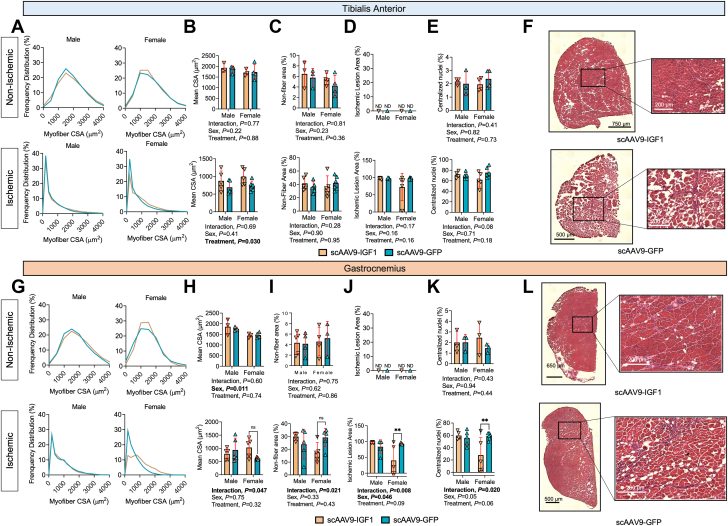
Lower-extremity peripheral arterial disease (PAD) has increased in prevalence, yet therapeutic development has remained stagnant. Skeletal muscle health and function has been strongly linked to quality of life and medical outcomes in patients with PAD. Using a rodent model of PAD, this study demonstrates that treatment of the ischemic limb with insulin-like growth factor (IGF)-1 significantly increases muscle size and strength without improving limb hemodynamics. Interestingly, the effect size of IGF1 therapy was larger in female mice than in male mice, highlighting the need to carefully examine sex-dependent effects in experimental PAD therapies.
下肢外周动脉疾病(PAD)的患病率有所上升,但治疗进展一直停滞不前。骨骼肌健康与功能与PAD患者的生活质量和医疗结局密切相关。本研究利用PAD啮齿动物模型表明,用胰岛素样生长因子(IGF)-1治疗缺血肢体可显著增加肌肉大小和力量,而不会改善肢体血流动力学。有趣的是,IGF-1疗法对雌性小鼠的效应大小大于雄性小鼠,这突出表明在实验性PAD治疗中需要仔细研究性别依赖性效应。