University Hospital, Universidade Federal de Minas Gerais, Belo Horizonte, Brazil.
Rede Mater Dei de Saúde, Belo Horizonte, Brazil.
J Med Internet Res. 2023 Jul 10;25:e45922. doi: 10.2196/45922.
Oral anticoagulation is the cornerstone treatment of several diseases. Its management is often challenging, and different telemedicine strategies have been implemented to support it.
The aim of the study is to systematically review the evidence on the impact of telemedicine-based oral anticoagulation management compared to usual care on thromboembolic and bleeding events.
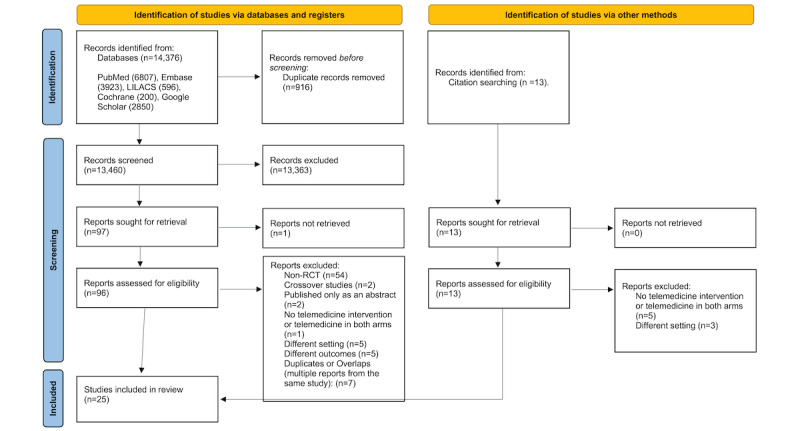
Randomized controlled trials were searched in 5 databases from inception to September 2021. Two independent reviewers performed study selection and data extraction. Total thromboembolic events, major bleeding, mortality, and time in therapeutic range were assessed. Results were pooled using random effect models.
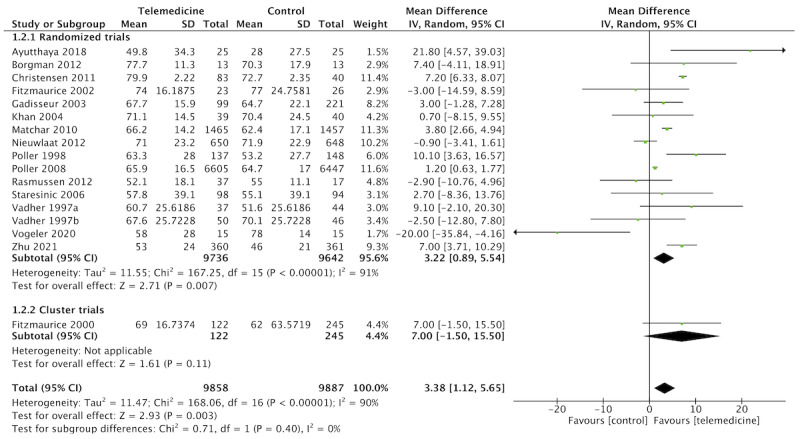
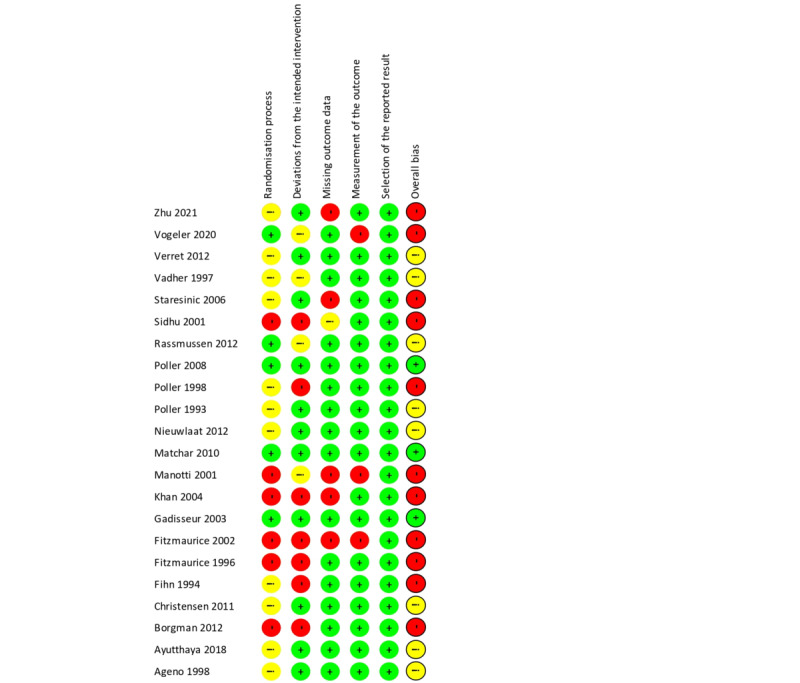
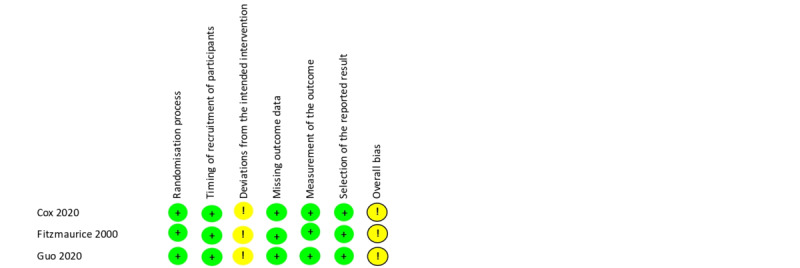
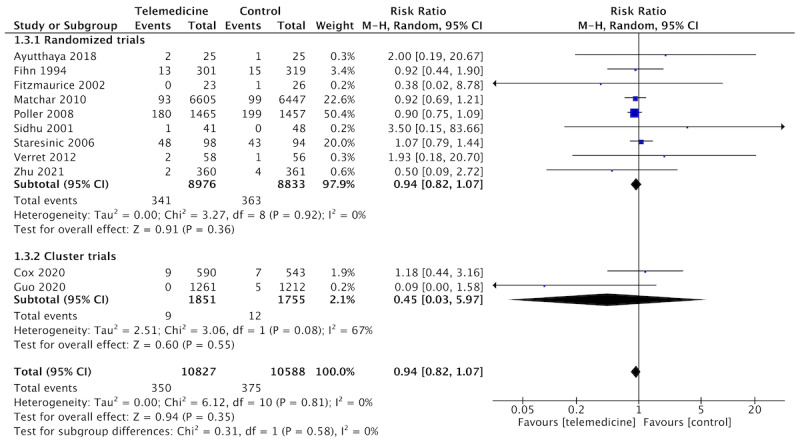
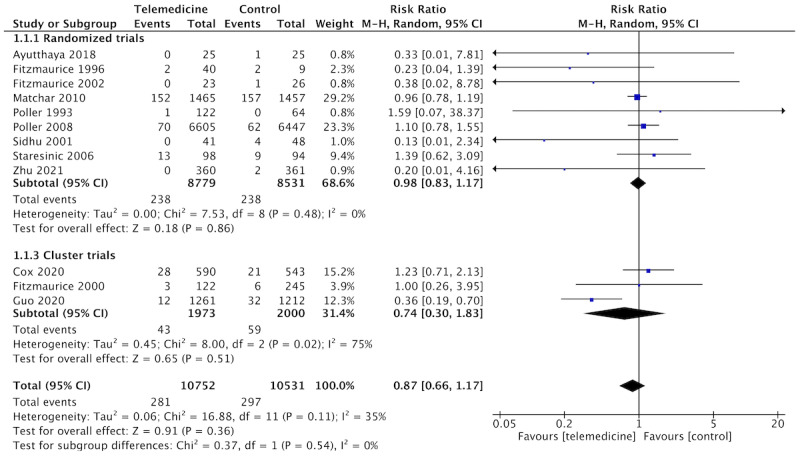
In total, 25 randomized controlled trials were included (n=25,746 patients) and classified as moderate to high risk of bias by the Cochrane tool. Telemedicine resulted in lower rates of thromboembolic events, though not statistically significant (n=13 studies, relative risk [RR] 0.75, 95% CI 0.53-1.07; I=42%), comparable rates of major bleeding (n=11 studies, RR 0.94, 95% CI 0.82-1.07; I=0%) and mortality (n=12 studies, RR 0.96, 95% CI 0.78-1.20; I=11%), and an improved time in therapeutic range (n=16 studies, mean difference 3.38, 95% CI 1.12-5.65; I=90%). In the subgroup of the multitasking intervention, telemedicine resulted in an important reduction of thromboembolic events (RR 0.20, 95% CI 0.08-0.48).
Telemedicine-based oral anticoagulation management resulted in similar rates of major bleeding and mortality, a trend for fewer thromboembolic events, and better anticoagulation quality compared to standard care. Given the potential benefits of telemedicine-based care, such as greater access to remote populations or people with ambulatory restrictions, these findings may encourage further implementation of eHealth strategies for anticoagulation management, particularly as part of multifaceted interventions for integrated care of chronic diseases. Meanwhile, researchers should develop higher-quality evidence focusing on hard clinical outcomes, cost-effectiveness, and quality of life.
PROSPERO International Prospective Register of Systematic Reviews CRD42020159208; https://www.crd.york.ac.uk/prospero/display_record.php?RecordID=159208.
口服抗凝治疗是多种疾病的基石治疗方法。其管理通常具有挑战性,并且已经实施了不同的远程医疗策略来支持它。
本研究旨在系统回顾基于远程医疗的口服抗凝管理与常规护理相比对血栓栓塞和出血事件的影响的证据。
从开始到 2021 年 9 月,在 5 个数据库中搜索随机对照试验。两名独立审查员进行了研究选择和数据提取。评估总血栓栓塞事件、大出血、死亡率和治疗范围内的时间。使用随机效应模型汇总结果。
共纳入 25 项随机对照试验(n=25746 名患者),并根据 Cochrane 工具被归类为中高度偏倚风险。远程医疗可降低血栓栓塞事件的发生率,但无统计学意义(n=13 项研究,相对风险[RR]0.75,95%CI0.53-1.07;I=42%),大出血发生率相当(n=11 项研究,RR0.94,95%CI0.82-1.07;I=0%)和死亡率(n=12 项研究,RR0.96,95%CI0.78-1.20;I=11%),并且治疗范围内的时间延长(n=16 项研究,平均差异 3.38,95%CI1.12-5.65;I=90%)。在多任务干预的亚组中,远程医疗可显著降低血栓栓塞事件(RR0.20,95%CI0.08-0.48)。
与标准护理相比,基于远程医疗的口服抗凝管理可导致大出血和死亡率相似,血栓栓塞事件发生率略有降低,抗凝质量更好。鉴于远程医疗护理的潜在益处,例如为远程人群或行动不便的人提供更大的获取途径,这些发现可能会鼓励进一步实施电子健康策略来管理抗凝治疗,尤其是作为慢性病综合护理的多方面干预措施的一部分。同时,研究人员应制定更高质量的证据,重点关注硬临床结局、成本效益和生活质量。
PROSPERO 国际前瞻性系统评价注册中心 CRD42020159208;https://www.crd.york.ac.uk/prospero/display_record.php?RecordID=159208。