Division of Cancer Immunotherapy, Kanagawa Cancer Center Research Institute, Yokohama, Japan
Cancer Vaccine and Immunotherapy Center, Kanagawa Cancer Center, Yokohama, Japan.
J Immunother Cancer. 2023 Jul;11(7). doi: 10.1136/jitc-2023-006788.
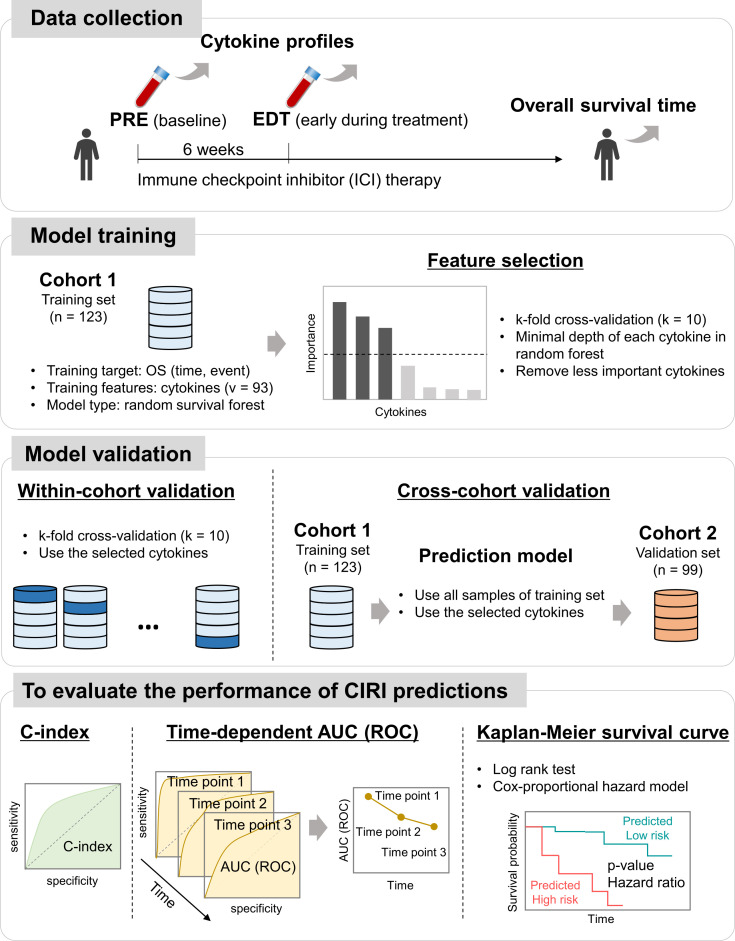
Immune checkpoint inhibitor (ICI) therapy has substantially improved the overall survival (OS) in patients with non-small-cell lung cancer (NSCLC); however, its response rate is still modest. In this study, we developed a machine learning-based platform, namely the Cytokine-based ICI Response Index (CIRI), to predict the ICI response of patients with NSCLC based on the peripheral blood cytokine profiles.
We enrolled 123 and 99 patients with NSCLC who received anti-PD-1/PD-L1 monotherapy or combined chemotherapy in the training and validation cohorts, respectively. The plasma concentrations of 93 cytokines were examined in the peripheral blood obtained from patients at baseline (pre) and 6 weeks after treatment (early during treatment: edt). Ensemble learning random survival forest classifiers were developed to select feature cytokines and predict the OS of patients undergoing ICI therapy.
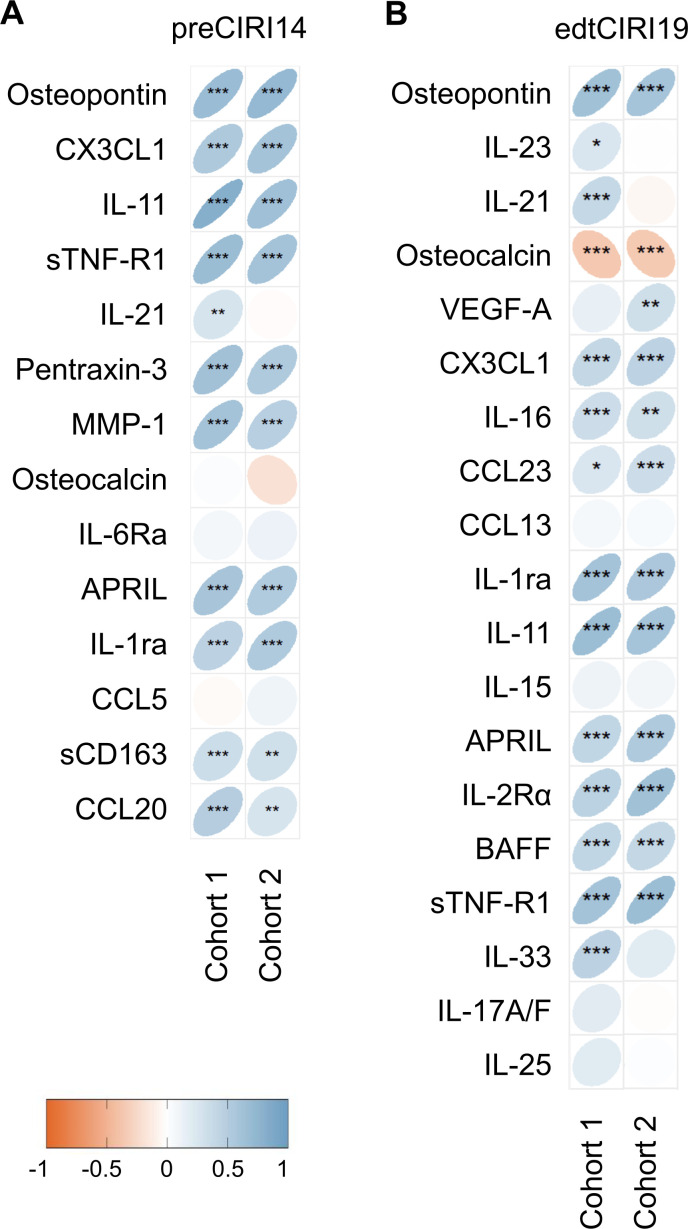
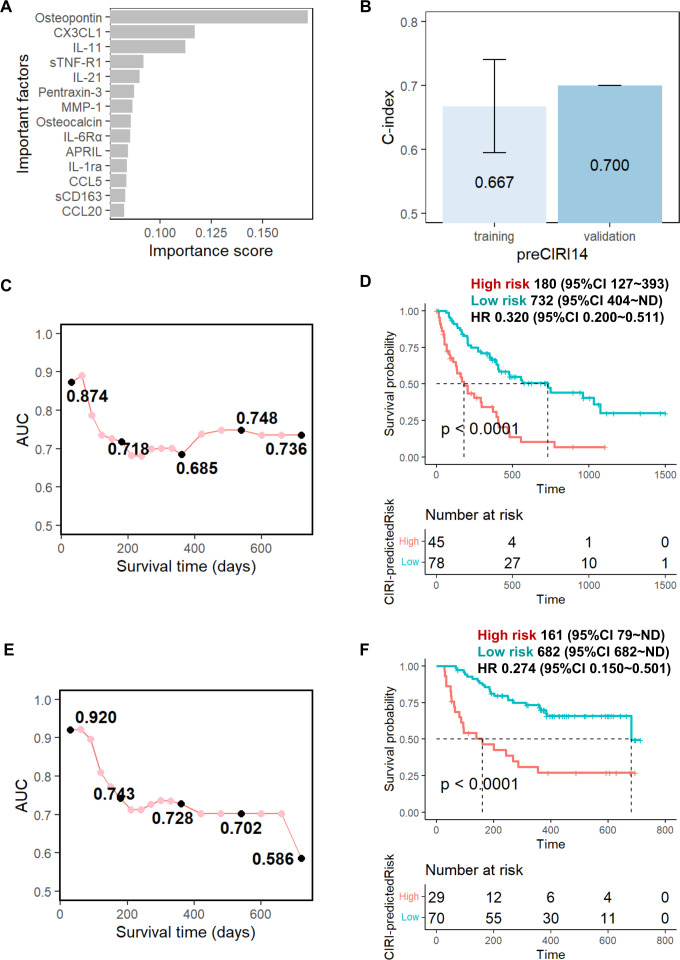
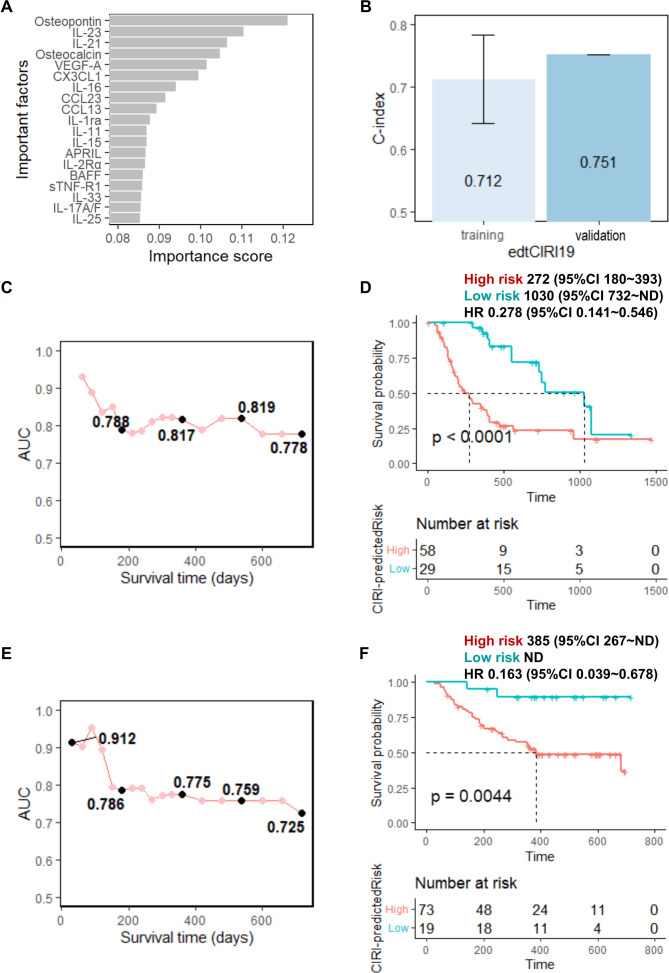
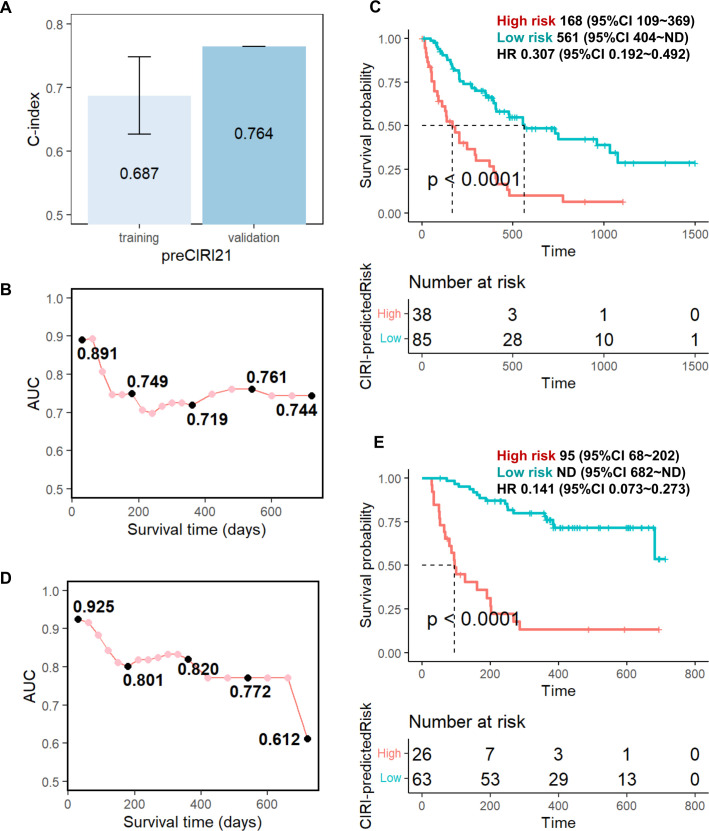
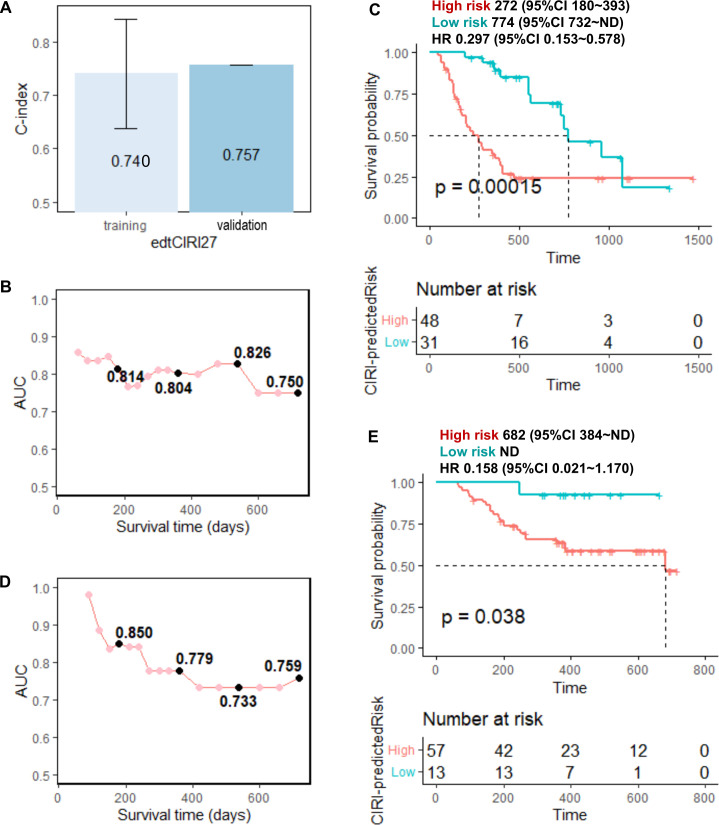
Fourteen and 19 cytokines at baseline and on treatment, respectively, were selected to generate CIRI models (namely preCIRI14 and edtCIRI19), both of which successfully identified patients with worse OS in two completely independent cohorts. At the population level, the prediction accuracies of preCIRI14 and edtCIRI19, as indicated by the concordance indices (C-indices), were 0.700 and 0.751 in the validation cohort, respectively. At the individual level, patients with higher CIRI scores demonstrated worse OS [hazard ratio (HR): 0.274 and 0.163, and p<0.0001 and p=0.0044 in preCIRI14 and edtCIRI19, respectively]. By including other circulating and clinical features, improved prediction efficacy was observed in advanced models (preCIRI21 and edtCIRI27). The C-indices in the validation cohort were 0.764 and 0.757, respectively, whereas the HRs of preCIRI21 and edtCIRI27 were 0.141 (p<0.0001) and 0.158 (p=0.038), respectively.
The CIRI model is highly accurate and reproducible in determining the patients with NSCLC who would benefit from anti-PD-1/PD-L1 therapy with prolonged OS and may aid in clinical decision-making before and/or at the early stage of treatment.
免疫检查点抑制剂(ICI)治疗显著提高了非小细胞肺癌(NSCLC)患者的总生存期(OS);然而,其反应率仍然不高。在这项研究中,我们开发了一个基于机器学习的平台,即细胞因子为基础的ICI 反应指数(CIRI),基于外周血细胞因子谱来预测 NSCLC 患者的 ICI 反应。
我们分别纳入了 123 名和 99 名接受抗 PD-1/PD-L1 单药治疗或联合化疗的 NSCLC 患者,这些患者分别来自训练队列和验证队列。在基线(pre)和治疗 6 周后(早期治疗期间:edt),从患者的外周血中检测了 93 种细胞因子的血浆浓度。采用集成学习随机生存森林分类器来选择特征细胞因子,并预测接受 ICI 治疗的患者的 OS。
基线和治疗时分别有 14 种和 19 种细胞因子被选中来生成 CIRI 模型(分别为 preCIRI14 和 edtCIRI19),这两个模型在两个完全独立的队列中都成功地识别出了 OS 较差的患者。在人群水平上,验证队列中 preCIRI14 和 edtCIRI19 的一致性指数(C-index)分别为 0.700 和 0.751,表明预测准确率较高。在个体水平上,CIRI 评分较高的患者 OS 较差[风险比(HR):preCIRI14 中为 0.274 和 0.163,p<0.0001 和 p=0.0044;edtCIRI19 中为 0.274 和 0.163,p<0.0001 和 p=0.0044]。通过纳入其他循环和临床特征,在高级模型(preCIRI21 和 edtCIRI27)中观察到了更好的预测效果。验证队列中的 C-index 分别为 0.764 和 0.757,而 preCIRI21 和 edtCIRI27 的 HR 分别为 0.141(p<0.0001)和 0.158(p=0.038)。
CIRI 模型在确定 NSCLC 患者从抗 PD-1/PD-L1 治疗中获益方面具有较高的准确性和可重复性,可延长 OS,并可能有助于治疗前和/或早期的临床决策。