• 文献检索
  • 文档翻译
  • 深度研究
  • 学术资讯
  • Suppr Zotero 插件Zotero 插件
  • 邀请有礼
  • 套餐&价格
  • 历史记录
应用&插件
Suppr Zotero 插件Zotero 插件浏览器插件Mac 客户端Windows 客户端微信小程序
定价
高级版会员购买积分包购买API积分包
服务
文献检索文档翻译深度研究API 文档MCP 服务
关于我们
关于 Suppr公司介绍联系我们用户协议隐私条款
关注我们

Suppr 超能文献

核心技术专利:CN118964589B侵权必究
粤ICP备2023148730 号-1Suppr @ 2026

文献检索

告别复杂PubMed语法,用中文像聊天一样搜索,搜遍4000万医学文献。AI智能推荐,让科研检索更轻松。

立即免费搜索

文件翻译

保留排版,准确专业,支持PDF/Word/PPT等文件格式,支持 12+语言互译。

免费翻译文档

深度研究

AI帮你快速写综述,25分钟生成高质量综述,智能提取关键信息,辅助科研写作。

立即免费体验

重症患者被动抬腿(PLR)试验后,通过颈总动脉血流参数与经胸超声心动图心输出量的相关性评估液体反应性

Correlation of Common Carotid Artery Blood Flow Parameters With Transthoracic Echocardiographic Cardiac Output for Assessing Fluid Responsiveness After Passive Leg Raising (PLR) Test in Critically Ill Patients.

作者信息

Patnaik Rohit, Krishna Bhuvana, Sampath Sriram

机构信息

Critical Care Medicine, Institute of Medical Sciences and SUM Hospital, Bhubaneswar, IND.

Critical Care Medicine, St. John's Medical College and Hospital, Bengaluru, IND.

出版信息

Cureus. 2023 Jun 10;15(6):e40229. doi: 10.7759/cureus.40229. eCollection 2023 Jun.

DOI:10.7759/cureus.40229
PMID:37435241
原文链接:https://pmc.ncbi.nlm.nih.gov/articles/PMC10332793/
Abstract

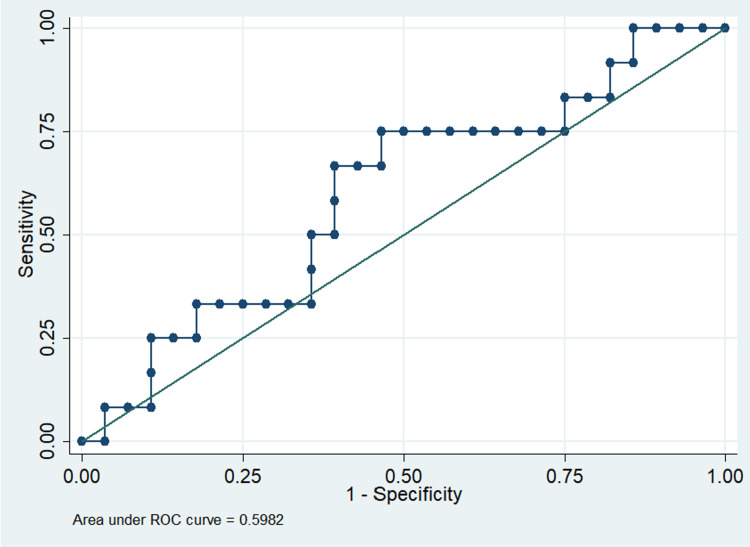
Introduction The passive leg raising (PLR) test is a simple, non-invasive method of knowing fluid responsiveness by acting as an internal-fluid challenge. The PLR test coupled with a non-invasive assessment of stroke volume would be the ideal method to assess fluid responsiveness. This study aimed to determine the correlation between transthoracic echocardiographic cardiac output (TTE-CO) and common carotid artery blood flow (CCABF) parameters in determining fluid responsiveness with the PLR test. Methods  We performed a prospective observational study on 40 critically ill patients. Patients were evaluated with a 7-13 MHz linear transducer probe for CCABF parameters calculated using time-averaged mean velocity (TAmean) and with a 1-5 MHz cardiac probe equipped with tissue doppler imaging (TDI) for TTE-CO calculated using left ventricular outflow tract velocity time integral (LVOT VTI) with an apical five-chamber view. Two separate PLR tests (five minutes apart) were done within 48 hours of ICU admission. The first PLR test was to assess the effects on TTE-CO. The second PLR test was performed to assess the effects on CCABF parameters. Patients were designated as fluid responders (FR) if changes in TTE-CO (Δ TTE-CO) ≥ 10 %. Results  A positive PLR test was observed in 33% of patients. A strong correlation was present between absolute values of TTE-CO calculated using LVOT VTI and the absolute values of CCABF calculated using TAmean (r=0.60, p<0.05). However, a weak correlation was found between Δ TTE-CO and changes in CCABF (Δ CCABF) during the PLR test (r=0.05, p<0.74). A positive PLR test response could not be detected by Δ CCABF (area under the curve (AUC): 0.59 ± 0.09). Conclusions We found a moderate correlation between TTE-CO and CCABF at baseline. However, Δ TTE-CO had a very poor correlation with Δ CCABF, during the PLR test. Considering this, CCABF parameters may not be recommended as a means to detect fluid responsiveness with PLR tests in critically ill patients.

摘要

引言 被动抬腿(PLR)试验是一种通过模拟体内液体负荷试验来了解液体反应性的简单、非侵入性方法。将PLR试验与每搏输出量的非侵入性评估相结合,将是评估液体反应性的理想方法。本研究旨在确定经胸超声心动图心输出量(TTE-CO)与颈总动脉血流(CCABF)参数在PLR试验中测定液体反应性方面的相关性。方法 我们对40例危重症患者进行了一项前瞻性观察性研究。使用7-13MHz线性换能器探头评估患者的CCABF参数,该参数通过时间平均平均速度(TAmean)计算得出;使用配备组织多普勒成像(TDI)的1-5MHz心脏探头,通过心尖五腔视图下的左心室流出道速度时间积分(LVOT VTI)计算TTE-CO。在入住重症监护病房(ICU)的48小时内进行两次单独的PLR试验(间隔5分钟)。第一次PLR试验用于评估对TTE-CO的影响。第二次PLR试验用于评估对CCABF参数的影响。如果TTE-CO变化(ΔTTE-CO)≥10%,则将患者指定为液体反应者(FR)。结果 33%的患者PLR试验呈阳性。使用LVOT VTI计算的TTE-CO绝对值与使用TAmean计算的CCABF绝对值之间存在强相关性(r=0.60,p<0.05)。然而,在PLR试验期间,ΔTTE-CO与CCABF变化(ΔCCABF)之间的相关性较弱(r=0.05,p<0.74)。通过ΔCCABF无法检测到阳性PLR试验反应(曲线下面积(AUC):0.59±0.09)。结论 我们发现基线时TTE-CO与CCABF之间存在中度相关性。然而,在PLR试验期间,ΔTTE-CO与ΔCCABF的相关性非常差。考虑到这一点,在危重症患者中,不建议将CCABF参数作为检测PLR试验液体反应性的手段。

https://cdn.ncbi.nlm.nih.gov/pmc/blobs/1c3f/10332793/a78e342b9a88/cureus-0015-00000040229-i09.jpg
https://cdn.ncbi.nlm.nih.gov/pmc/blobs/1c3f/10332793/75b5ffd703ce/cureus-0015-00000040229-i01.jpg
https://cdn.ncbi.nlm.nih.gov/pmc/blobs/1c3f/10332793/5bd963f403fb/cureus-0015-00000040229-i02.jpg
https://cdn.ncbi.nlm.nih.gov/pmc/blobs/1c3f/10332793/e84c1db3aad7/cureus-0015-00000040229-i03.jpg
https://cdn.ncbi.nlm.nih.gov/pmc/blobs/1c3f/10332793/1361792c4192/cureus-0015-00000040229-i04.jpg
https://cdn.ncbi.nlm.nih.gov/pmc/blobs/1c3f/10332793/ee8553f54297/cureus-0015-00000040229-i05.jpg
https://cdn.ncbi.nlm.nih.gov/pmc/blobs/1c3f/10332793/59444cb1a7f5/cureus-0015-00000040229-i06.jpg
https://cdn.ncbi.nlm.nih.gov/pmc/blobs/1c3f/10332793/1e87d610d6ac/cureus-0015-00000040229-i07.jpg
https://cdn.ncbi.nlm.nih.gov/pmc/blobs/1c3f/10332793/1de44e975ba9/cureus-0015-00000040229-i08.jpg
https://cdn.ncbi.nlm.nih.gov/pmc/blobs/1c3f/10332793/a78e342b9a88/cureus-0015-00000040229-i09.jpg
https://cdn.ncbi.nlm.nih.gov/pmc/blobs/1c3f/10332793/75b5ffd703ce/cureus-0015-00000040229-i01.jpg
https://cdn.ncbi.nlm.nih.gov/pmc/blobs/1c3f/10332793/5bd963f403fb/cureus-0015-00000040229-i02.jpg
https://cdn.ncbi.nlm.nih.gov/pmc/blobs/1c3f/10332793/e84c1db3aad7/cureus-0015-00000040229-i03.jpg
https://cdn.ncbi.nlm.nih.gov/pmc/blobs/1c3f/10332793/1361792c4192/cureus-0015-00000040229-i04.jpg
https://cdn.ncbi.nlm.nih.gov/pmc/blobs/1c3f/10332793/ee8553f54297/cureus-0015-00000040229-i05.jpg
https://cdn.ncbi.nlm.nih.gov/pmc/blobs/1c3f/10332793/59444cb1a7f5/cureus-0015-00000040229-i06.jpg
https://cdn.ncbi.nlm.nih.gov/pmc/blobs/1c3f/10332793/1e87d610d6ac/cureus-0015-00000040229-i07.jpg
https://cdn.ncbi.nlm.nih.gov/pmc/blobs/1c3f/10332793/1de44e975ba9/cureus-0015-00000040229-i08.jpg
https://cdn.ncbi.nlm.nih.gov/pmc/blobs/1c3f/10332793/a78e342b9a88/cureus-0015-00000040229-i09.jpg

相似文献

1
Correlation of Common Carotid Artery Blood Flow Parameters With Transthoracic Echocardiographic Cardiac Output for Assessing Fluid Responsiveness After Passive Leg Raising (PLR) Test in Critically Ill Patients.重症患者被动抬腿(PLR)试验后,通过颈总动脉血流参数与经胸超声心动图心输出量的相关性评估液体反应性
Cureus. 2023 Jun 10;15(6):e40229. doi: 10.7759/cureus.40229. eCollection 2023 Jun.
2
Passive leg raising test to predict fluid responsiveness using the right ventricle outflow tract velocity-time integral through a subcostal view.通过肋下视图利用右心室流出道速度时间积分进行被动抬腿试验以预测液体反应性。
J Ultrasound. 2025 Mar;28(1):19-25. doi: 10.1007/s40477-022-00719-7. Epub 2022 Sep 21.
3
Can bioimpedance cardiography assess hemodynamic response to passive leg raising in critically ill patients: A STROBE-compliant study.生物阻抗心动描记术能否评估危重症患者被动抬腿的血液动力学反应:一项符合 STROBE 指南的研究。
Medicine (Baltimore). 2020 Dec 18;99(51):e23764. doi: 10.1097/MD.0000000000023764.
4
Passive leg raising test using the carotid flow velocity-time integral to predict fluid responsiveness.应用颈总动脉血流速度时间积分的被动抬腿试验预测液体反应性。
J Ultrasound. 2024 Mar;27(1):97-104. doi: 10.1007/s40477-023-00824-1. Epub 2023 Sep 5.
5
[The value of passive leg raising test in predicting fluid responsiveness in patients with sepsis-induced cardiac dysfunction].[被动抬腿试验在预测脓毒症诱发心功能不全患者液体反应性中的价值]
Zhonghua Wei Zhong Bing Ji Jiu Yi Xue. 2015 Sep;27(9):729-34.
6
[Predictive value of carotid ultrasound in combination with passive leg raising on fluid responsiveness in critically ill patients].[颈动脉超声联合被动抬腿对危重症患者液体反应性的预测价值]
Zhonghua Wei Zhong Bing Ji Jiu Yi Xue. 2021 Sep;33(9):1105-1109. doi: 10.3760/cma.j.cn121430-20210706-01013.
7
Do ScvO variations induced by passive leg raising predict fluid responsiveness? A prospective study.被动抬腿引起的 ScvO 变化能否预测液体反应性?一项前瞻性研究。
Physiol Rep. 2021 Sep;9(17):e15012. doi: 10.14814/phy2.15012.
8
[Clinical observation of passive leg raising combined with non invasive cardiac output monitoring system in predicting volume responsiveness].被动抬腿联合无创心输出量监测系统预测容量反应性的临床观察
Zhongguo Wei Zhong Bing Ji Jiu Yi Xue. 2011 Mar;23(3):146-9.
9
Efficacy of Left Ventricular Outflow Tract and Carotid Artery Velocity Time Integral as Predictors of Fluid Responsiveness in Patients with Sepsis and Septic Shock.左心室流出道及颈动脉血流速度时间积分对脓毒症和脓毒性休克患者液体反应性的预测效能
Indian J Crit Care Med. 2021 Mar;25(3):310-316. doi: 10.5005/jp-journals-10071-23764.
10
The use of bioreactance and carotid Doppler to determine volume responsiveness and blood flow redistribution following passive leg raising in hemodynamically unstable patients.使用生物电抗和颈动脉多普勒技术在血流动力学不稳定患者被动抬腿后评估容量反应性和血流再分布。
Chest. 2013 Feb 1;143(2):364-370. doi: 10.1378/chest.12-1274.

引用本文的文献

1
Agreement between carotid and LVOT non-invasive cardiac output measurements in ED septic shock patients: a prospective observational study.急诊科脓毒性休克患者颈动脉与左心室流出道无创心输出量测量的一致性:一项前瞻性观察研究。
Sci Rep. 2025 Jun 6;15(1):19911. doi: 10.1038/s41598-025-05077-y.
2
The left ventricular outflow tract and carotid artery velocity time integrals.左心室流出道及颈动脉速度时间积分。
Front Med Technol. 2024 Jan 24;6:1320810. doi: 10.3389/fmedt.2024.1320810. eCollection 2024.

本文引用的文献

1
Reply to "Using Transthoracic Echocardiography to Predict Fluid Responsiveness after Passive Leg Raising Test: Caution Needed".对《使用经胸超声心动图预测被动抬腿试验后的液体反应性:需谨慎》的回复
Indian J Crit Care Med. 2020 Nov;24(11):1149. doi: 10.5005/jp-journals-10071-23668.
2
Carotid and femoral Doppler do not allow the assessment of passive leg raising effects.颈动脉和股动脉多普勒检查无法评估被动抬腿的效果。
Ann Intensive Care. 2018 May 29;8(1):67. doi: 10.1186/s13613-018-0413-7.
3
Focused cardiac ultrasound (FOCUS) by emergency medicine residents in patients with suspected cardiovascular diseases.
急诊医学住院医师对疑似心血管疾病患者进行的心脏重点超声检查(FOCUS)。
J Ultrasound. 2017 May 2;20(2):133-138. doi: 10.1007/s40477-017-0246-5. eCollection 2017 Jun.
4
Common Carotid Artery Sonography Versus Transthoracic Echocardiography for Cardiac Output Measurements in Intensive Care Unit Patients.在重症监护病房患者中,经胸超声心动图与颈总动脉超声心动图测量心输出量的比较
J Ultrasound Med. 2017 Sep;36(9):1793-1799. doi: 10.1002/jum.14214. Epub 2017 Apr 21.
5
The passive leg raising test to guide fluid removal in critically ill patients.被动抬腿试验指导危重症患者液体清除。
Ann Intensive Care. 2016 Dec;6(1):46. doi: 10.1186/s13613-016-0149-1. Epub 2016 May 20.
6
Defining Fluid Responsiveness by the Velocity-Time Integral Alone?
J Ultrasound Med. 2016 Feb;35(2):459-60. doi: 10.7863/ultra.15.09047.
7
Rapid Ultrasound in Shock (RUSH) Velocity-Time Integral: A Proposal to Expand the RUSH Protocol.休克快速超声检查(RUSH)速度时间积分:扩展RUSH方案的建议
J Ultrasound Med. 2015 Sep;34(9):1691-700. doi: 10.7863/ultra.15.14.08059. Epub 2015 Aug 17.
8
Volumetric blood flow measurement using Doppler ultrasound: concerns about the technique.使用多普勒超声测量容积血流量:对该技术的担忧
J Ultrasound. 2015 Mar 18;18(2):201-4. doi: 10.1007/s40477-015-0164-3. eCollection 2015 Jun.
9
Feasibility of common carotid artery point of care ultrasound in cardiac output measurements compared to invasive methods.与侵入性方法相比,颈总动脉床旁超声心动图测量心输出量的可行性。
J Ultrasound. 2014 Nov 12;18(2):127-33. doi: 10.1007/s40477-014-0139-9. eCollection 2015 Jun.
10
Can emergency physicians perform common carotid Doppler flow measurements to assess volume responsiveness?急诊医生能否通过进行颈总动脉多普勒血流测量来评估容量反应性?
West J Emerg Med. 2015 Mar;16(2):255-9. doi: 10.5811/westjem.2015.1.24301. Epub 2015 Feb 26.