Assakran Bandar Saad, Khalid Renad, Bennasser Thekra, Alsaif Maha, Alsawyan Watin, Alsaleem Haifa, Alsalhi Ahlam
General Surgery, King Fahad Specialist Hospital, Buraydah, SAU.
College of Medicine, Qassim University, Buraydah, SAU.
Cureus. 2023 Jun 8;15(6):e40131. doi: 10.7759/cureus.40131. eCollection 2023 Jun.
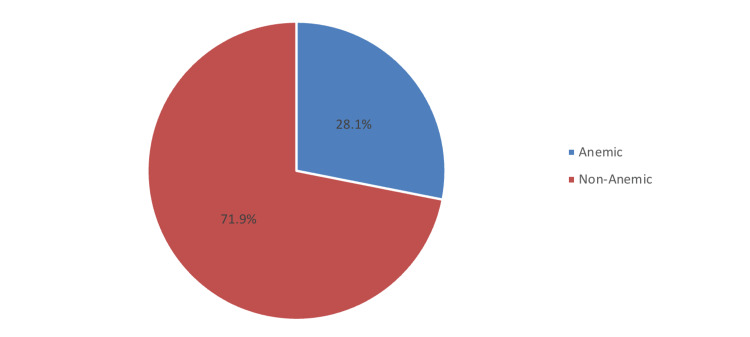
Introduction There is a high prevalence of obesity among the Saudi population. Anemia due to iron deficiency or an inflammatory state is often associated with obesity. Multiple nutritional deficiencies are associated with bariatric surgeries, with anemia being one of the commonest causes. Aim This study aimed to evaluate the prevalence of anemia after bariatric surgery among patients in the Qassim Region, Saudi Arabia. Patients and methods This retrospective cohort study was conducted at King Fahad Specialist Hospital Al-Qassim (Buraydah), Saudi Arabia. We reviewed data from patients' records who underwent bariatric surgeries from January 2018 to January 2021. By using a structured data collection form, we collected data such as demographic variables, surgery perioperative-related data, postoperative complications and interventions, type of transfusion required after surgery, postoperative medications and/or supplements and duration, and blood count indices. Results Of the 520 patients who underwent bariatric surgery, 61% were females, and 31.7% were aged between 26 to 35 years old. The most prominent type of bariatric surgery was sleeve gastrectomy (97.1%). The prevalence of anemia among patients who underwent bariatric surgery was 28.1%. Independent risk factors for anemia were female gender, microcytic red blood cells, and low normal hematocrit and hemoglobin (Hgb) levels. It is interesting to know that sleeve gastrectomy and elevated BMI levels are considered to be the protective factors for developing anemia postoperatively. Conclusion There was a high prevalence of anemia among bariatric patients postoperatively. Female gender with decreasing hematocrit and hemoglobin levels after the surgery might be more at the receiving end for developing anemia than the other patients. Further longitudinal studies are needed to establish the prevalence and risk factors for developing anemia among bariatric surgery patients.
沙特人群中肥胖症的患病率很高。缺铁或炎症状态导致的贫血通常与肥胖症相关。多种营养缺乏与减肥手术有关,贫血是最常见的原因之一。
本研究旨在评估沙特阿拉伯卡西姆地区减肥手术后患者贫血的患病率。
这项回顾性队列研究在沙特阿拉伯卡西姆的法赫德国王专科医院(布赖代)进行。我们回顾了2018年1月至2021年1月接受减肥手术患者的病历数据。通过使用结构化数据收集表,我们收集了人口统计学变量、手术围手术期相关数据、术后并发症和干预措施、术后所需输血类型、术后药物和/或补充剂及其持续时间以及血细胞计数指标等数据。
在520例接受减肥手术的患者中,61%为女性,31.7%年龄在26至35岁之间。最主要的减肥手术类型是袖状胃切除术(97.1%)。接受减肥手术患者的贫血患病率为28.1%。贫血的独立危险因素为女性、小红细胞以及血细胞比容和血红蛋白(Hgb)水平略低于正常范围。有趣的是,袖状胃切除术和较高的体重指数水平被认为是术后发生贫血的保护因素。
减肥手术后患者贫血的患病率很高。术后血细胞比容和血红蛋白水平下降的女性可能比其他患者更容易患贫血。需要进一步进行纵向研究以确定减肥手术患者贫血的患病率和危险因素。